
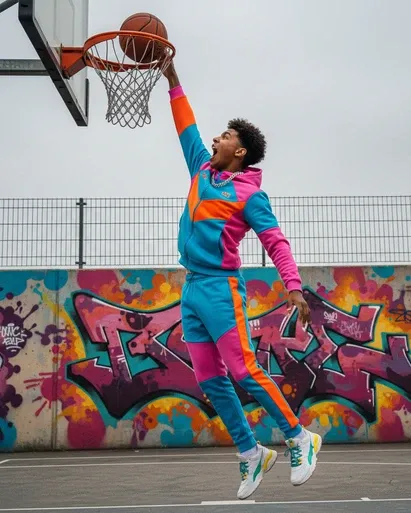


A player trains well all week.
They make good decisions, execute skills cleanly and look confident. The coach knows what they are capable of because they see it repeatedly.
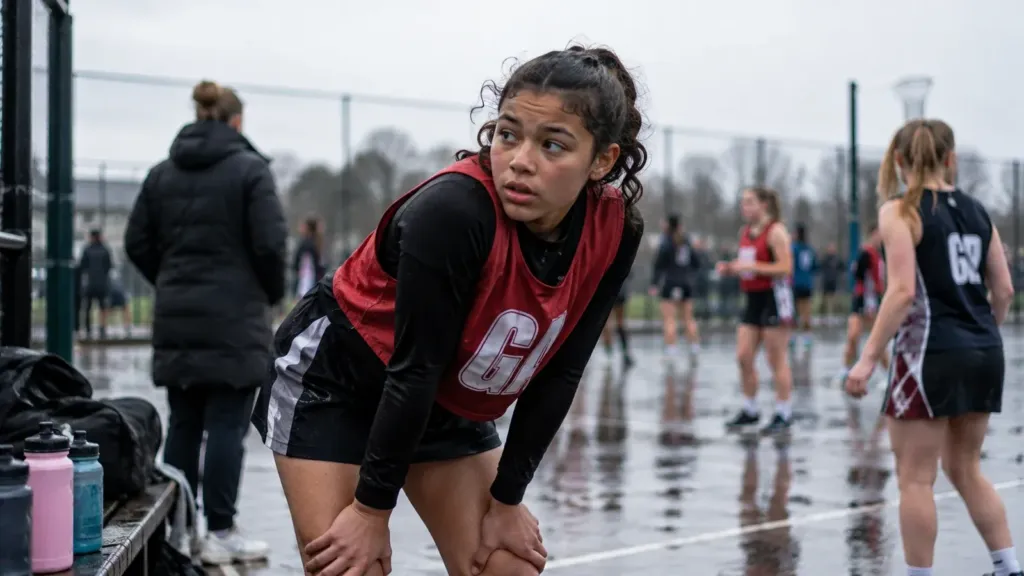
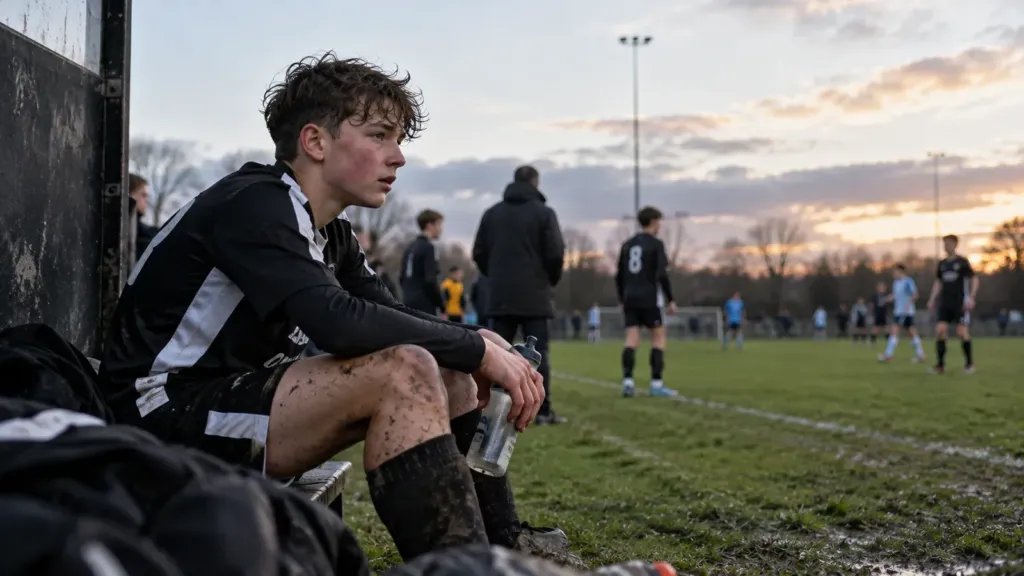
Then competition arrives and the same player looks different.
They hesitate. Their timing changes. They choose safer options. Skills that looked automatic during training become less reliable. Afterwards, everyone is confused because the ability was clearly there two days earlier.
When a player can perform a skill in training but struggles to reproduce it in competition, I would not immediately assume they need more repetitions.
I would want to know what changed.
Training and competition might involve the same sport, equipment and skills, but they are not automatically the same performance environment. Pressure changes. Consequences change. Attention changes. Opponents behave differently. Decisions might have to happen faster. The player might also be asked to solve problems they have rarely experienced in practice.
Sometimes the gap is psychological. Sometimes the training itself has not prepared the player for what competition is asking them to do.
Often, both are involved.
Start by finding out what is different
Saying that somebody is a “training player” describes what we can see. It does not explain why it is happening.
I would start by comparing the two environments.
In training, does the player know what drill is coming next? Are they repeating the same skill from the same position? Do they know where the ball, opponent or target will be? Does the coach stop the exercise after mistakes? Are they practising against familiar teammates? Are consequences low?
Now look at competition.
Information is less predictable. Opponents are trying to disrupt them. The score matters. Decisions have consequences. Parents or selectors might be watching. The player has less time. An error cannot always be repeated immediately.
If several things change at once, “they need to be more confident” is not much of a diagnosis.
You need to work out which part of the gap is causing the problem.
Being able to perform a skill is different from being able to find the skill
This distinction gets missed a lot.
A player might execute a movement beautifully when the coach tells them exactly what to do.
Competition rarely works like that.
The player has to recognise when the action is appropriate, read information around them, choose a response and then execute it.
Think about the difference between receiving ten predictable passes in a drill and receiving under pressure while several options are changing. Or hitting the same shot repeatedly from a known feed compared with deciding which shot to use against an opponent. A combat-sport player hitting pads knows what is coming in a way they will not during a live exchange.
The movement might look similar, but the information surrounding it is different.
Research in skill acquisition describes this through the idea of representative learning design. Practice should preserve important information and action relationships from the performance environment rather than separating skills completely from the situations in which players need to use them.
That does not mean every drill has to look exactly like competition.
Technical practice still has a place.
But if a player only succeeds when they already know what is going to happen, competition is testing something training has not fully tested.
A clean training drill can hide a decision problem
Imagine a player completes a passing drill at high speed with almost no mistakes.
It looks excellent.
Now add an opponent and give the player two possible targets. Suddenly they are slower.
Add another opponent and change where the space appears. More errors arrive.
Nothing has happened to their basic passing technique in the last five minutes.
The player now has to perceive information and make a decision before executing the skill.
This matters because coaches and parents sometimes interpret the drop as poor technique or lack of confidence when the difficulty has moved somewhere else.
If the player regularly performs the movement well in predictable situations but struggles once information becomes uncertain, I would look closely at the design of their practice.
More repetition of the predictable version might make them even better at the predictable version.
Competition adds consequences that training struggles to copy
Even well-designed training cannot reproduce everything.
A missed shot in training is one missed shot.
The same miss late in an important competition might affect the result, selection, qualification or how the player believes other people see them.
The movement has not changed, but its meaning has.
That is where pressure becomes relevant.
Players do not respond to pressure in exactly the same way. Their response depends partly on how they evaluate the demands of the situation and the resources they believe they have to deal with them.
Research on challenge and threat states in sport has examined this distinction. Situations perceived more as a challenge tend to involve a stronger sense that personal resources are sufficient for the demands, while threat states involve the demands feeling greater than the resources available.
I would not expect a young player to learn the theory.
I would want them to recognise the practical version: “This matters” and “I can deal with what it asks of me” can exist at the same time.
Pressure can change how a player controls a skill
There is another reason a familiar skill can suddenly feel unfamiliar.
The player starts consciously supervising it.
A movement they normally execute without thinking about every part becomes something they try to control.
This is especially common when they care about avoiding an error.
They start thinking about where the foot should go, what the arm should do, whether the technique feels right or whether they are about to repeat the previous mistake.
The skill has not disappeared. The way attention is being used has changed.
Our guide on how to stop overthinking during competition explains this problem in more depth, including the evidence around internal and external attentional focus.
For the training-to-competition gap, the useful question is whether the player is being taught a skill so consciously that they struggle to use it when competition becomes fast and uncertain.
Confidence might be part of the problem, but be specific
“Confidence” becomes the explanation for almost everything in youth sport.
A player hesitates. Confidence.
They make mistakes. Confidence.
They play safely. Confidence.
Sometimes that is accurate. Sometimes it hides the actual problem.
What is the player uncertain about?
Are they worried about making mistakes?
Do they not trust the skill?
Are they unclear about their role?
Are they afraid of the coach’s reaction?
Are they worried about selection?
Do they struggle to read the situation quickly enough?
Do they know what decision they should make?
Those are different problems.
A player who understands the decision but is frightened to make it needs something different from a player who genuinely does not recognise the right decision.
Calling both “low confidence” makes the coaching less precise.
Watch for the player becoming safer in competition
One of the clearest changes I would look for is not more mistakes. It is fewer attempts.
The player who attacks space in training stops doing it in competition.
The player who attempts difficult passes chooses the safest option every time.
The player who normally takes somebody on releases the ball immediately.
The player who attacks the shot becomes tentative.
The player who communicates in training becomes quiet.
From the outside, this might look like discipline. Sometimes it is.
But sometimes the player is reducing risk because avoiding a visible mistake has become more important than performing naturally.
That is why statistics alone might not show the whole training-to-competition gap. A player can reduce errors simply by avoiding the actions where errors are possible.
Coaches need to look at what the player has stopped trying as well as what they get wrong.
Fear of mistakes changes the environment
If every training mistake stops the session, attracts an immediate correction or feels like something the player has to explain, players learn something beyond the technical lesson.
They learn that mistakes receive attention.
Some correction is obviously necessary. Players need feedback.
But development also requires enough room to attempt difficult things, make imperfect decisions and work out what happened.
If training becomes a place where the player is constantly trying to satisfy the coach, competition can become difficult because the coach is no longer able to guide every decision.
This connects directly with how players recover quickly after a mistake. The aim is not to make players indifferent to errors. It is to help them respond without the mistake controlling several actions afterwards.
Training needs uncertainty, not chaos
Once coaches notice the gap, there is a temptation to make every session harder.
More pressure.
More noise.
More consequences.
More competition.
That is not automatically better practice.
Players still need opportunities to learn movements, understand ideas and work at a level where useful improvement is possible.
The better question is whether training gradually exposes them to the information and decisions competition requires.
A player might first learn a movement with little pressure. Then the task gains choices. Timing becomes less predictable. An opponent is introduced. Space changes. Score matters. The player has to adapt rather than repeat.
Different sports will organise this differently.
The principle is to increase representativeness where transfer matters, not to turn every practice into a fake final.
Some pressure should appear before the real competition
If training never contains meaningful consequences, players have fewer opportunities to learn how they respond when something matters.
That does not require punishment.
A coach might use scoring, limited attempts, competitive games, time constraints or tasks where a player has to perform after making an error. Individual sports might create practice sets, rounds or routines with consequences that resemble competition.
The purpose is not to make young players anxious.
It is to give them experience of noticing what changes when they care about the outcome.
Do they rush?
Become passive?
Start controlling their technique?
Stop communicating?
Avoid difficult decisions?
Once you know the pattern, training becomes more useful.
The player needs a competition version of their skill
This is something I would build deliberately.
Ask the player what the skill feels like when it is working in training.
Then ask what changes in competition.
You might find that the training version contains five technical thoughts while the competition version needs one simple cue.
A coach might use detailed technical information while teaching a movement, then gradually reduce that information as the player becomes more independent.
By competition, the player should not need an internal coaching session before every action.
They need enough information to perform.
Article 9 on how to deal with nerves before competition covers what to do when the gap starts before the event has even begun. For some players, getting the pre-competition routine right removes part of the problem before they enter the performance environment.
Be careful with “they don’t want it enough”
A player performs freely on Tuesday and cautiously on Saturday.
It is easy to read that as an effort problem.
But a player who cares deeply can become more inhibited, not less.
The importance of the event might increase worry about consequences. The player might be trying so hard not to make an error that their normal decision-making changes.
That does not excuse poor effort.
Effort still matters.
But before questioning how much a developing player wants it, I would look at whether they are working under a different psychological and informational load in competition.
Sometimes the player is not giving less.
They are trying to control more.
Sometimes the player is not giving less. They are trying to control more.Grantley Baugh, Founder of PlayerScout
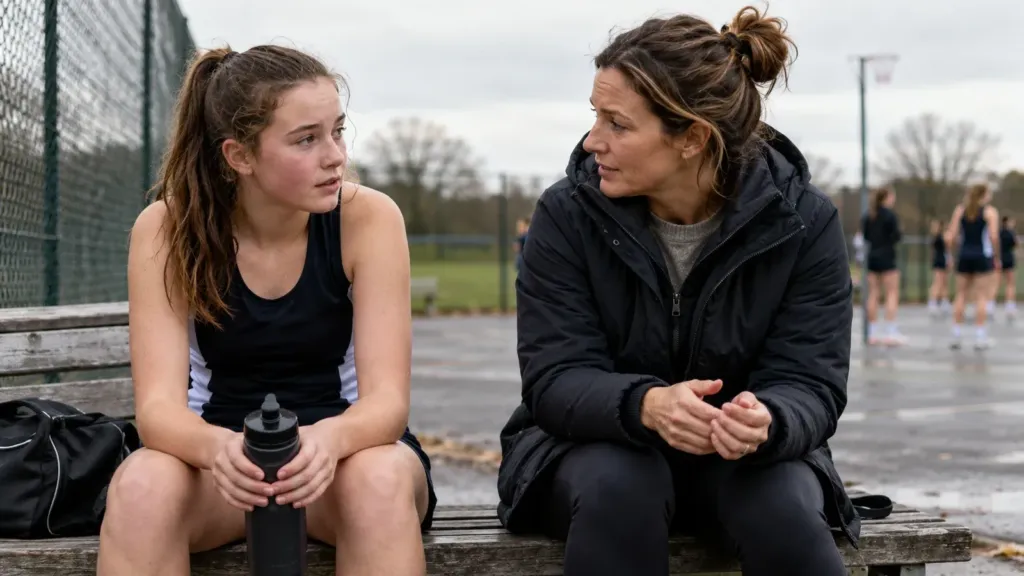
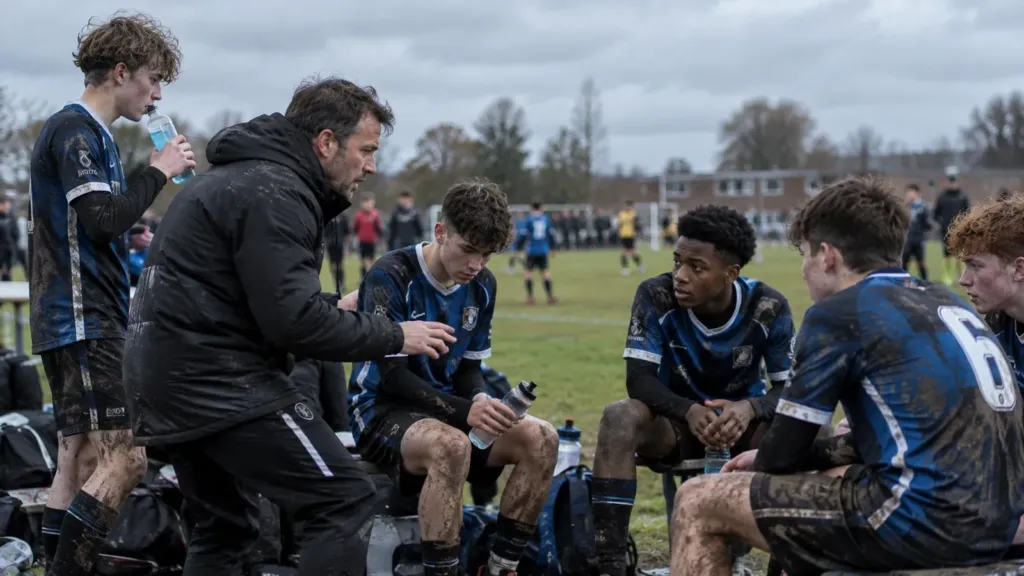
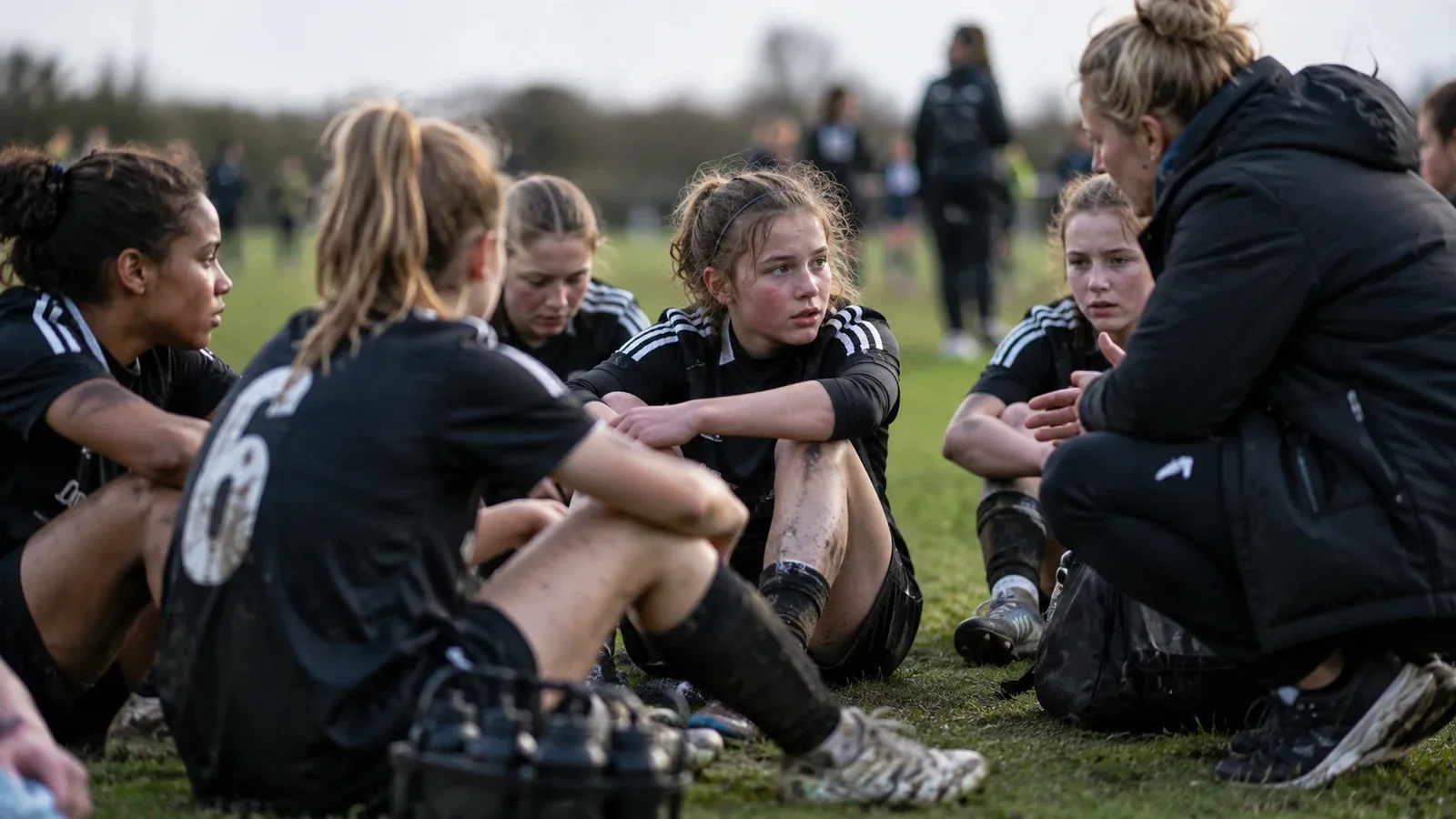
Parents see the competition. Coaches see more of the week.
This creates an understandable difference in perspective.
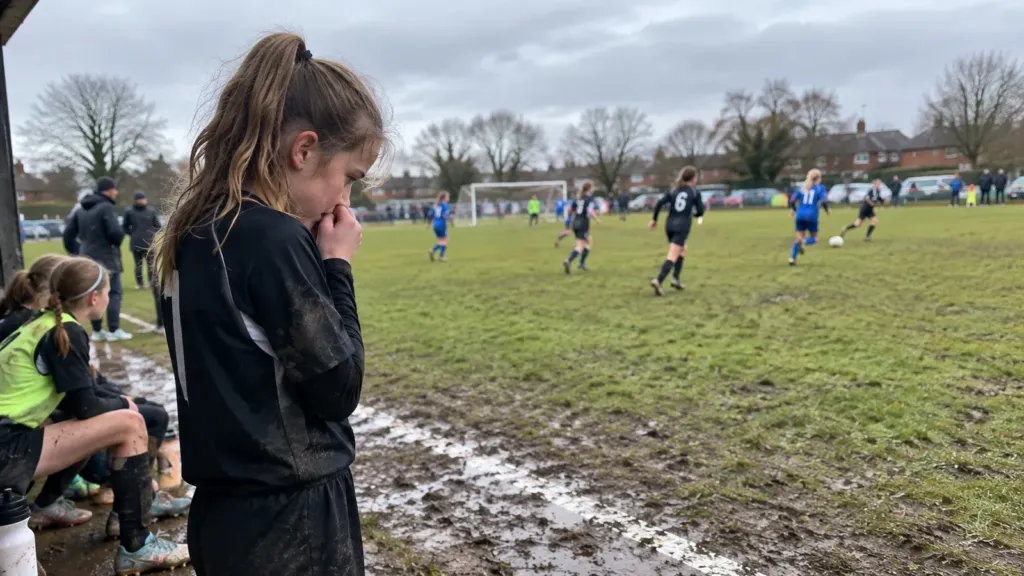
A parent watches the weekend and sees a player who looks hesitant.
The coach might have watched the same player train brilliantly three times.
One person wonders why the player cannot do what they know they can do. The other might be equally frustrated because they have seen the evidence all week.
The useful conversation is not, “Why don’t you do that in games?”
Ask what feels different.
Does everything feel faster?
Are they worried about mistakes?
Do they know what they are looking for?
Are they thinking too much technically?
Does the opposition change their decisions?
Do they feel watched?
The player’s answer might not be perfect, especially when they are young, but it starts looking for a cause rather than treating the competition performance as a character flaw.
Measure transfer, not only training quality
A brilliant training session feels good.
Skills look clean. The player succeeds repeatedly. Everyone leaves happy.
But if the purpose of training is to help performance, some of the value only becomes visible later.
Can the player recognise the right moment without being told?
Can they execute when the situation changes?
Can they adapt after an opponent takes away their preferred option?
Can they recover when the first attempt fails?
Can they still make decisions when the score matters?
If not, the answer might involve mindset work. It might involve better practice design. It might involve technical development, tactical understanding or more experience.
That is why the gap between training and competition is worth diagnosing rather than labelling.
If a player repeatedly shows an ability in training, I would take that as useful evidence. Something is already there.
The next job is to work out what competition is adding, what training is removing and which part needs to be brought closer together.
Was this helpful?
 9 min