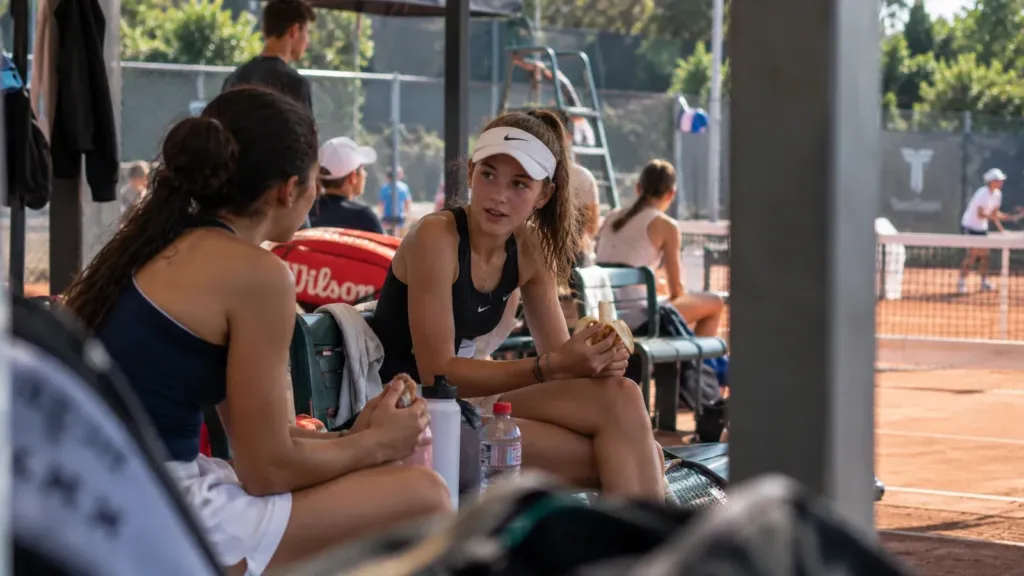


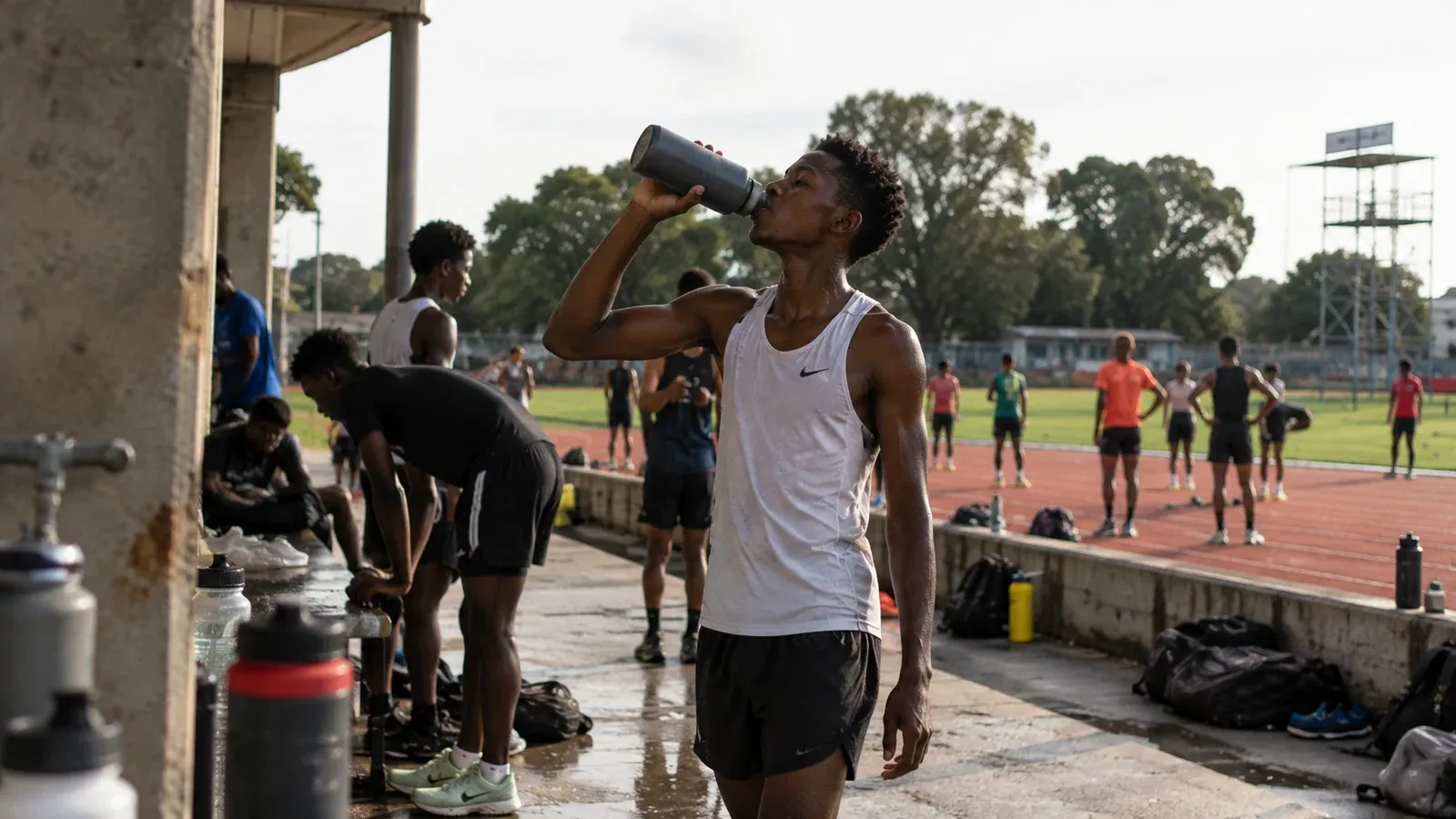

Two players can complete the same session and need different amounts to drink.
One is bigger. One sweats more. One arrived already well hydrated. One barely drank at school. The session might be indoors in winter or outside in heat and humidity.
That is why I would be careful with any hydration advice that gives every young player the same bottle target.
Good hydration is more individual than that.
For most developing players, the basics are straightforward. Drink regularly through the day. Arrive at training or competition normally hydrated. Have fluid available during sport. Drink afterwards to replace what has been lost.
Water will cover a lot of normal youth sport.
Long sessions, high sweat losses, heat, repeated competition and some sporting environments change the problem.
The useful skill is knowing when.
Hydration does not begin at the warm-up
A player arrives at training carrying a large water bottle.
That tells you almost nothing about what they drank during the previous eight hours.
This is where I would look first.
Did they drink at breakfast?
Did they have access to water at school?
Is the bottle they took to school still full?
Did they drink with lunch?
Have they spent an hour travelling in a hot car?
A player who has barely drunk all day is starting training from a different position from someone who has been drinking normally.
Sports Dietitians Australia’s guidance for adolescent players recommends access to clean, cool fluid in sufficient amounts before, during and after sport.
The practical part starts much earlier.
If evening training repeatedly begins with the player desperately drinking because they are already thirsty, I would look at the afternoon routine before buying a different sports drink.
There is no perfect amount for every player
This is the part people often want turned into one number.
How much should my child drink?
There is no useful universal answer.
Fluid requirements change with body size, maturity, exercise duration and intensity, individual sweat losses and the environment. Heat, humidity, direct sun and clothing or protective equipment also change how much fluid a player loses.
Even teammates doing the same training do not necessarily sweat at the same rate.
Think about a goalkeeper training in cool weather compared with a midfielder doing repeated running.
A cricketer standing in the field for hours in hot conditions faces a different problem from a swimmer training indoors.
Combat-sport equipment, hockey goalkeeping kit, helmets and other protective clothing can make heat loss harder too.
So the target should not be:
“Finish this bottle because everybody has to drink two litres.”
A better question is:
What does this player need in these conditions?
Water is the starting point more often than marketing suggests
Young players are surrounded by brightly coloured drinks promising hydration, electrolytes and performance.
Most normal training does not automatically require them.
The American Academy of Pediatrics states that water is generally the appropriate first choice for hydration before, during and after most exercise for children and adolescents.
That is a useful starting position.
A player doing an ordinary training session in moderate conditions might need nothing more complicated than water, alongside the food they eat through the day.
Sports drinks have a more specific role.
Longer vigorous exercise, heavy sweating, hot conditions or repeated activity can increase the value of replacing carbohydrate and electrolytes alongside fluid. The American Academy of Pediatrics makes this distinction too, rather than treating sports drinks as everyday drinks for active children.
So the question is not whether sports drinks are good or bad.
Ask what problem the drink is solving.
Electrolytes matter, but not every sweaty player needs a special product
Sweat contains water and electrolytes, particularly sodium.
So when a player sweats, they are not losing plain water.
That fact gets turned into a lot of marketing.
A short session does not automatically mean a young player needs an electrolyte tablet afterwards. Normal food also provides sodium and other electrolytes.
The situation becomes more relevant when sweat losses are substantial.
A long tournament in hot weather.
Repeated sessions on the same day.
A player who sweats heavily.
Several hours of competition.
Protective clothing in warm conditions.
Now replacing fluid and sodium deserves more thought.
Guidance on exercise in hot environments recommends considering individual fluid balance, gastrointestinal tolerance and sweat losses when building a drinking strategy rather than assuming one approach suits everybody.
That is the distinction I would teach players.
Electrolytes have a job.
They are not something every bottle needs simply because sport is happening.
You do not need to make a player drink constantly
There is another side to hydration advice that gets less attention.
More water is not always better.
Drinking far beyond fluid losses can also create problems. In extreme cases, excessive fluid intake during prolonged exercise can contribute to exercise-associated hyponatraemia, where blood sodium becomes dangerously diluted.
That is uncommon in normal youth sport, but the principle matters.
The aim is not to drink as much as physically possible.
The aim is to stay appropriately hydrated.
This is another reason I dislike hydration challenges based on finishing giant bottles regardless of the player, weather or activity.
A sensible routine beats chasing a number.
What about thirst?
Thirst is useful, but I would not make it the only hydration plan for a young player.
Competition changes behaviour.
Players get distracted.
Some do not want to stop training.
Access to drinks might be limited by the sport.
Young children also depend on adults creating opportunities to drink.
In hot conditions, waiting until a player feels badly thirsty before thinking about fluid is not much of a strategy.
At the same time, forcing players to drink large amounts when they do not need them is not the answer either.
Make fluid easy to access.
Build sensible drink opportunities into training.
Encourage players to arrive hydrated.
Then use thirst alongside the conditions, session and what you know about the individual player.
Urine colour gives you a clue, not a medical test
Players and parents sometimes use urine colour to judge hydration.
There is some practical value in that.
Very dark urine, particularly alongside thirst and a long period without drinking, might suggest the player needs more fluid.
Pale yellow urine is generally more reassuring.
But urine colour is affected by other things too, including food, supplements and the time of day.
I would use it as one clue rather than turning every trip to the toilet into a hydration test.
You are looking for patterns.
A player who regularly wakes thirsty, has dark urine, barely drinks through school and arrives at training desperate for water has several clues pointing in the same direction.
That is more useful than obsessing over one urine sample.
For some players, measuring sweat loss is useful
Most 10-year-olds do not need a spreadsheet calculating sweat rate.
For older players training seriously, or players repeatedly struggling in hot conditions, measuring approximate sweat loss can become useful.
A common field method compares body mass before and after a session while accounting for fluid consumed and urine produced.
The purpose is not to make a young player anxious about body weight.
It is to learn something about fluid loss in a particular environment and session.
That distinction matters.
Body-mass measurements around exercise should be used carefully with young players, particularly where body image or eating concerns exist. They should never become another way of judging physique.
If the information is not going to change anything useful, you do not need to collect it.
Heat changes the session, not only the bottle
This is an important one.
When the weather becomes hot, the answer is not always:
Drink more and carry on.
Heat increases the strain of exercise. Humidity makes evaporating sweat less effective. Heavy kit can make cooling harder.
Young players also need appropriate breaks, access to shade where possible, sensible clothing and time to adapt when conditions become hotter.
The American Academy of Pediatrics recommends gradual acclimatisation for children and adolescents exercising in the heat, alongside regular access to suitable fluid.
Coaches need to look at the session as well as the drinks break.
Intensity might need adjusting.
Breaks might need changing.
The environment might make the planned session inappropriate.
Hydration is part of managing heat. It is not permission to ignore it.
Sports drinks and energy drinks are completely different
Young players need to know this.
A sports drink usually contains fluid, carbohydrate and electrolytes.
An energy drink typically contains stimulants such as caffeine, often alongside other ingredients.
They are sold beside each other. They are marketed with similar performance language. They do different jobs.
The American Academy of Pediatrics advises that energy drinks are not appropriate for children and adolescents, while sports drinks have a limited role during prolonged, vigorous physical activity.
If the player needs water, give them water.
If a longer or harder sporting situation creates a genuine reason for carbohydrate and electrolytes, a sports drink is one possible tool.
Do not confuse that with needing a stimulant to feel more energetic.
Competition days need more planning
Hydration gets harder when sport lasts most of the day.
The player warms up.
Competes.
Waits.
Competes again.
Travels between venues.
Sits in the sun.
Suddenly the bottle they brought for one match has to cover six hours.
This is where the schedule matters.
Our guide to what players should eat on a competition day covers the wider food and fluid plan for tournaments and repeated events.
For hydration specifically, think ahead.
Will water be available?
Can bottles be refilled?
Will drinks stay cool?
How hot is the venue likely to be?
How long are the gaps?
Is the player wearing equipment for long periods?
A little planning at home saves a lot of improvising beside a court, track, pitch or pool.
Recovery includes replacing fluid too
After training, players often think about food first.
Fluid belongs in recovery as well.
A player who has lost a meaningful amount through sweat needs to keep drinking afterwards rather than assuming the session ended when training stopped.
That does not mean downing several litres immediately.
Drink alongside the recovery period and normal meals.
Food helps too because normal meals provide fluid and electrolytes alongside carbohydrate, protein and other nutrients.
If you are also planning what players should eat after training, think about food and fluid together rather than treating recovery nutrition and hydration as separate jobs.
What I would want a player to notice
I would rather teach a young player to notice their own hydration than give them a number they follow without thinking.
Was today hot?
Did I sweat much more than usual?
Is this session longer?
Have I drunk anything since lunch?
Do I have another event later?
Is my bottle still almost full after two hours?
Am I finishing every hot session desperately thirsty?
Those questions start building awareness.
Hydration changes from one day to another because sport changes from one day to another.
The player who understands that has something more useful than a giant bottle with a target line printed on the side.
I would rather teach a young player to notice their own hydration than give them a number they follow without thinking.Grantley Baugh, Founder of PlayerScout
Was this helpful?
 11 min