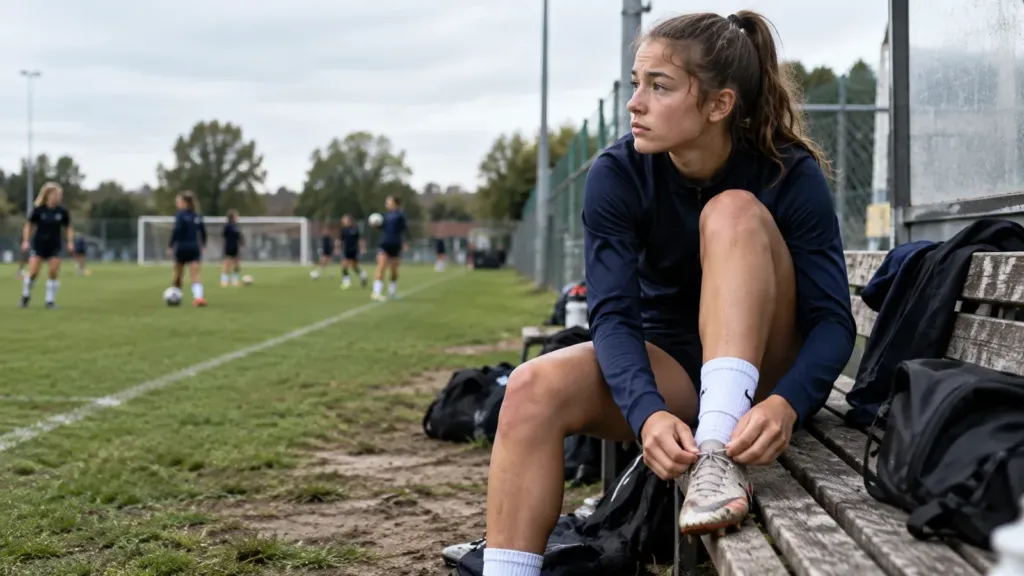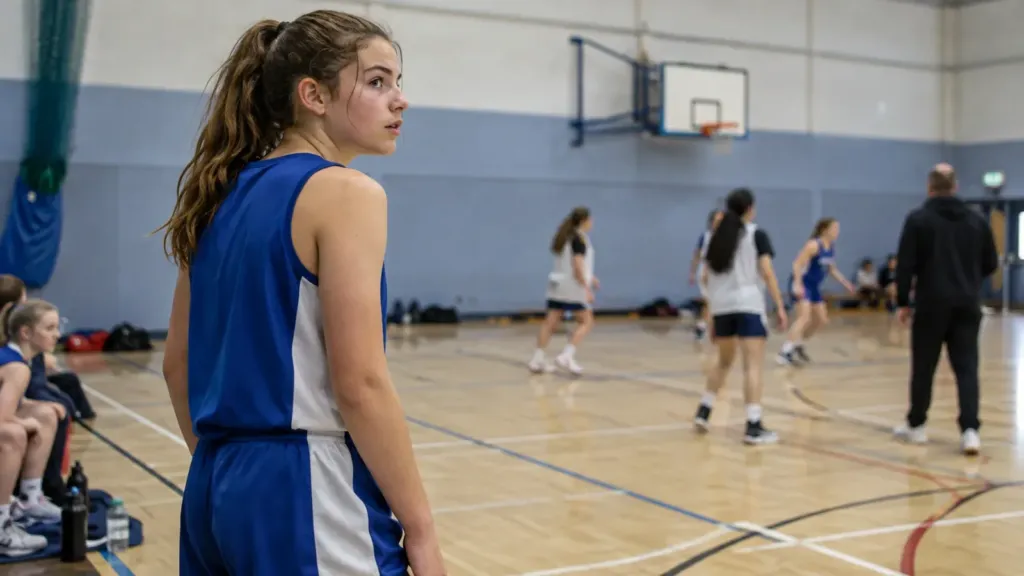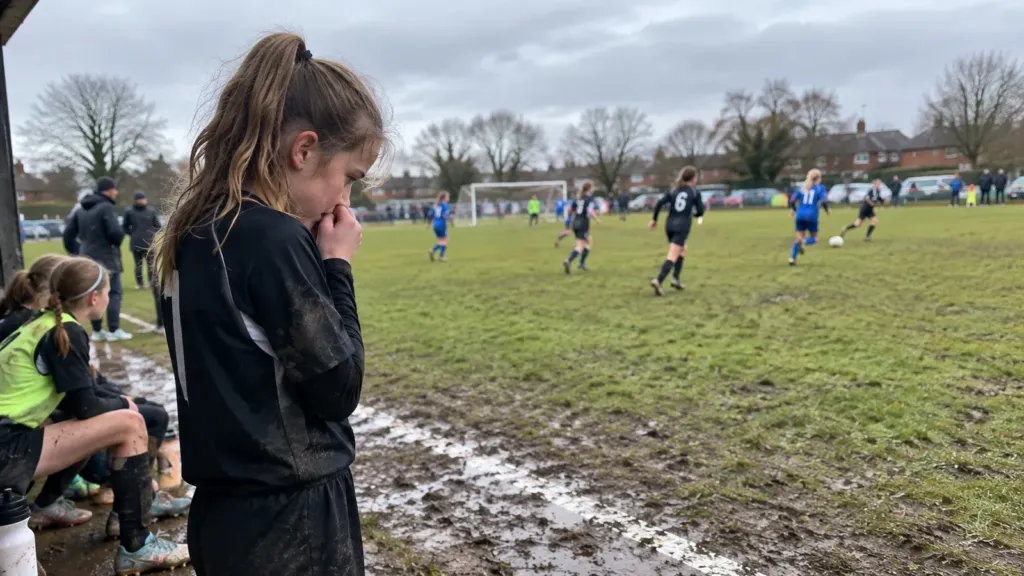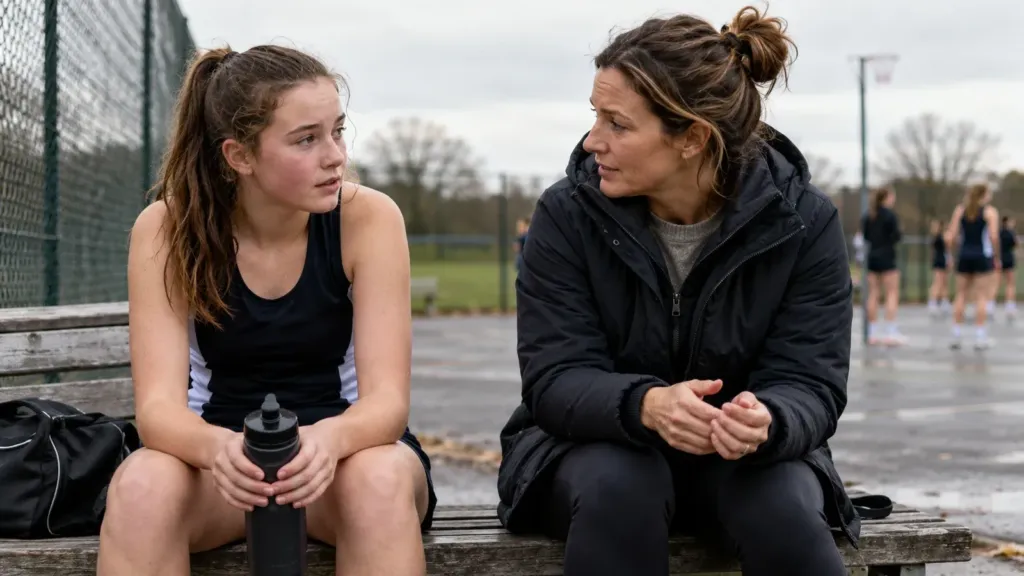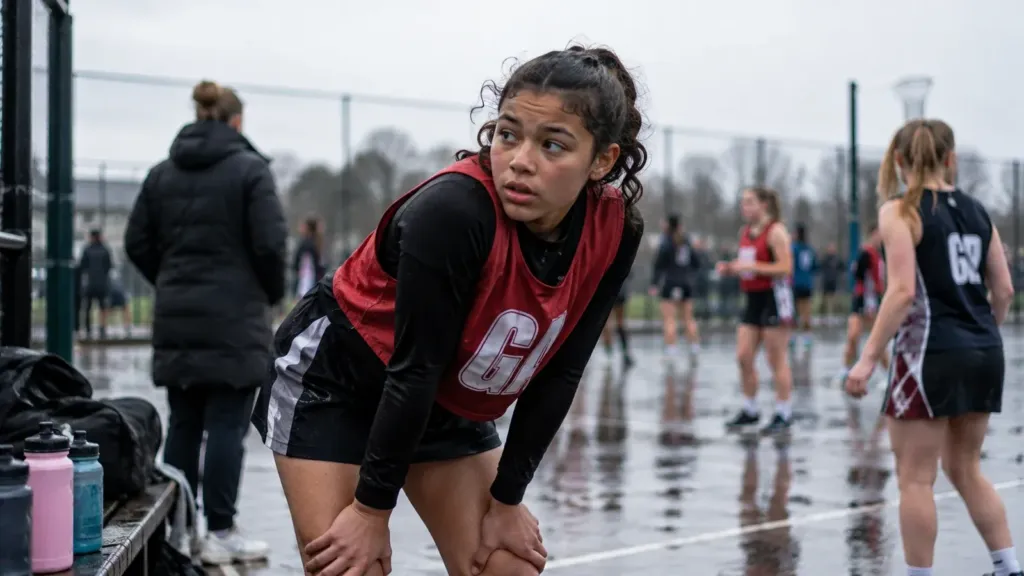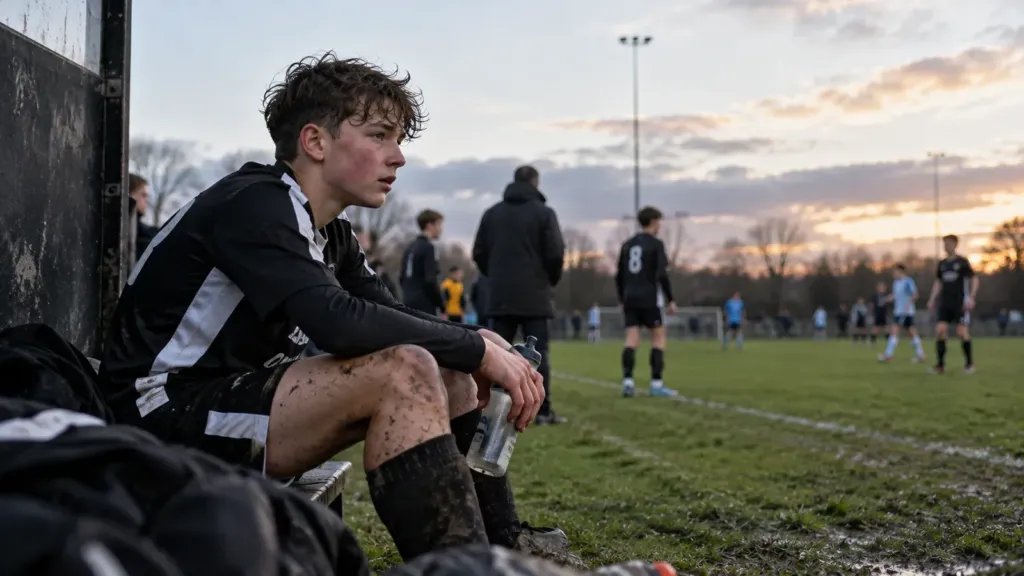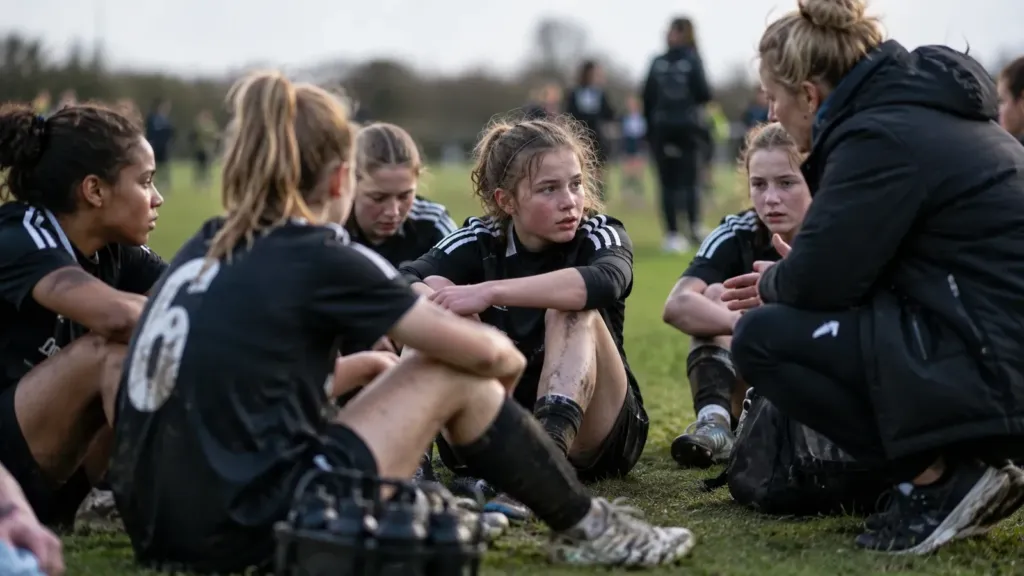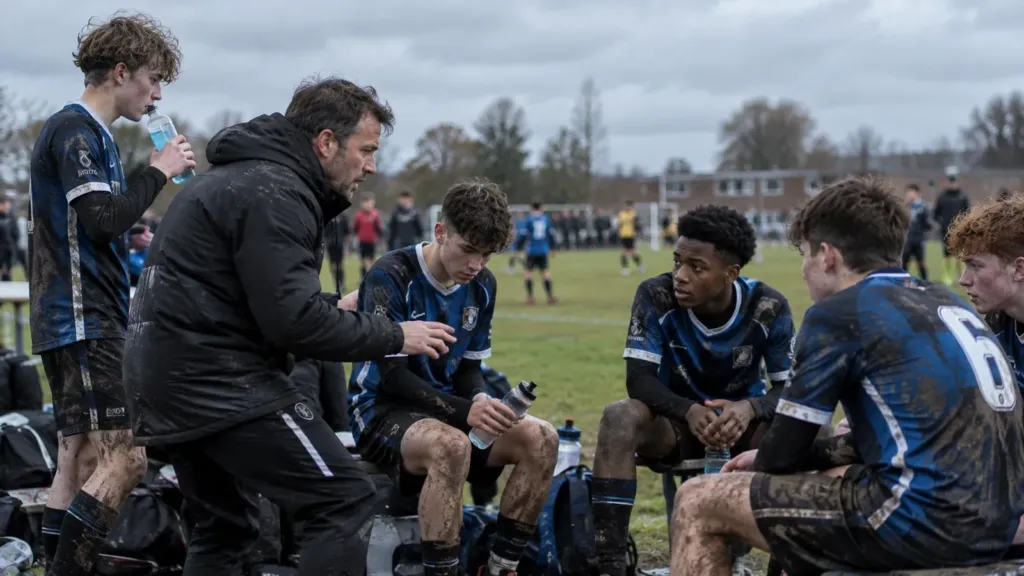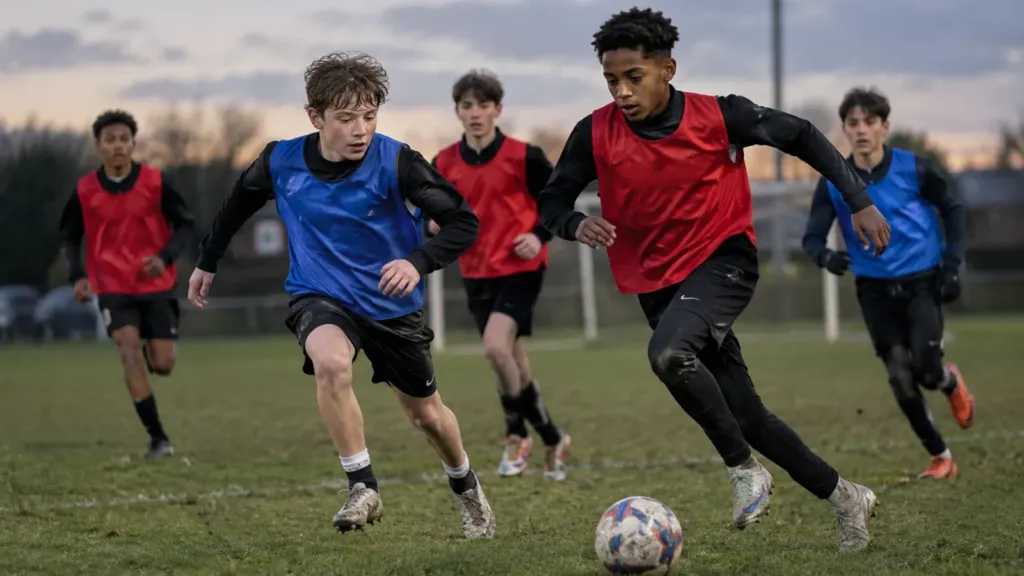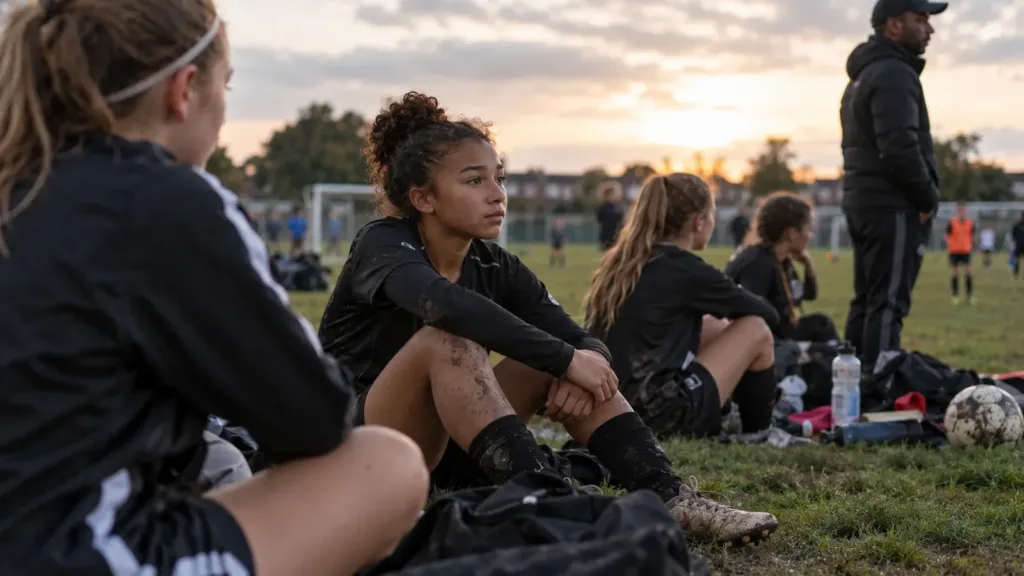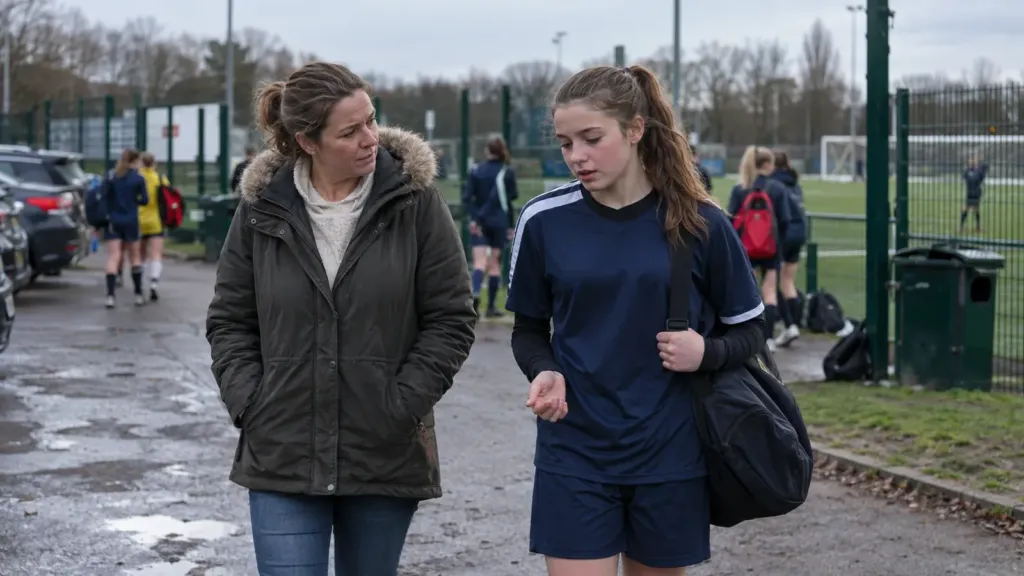



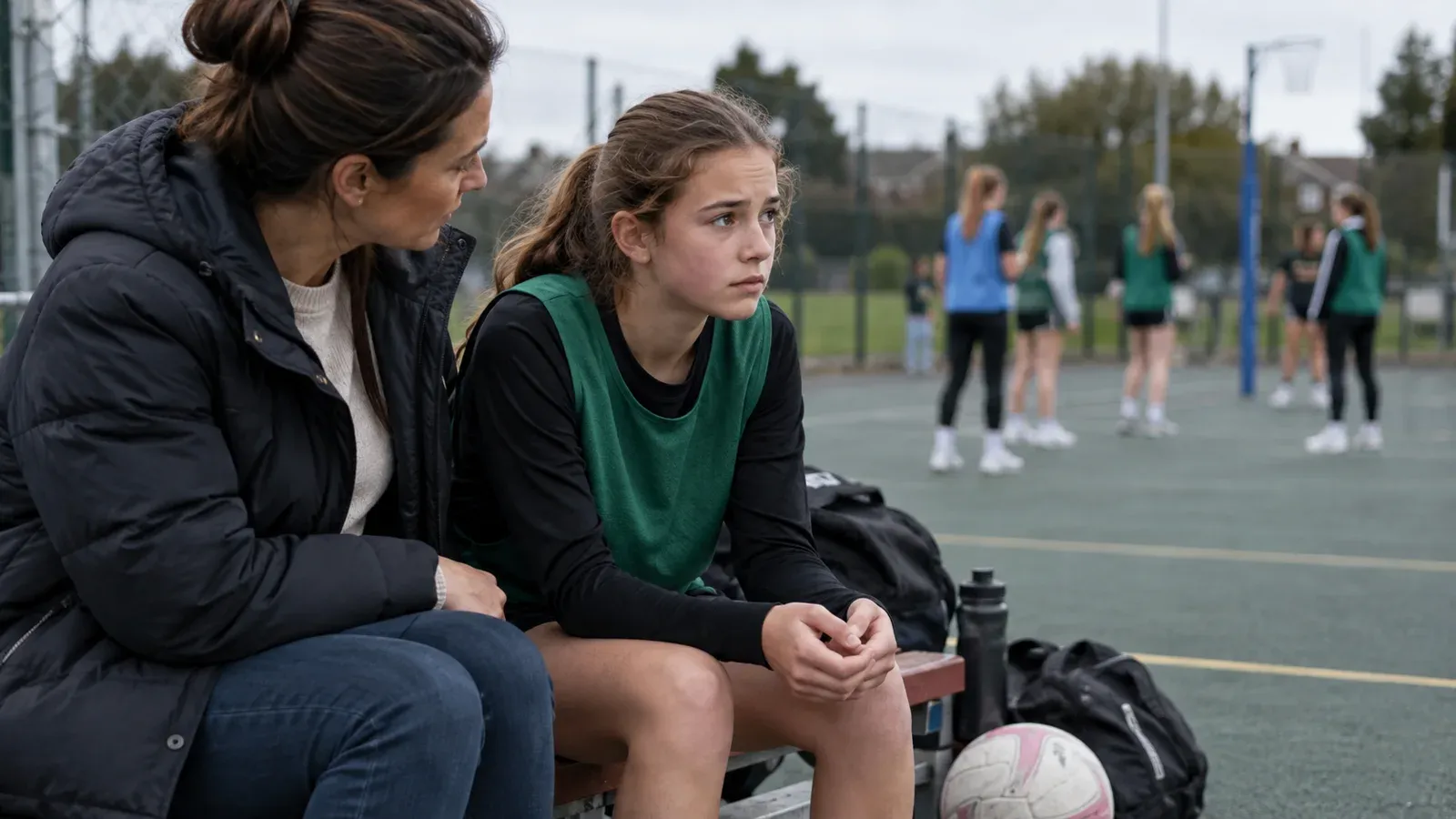

They were laughing with their teammates at training on Thursday. By Saturday morning, they are asking whether they really have to play.
It can be difficult to know what to say. You want to help, but telling them to relax rarely gets you very far.
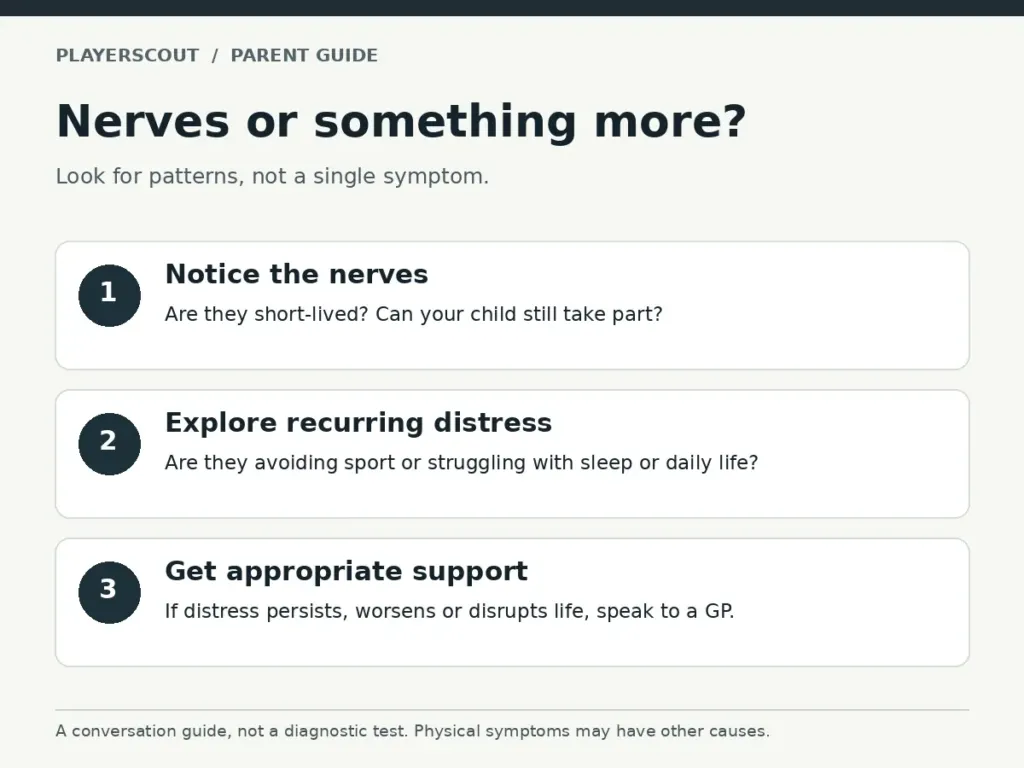
That doesn’t automatically mean they have an anxiety disorder. Some nerves are a normal part of competing. The important questions are how distressed your child feels, whether the worry is getting worse and whether it is affecting their enjoyment, participation or life outside sport.
Start with a question rather than a pep talk: “What is the bit you’re most worried about?” Listen to the answer before offering a solution. If the worry keeps returning, affects life outside sport or feels overwhelming, ask a healthcare professional for advice.
What’s the difference between competition nerves and performance anxiety?
A nervous player might notice a faster heartbeat, butterflies or worried thoughts before a big event, then settle once they get involved. Another player might feel so frightened of failing that they avoid competitions, become distressed for days beforehand or struggle to sleep.
There isn’t a single symptom that separates the two. The 2025 clinical review Sport-related performance anxiety in young athletes explains that the level of distress and disruption matters. Assessment belongs with an appropriately qualified clinician, not a parent checklist or a coach’s opinion.
Ask yourself whether the feelings are manageable, whether your child still wants to take part, and whether the worry is spreading beyond sport. Those observations can guide your next conversation, but they aren’t a diagnosis.
Signs your child may be struggling
You may notice repeated stomach aches before competitions, disrupted sleep, irritability, tearfulness, negative predictions, difficulty concentrating or attempts to avoid taking part. Some children become quiet; others become angry or clingy.
The NHS guidance on anxiety in children describes similar signs across childhood. But stomach aches, fatigue or changes in behaviour can have many causes. Don’t assume anxiety explains every physical symptom.
Look for changes from your child’s usual behaviour. A single difficult tournament tells you less than a pattern that keeps returning or worsening.
Why might a young player feel anxious about sport?
Different players worry about different things. One fears letting teammates down. Another worries about selection, public mistakes or an angry reaction from the touchline. A player returning from a difficult experience may be anxious about repeating it.
Sometimes the pressure comes from a parent. Sometimes it comes from a coach, teammates, selection, a previous injury or the player’s own expectations. And sometimes there isn’t an obvious cause. The aim is to understand what your child is experiencing, not to decide who is to blame before they’ve finished talking.
The first useful distinction is whether your child is worried about performing, worried about how adults will react, or worried about something unsafe in the sporting environment. Those situations need different responses.
For parents looking for help with ordinary match-day jitters, see our guide to nerves before competition. This article focuses on the harder question: what to do when your child’s worry becomes persistent, distressing or starts changing their relationship with sport.
A five-minute conversation that gets beyond “I’m nervous”
You don’t need a long conversation or a list of questions. Pick a quiet moment, ask one thing and give them time to answer. If they open up, you can go a little further.
“When does the worry start?” Is it the night before, on the journey, during warm-up or after a mistake? That tells you when support may be useful.
“What do you think might happen?” They might fear letting the team down, losing their place, being laughed at or disappointing you. Don’t tell them the fear is silly. Ask what makes that possibility feel important.
“What would you like me to do differently?” Your child may want fewer questions, no technical feedback from the sidelines or simply reassurance that the result won’t change how you feel about them.
“Is there anything happening at training or matches that doesn’t feel safe?” If they describe bullying, intimidation or inappropriate behaviour, take it seriously and follow the organisation’s safeguarding procedures rather than relying on a mindset exercise.
If your child doesn’t want to talk, don’t demand an answer. Let them know you’re available and return to the conversation at a calmer time. If they are persistently distressed, don’t wait for the perfect conversation before seeking professional advice.
What parents can do before the next competition
1. Choose a calm time to revisit the conversation
If your child has already explained what worries them, don’t make them repeat it. Agree a calm moment to discuss what you can change before the next competition.
Ask whether they want you to change anything about the journey, the touchline or the conversation afterwards. Keep the focus on your actions, not on another task for them.
2. Make the goal smaller than the result
Rather than “You need to play well today”, help them choose one controllable task. A netball player might focus on finding space for the next pass. A tennis player might focus on their preparation between points. A footballer might choose to scan before receiving the ball.
These are practical attention cues, not a treatment for an anxiety disorder. Don’t turn them into another standard your child feels judged against.
3. Agree what support actually helps
Some players want quiet on the journey. Others want music or a normal conversation. Ask whether they want encouragement, practical help or simply company.
Keep routines predictable where possible. The NHS advice for parents recommends listening, acknowledging feelings and using reassuring routines.
4. Check the sporting environment
If your child is frightened of being humiliated, shouted at or bullied, don’t treat that as a confidence problem they simply need to overcome. Take the concern seriously, document what they tell you and use the club’s safeguarding process where appropriate. NSPCC Sport’s guidance on supporting young people with anxiety explains the role of safeguarding leads and reporting concerns.
What to do when they feel anxious during a game
A player who is mildly nervous may find a short, familiar cue helpful: notice where the next pass is going, return to a ready position or concentrate on the next action. Practise the cue in training first. For more on this specific performance skill, see how to stop overthinking during competition.
Don’t force a child who is panicking or highly distressed to continue. Help them reach a safe, calm place, listen and seek appropriate support. Equally, don’t assume that stopping every activity indefinitely is the answer: if avoidance is becoming a pattern, a qualified professional can help plan a safe, gradual approach.
Avoid public analysis from the sidelines. Your child already has enough to process.
A simple support plan for the next match
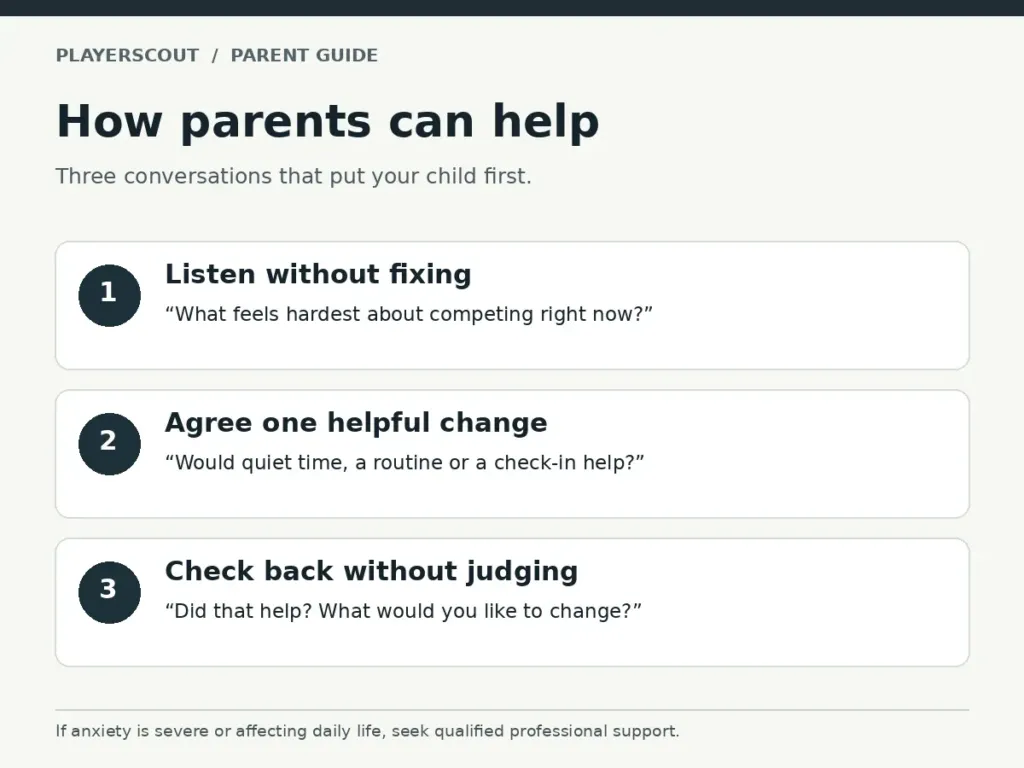
Use this as a conversation guide, not a test your child has to pass.
The day before: Ask whether they want to talk about the competition. Agree one thing you can control as a parent, such as keeping the journey calm or avoiding last-minute technical advice. Don’t promise they won’t feel nervous.
Before the start: Check what kind of support they want. If they already use a familiar preparation routine, let them follow it. Don’t introduce a complicated new technique at the gate.
During competition: Keep your reactions proportionate. If your child is managing ordinary nerves, avoid interrupting them with constant instructions. If they are highly distressed or feel unsafe, prioritise their wellbeing and appropriate support.
Afterwards: Offer connection before analysis. They may want a normal journey home, some quiet or a conversation later. Let their preference guide the timing.
Across several weeks: Notice whether your child’s distress, sleep, school life or willingness to participate is changing. If the problem persists or worsens, speak to a healthcare professional. This plan is not a substitute for assessment or treatment.
What to say after a difficult competition
You don’t need to solve everything in the car.
Try “Do you want to talk about it, or leave it for now?” If they want to talk, ask what felt hardest and what would help next time. If they don’t, let the conversation wait.
Don’t immediately explain what they did wrong, compare them with another player or insist they should have been more confident. Keep the relationship separate from the result. Players looking for their own next-action process can use our separate guide to recovering after a mistake.
When they’re ready, you can help them review one manageable next step. If they’re consistently frightened or distressed, the priority is support rather than another performance target.
When should you get professional help?
The NHS guidance on anxiety disorders in children recommends seeking help when anxiety persists, worsens, self-help isn’t working or it affects school, family life or friendships. A GP is a sensible starting point in the UK. Elsewhere, contact your child’s primary healthcare professional.
Tell them what you’ve noticed, when it happens, how long it’s been going on and how it affects sleep, school, relationships and sport. You can ask about an assessment and suitable support.
The 2025 clinical practice review discusses psychological interventions, including cognitive behavioural therapy, for clinically significant sport-related performance anxiety. Treatment decisions require qualified assessment.
If your child is in immediate danger, contact local emergency services. If urgent mental-health help is needed without immediate danger, use your local urgent mental-health service.
Can mental skills training help?
Mental skills such as preparing for competition, choosing an attention cue and responding to mistakes can be useful learning activities for developing players. The American Academy of Pediatrics’ guide to mental skills in sport discusses emotional regulation and other skills.
But a course, coach or self-help routine shouldn’t replace clinical assessment or treatment when a child is experiencing significant anxiety.
For ordinary nerves, practise a simple cue in training and see whether your child finds it helpful. For persistent or significant distress, prioritise qualified healthcare advice over performance exercises.
The most useful first step
Ask your child what competition feels like from their point of view. You might discover that the biggest problem isn’t the game itself but what they fear will happen if they get something wrong.
You don’t have to remove every nervous feeling. You can help your child feel heard, make the sporting environment safer and get professional support when the distress is more than ordinary nerves.
Was this helpful?

 9 min