




If your child is frightened of making mistakes in sport, start by making it safer to try, rather than telling them to be more confident. Listen to what they think will happen if they get something wrong. Then look at how adults respond, what the team environment rewards and whether your child still feels able to enjoy playing.
A child who passes the ball immediately, avoids taking a shot or refuses to try a new skill might be making a sensible decision in that moment. But if the reason is “Everyone will be angry if I mess up”, the problem deserves attention.
The key question is not simply whether your child dislikes mistakes. It is what they believe a mistake will cost them: a place in the team, approval from adults, respect from teammates or their own sense of being good enough. The support you offer should address that feared consequence, not just the error.
Why does my child worry so much about mistakes?
There isn’t one explanation. A player may be worried about disappointing a parent, losing their place, being criticised by a coach or hearing comments from teammates. Some put enormous pressure on themselves even when the adults around them are supportive. A 2026 survey of 678 higher-level youth players found that perceptions of a coach-created perfectionistic climate were associated with greater fear of failure and poorer wellbeing. That cross-sectional finding cannot establish that a particular coach caused a child’s fear. You can read the 2026 study of youth players for the research details.
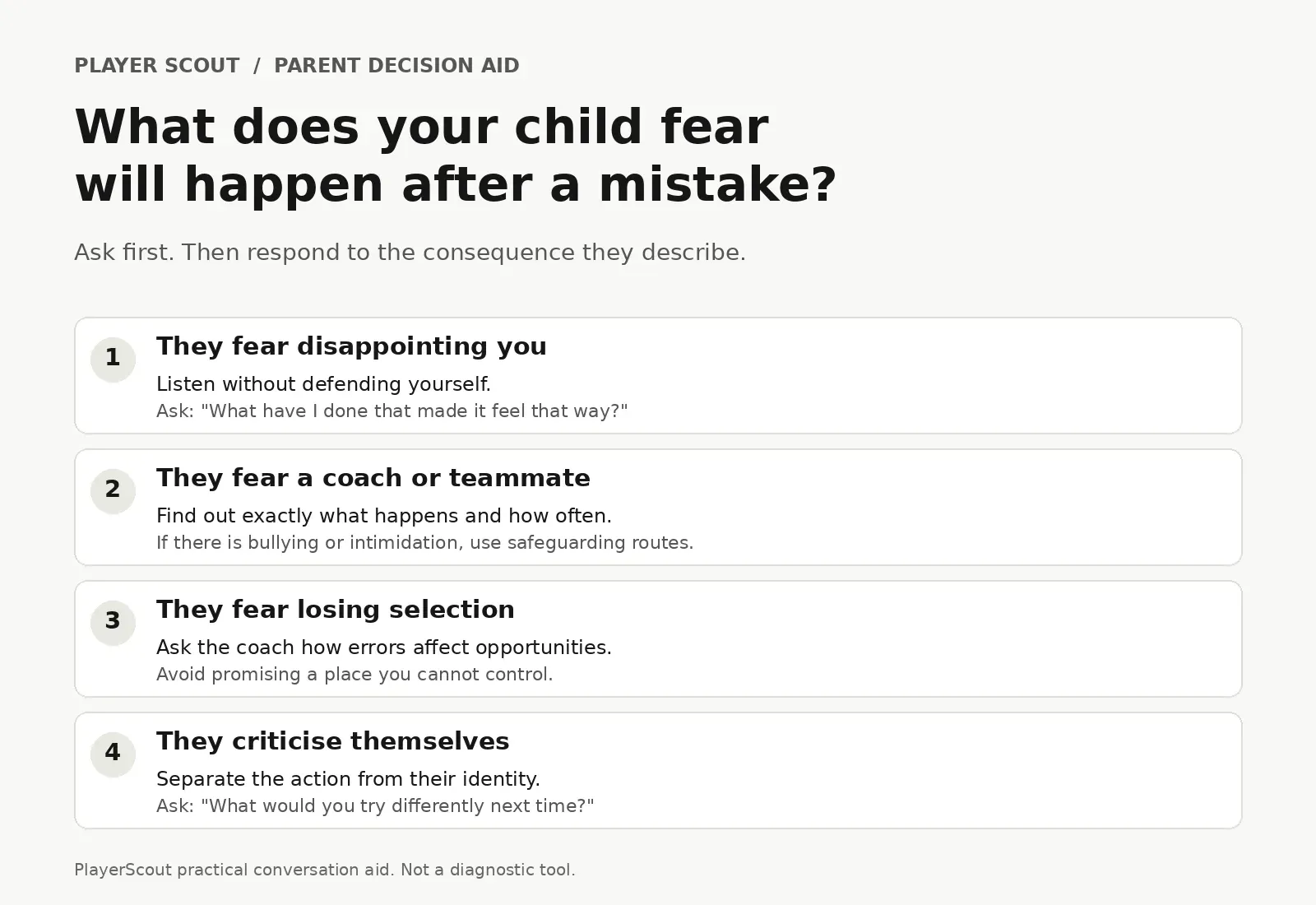
Ask what the mistake means to them. “What do you think would happen if you tried that and it didn’t work?” often tells you more than “Why didn’t you shoot?”
Don’t assume a quiet child isn’t affected. And don’t assume a visibly upset player has a clinical anxiety condition. Look for a pattern across training, competition and everyday life.
The difference between learning from a mistake and fearing one
A player who learns from mistakes can recognise what happened, make an adjustment and try again. A player who fears mistakes may spend the next few minutes thinking about the reaction, avoiding involvement or checking whether adults are disappointed.
You might notice them choosing only safe options, apologising repeatedly, asking for reassurance before every match or enjoying training much more than competition. These are prompts for a conversation, not a diagnostic checklist.
Fear can also be specific. A young gymnast might attempt a skill comfortably in practice but hesitate when people are watching. A footballer may stop asking for the ball after one misplaced pass. A tennis player might play cautiously after a double fault. The common question is whether attention has moved from the task to the consequences of getting it wrong.
What to say when your child is afraid of making a mistake
Start with curiosity. You don’t need a speech.
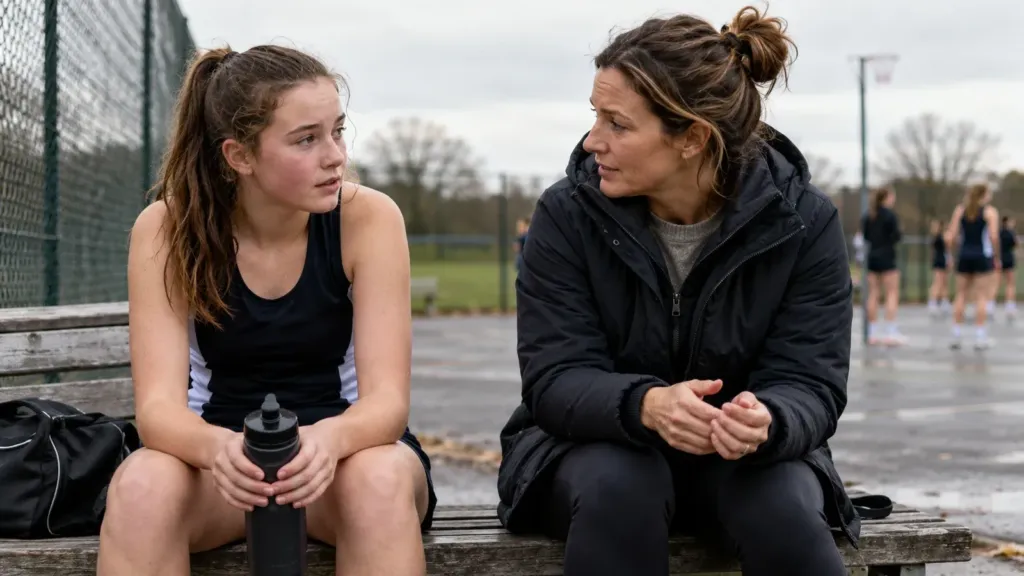
Try “What feels hardest about getting something wrong?” or “Is it the mistake itself, or what happens afterwards?”
If they say a coach gets angry, take that seriously without immediately deciding what happened. Ask what was said, how often it happens and how it makes them feel. If they say they don’t want to let you down, don’t rush to defend yourself. Ask what you’ve done that may have given them that impression.
Then be specific about your support. “You don’t have to play perfectly for me to enjoy watching you” is clearer than “Don’t worry.”
After a difficult match, give them a choice. “Would you rather talk about it now or leave it until later?” Some players want to unpack the moment immediately. Others need food, a journey home and some space first.
What parents can change this week
First, notice your own reaction to errors. A sharp intake of breath, a visible head shake or a running commentary can communicate more than a supportive conversation afterwards. You don’t have to pretend every decision was good. You can choose when and how to discuss it.
Second, change what you ask about. Instead of starting with the score, goals or selection, ask “Was there a moment you tried something you’d been practising?” A child who took a risk and failed can still have made progress.
Third, agree one small action with your child before the next session. It might be asking for the ball twice, attempting a new turn or speaking up after a mistake. Keep it within their control. Don’t turn the action into another test they must pass.
Fourth, ask what support they want from you on the touchline. One player may want encouragement. Another may prefer you to watch quietly. Agree it together, then respect the answer.
Finally, review the experience, not only the outcome. “You went for it even though you weren’t sure” recognises a choice. Avoid praising every error automatically. Children can usually tell when adults aren’t being genuine.
A seven-day observation and support plan
Day 1. Have one calm conversation away from the sports venue. Ask what your child fears will happen after a mistake. Listen without correcting their answer.
Day 2. Ask what you do on match day that helps, and what makes things harder. Choose one behaviour to change yourself.
Day 3. Invite your child to choose a small, realistic playing action they have been avoiding. It must be safe and suitable for their level.
Day 4. Practise the action in a lower-pressure setting if the coach and situation allow it. The goal is to attempt it, not to get it right every time.
Day 5. Agree a short response to an error, such as looking up, finding the next job and rejoining play. Let the player choose words that feel natural.
Day 6. During the next session or match, pay attention to their willingness to participate. Resist keeping a public tally of mistakes.
Day 7. Ask “Did anything feel different?” and “What would you like to keep doing?” If nothing changed, that isn’t failure. It may mean you need to understand the environment more carefully.
Use these seven days to notice patterns and make small changes, not to test whether your child has become confident. There is no evidence that this particular schedule treats fear of failure. If your child feels unsafe or distressed, do not wait seven days before seeking appropriate help.
When the coaching environment is part of the problem
Sometimes the problem is not the child’s reaction but what follows an error. If a coach mocks them, teammates repeatedly ridicule them or an adult threatens selection as punishment, another breathing technique will not fix that environment. The first job is to make participation safe.
Ask the coach how they help players learn after mistakes and how they balance correction with encouragement. Be factual and curious. A useful conversation might start “My child has become reluctant to try things in games. Can we talk about what you’re noticing?”
A coach can set high standards without humiliation. Constructive feedback explains what to change and gives the player a chance to try again. If you have concerns about bullying, intimidation or safeguarding, follow the club or organisation’s safeguarding process. The NSPCC Child Protection in Sport Unit explains how to report concerns. Don’t ask a child to manage unsafe adult behaviour on their own.
Help your child decide what to do after an error
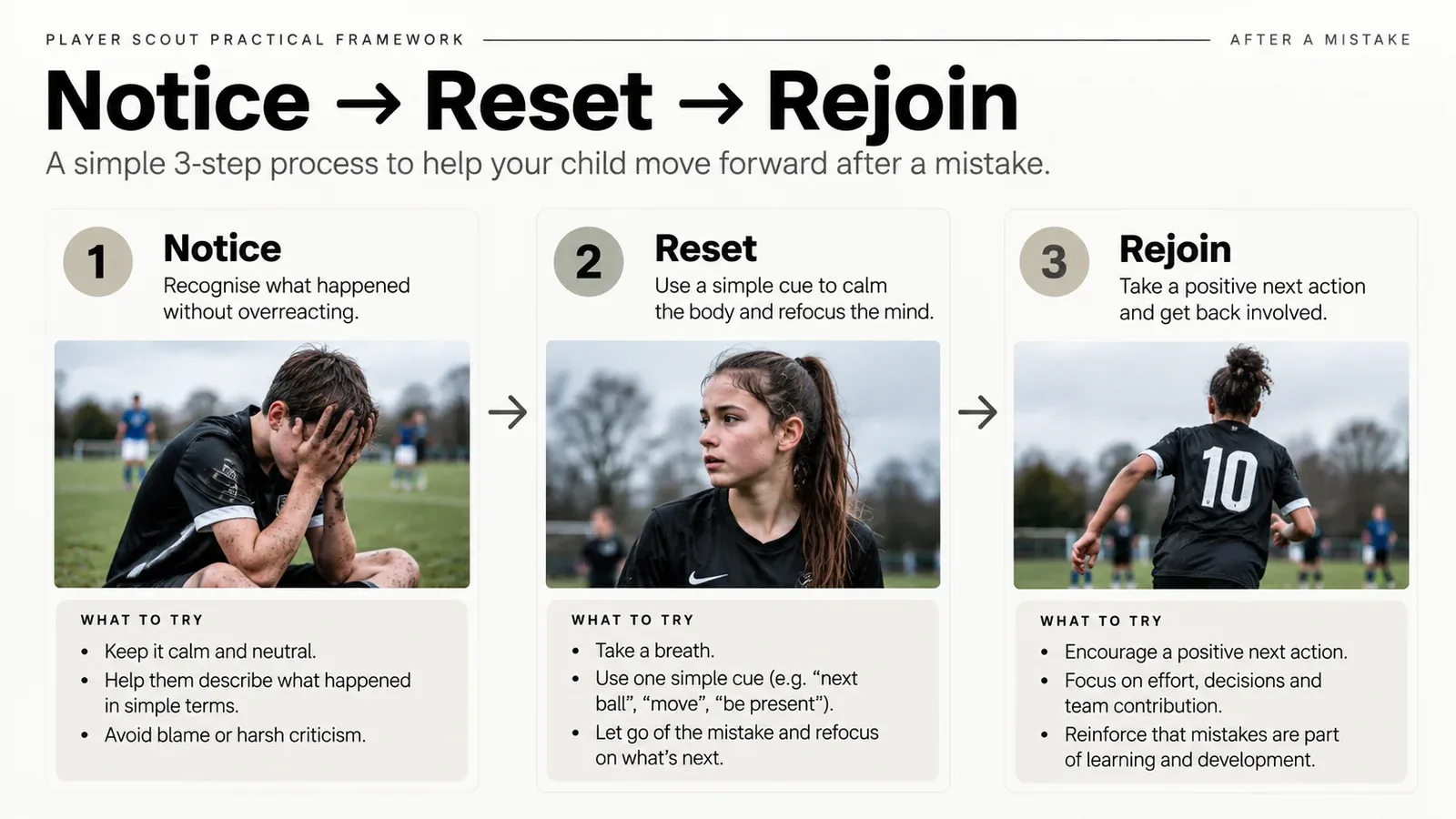
Agree a response with your child before the next game, rather than shouting instructions after an error. Three simple stages can help them describe a choice: notice what happened without turning it into a judgement about themselves; reset attention with a breath or familiar cue; then rejoin the next passage of play. This is a practical PlayerScout teaching framework, not a tested treatment.
In football, that might mean recovering position. In netball, offering for the next pass. In tennis, preparing for the next point. In swimming, returning attention to the next technical cue rather than replaying a poor start.
Practise the response when the stakes are low. After a training error, ask “What’s next?” and let the player answer. Don’t make it a ritual that interrupts every session.
For a player-facing guide on immediate recovery during competition, read our guide to recovering after a mistake in sport. This article focuses on what parents can change around the player.
What if my child keeps avoiding sport?
Take a sustained change in enjoyment seriously. Ask whether they still want to play, whether the problem is specific to one team or event and whether they feel safe. Sometimes reducing pressure, changing an environment or taking a break is more appropriate than adding another mental exercise.
If fear causes significant distress, affects sleep or school, leads to repeated avoidance, or persists despite supportive changes, speak with an appropriate qualified health professional. The NHS offers guidance for parents on anxiety in children and getting support. A GP can help families decide what support is needed. If a safeguarding concern exists, use the relevant safeguarding route promptly.
Mental skills training can help players practise attention, preparation and responses to setbacks. It isn’t a substitute for clinical mental health care or safeguarding action.
Where structured mental skills practice may fit
Once a player feels safe and wants to keep participating, you can help them practise what to do before pressure, during mistakes and afterwards. PlayerScout’s Player Mindset Program is an eight-week educational programme covering skills such as handling pressure, refocusing after mistakes and building confidence. You can explore the Player Mindset Program to see whether it’s suitable for your family.
You don’t need to buy a programme to begin. Start by listening, reducing unnecessary pressure and helping your child find one next action they can control.
The question worth asking after the next game isn’t “How many mistakes did you make?” It’s “Did you feel able to play?”
Was this helpful?

 10 min