


The first mistake is not always the one that causes the most damage.
A player loses possession, misses an easy chance, double-faults, gets beaten, drops a catch or makes the wrong tactical decision. The error lasts a moment, but the reaction to it can stay around much longer.
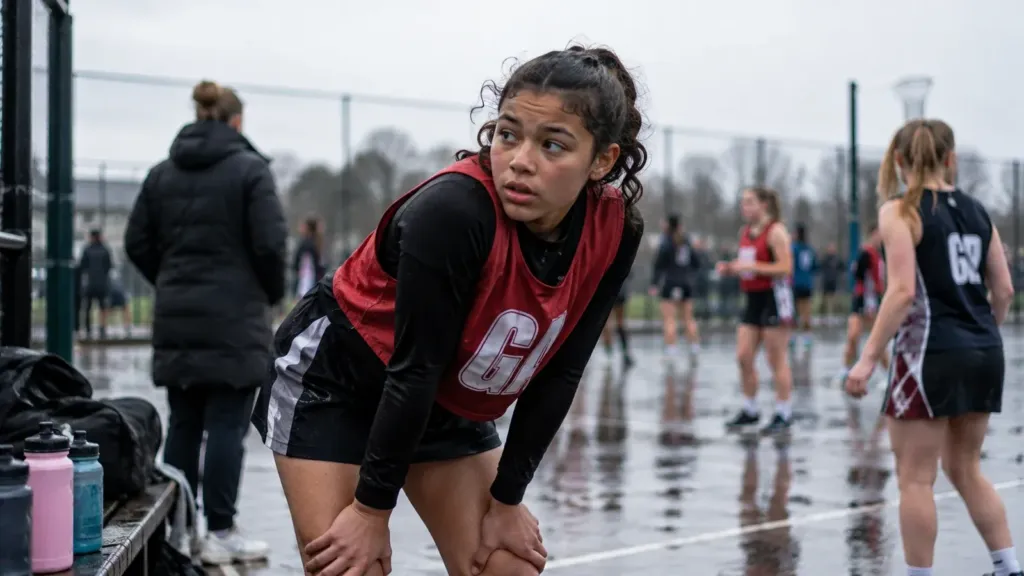
They look towards the coach. Their shoulders drop. They replay what happened. They rush the next action because they want to make up for it. Then another mistake arrives.
When I talk about recovering quickly from mistakes, I do not mean pretending the mistake did not matter. Some mistakes need correcting.
I mean stopping one error from taking more of the performance than it deserves.
The first few seconds afterwards are often where that starts.
The mistake has finished. Your reaction has not.
There are really two events happening.
First, there is the actual mistake. The pass went to the wrong player. The shot missed. The routine broke down. The opponent scored.
Then there is everything the player does with it.
They might become angry, embarrassed or frustrated. Their attention might stay on the previous action. They might start worrying about being substituted, losing, disappointing someone or making the same error again.
That second part often lasts much longer than the original mistake.
Research on emotion regulation in sport supports the broader point that emotions and the way players regulate them are related to sporting performance, although effects vary depending on the person, strategy and situation. A 2024 meta-analysis found an overall association between emotion regulation and athletic performance, while also showing substantial variation across studies.
For a young player, the practical lesson is simpler. Feeling frustrated after an error is normal. Staying mentally attached to it while the competition continues creates another problem to solve.
You do not need to feel better before you play the next moment
This is where players sometimes make recovery harder than necessary.
They think they need to get rid of the frustration first.
But the next point, possession, rally, routine or decision might arrive before the feeling has gone.
So the target changes.
You do not need to become happy about the mistake. You need to become available for what happens next.
A tennis player might still be annoyed about a double fault while preparing to serve again. A defender might still feel embarrassed after being beaten while needing to recover their position. A gymnast might still know the previous element was poor while preparing for the next part of the routine.
Emotional recovery and performance recovery do not always happen at exactly the same speed.
A player who understands that does not have to wait for perfect emotional control before competing again.
Watch what happens to the next action
One of the most useful ways to understand a player’s response to mistakes is to stop staring at the mistake itself.
Watch the next action.
After an error, does the player hide from involvement? Do they rush to make amends? Do they become unusually safe? Does their decision-making change? Do they stop communicating? Are they still looking towards the coach or parent when play has restarted?
That tells you more about their recovery than whether they looked annoyed for two seconds.
Some players show frustration clearly and then compete normally.
Others look completely calm but become hesitant for the next five minutes.
Body language gives you information, but it does not tell you everything happening inside the player. The behaviour that follows the mistake matters more.
Trying to make up for the mistake can create the next one
This reaction is easy to miss because it sometimes looks positive.
The player makes an error and immediately wants to fix it.
So they force the next pass. Take a shot that is not there. Sprint into a poor position. Try an unnecessarily difficult skill. Hit the next serve harder. Attack the next point too quickly.
They are not dwelling on the mistake in the obvious sense. They are still being controlled by it.
The previous action has changed the next decision.
I would want the player to understand that they do not owe the competition an instant repayment.
The next action only needs to be the right action for that moment.
Sometimes the best response to a big mistake is a completely ordinary next decision.
"Forget about it" is usually too vague
Adults say this with good intentions.
"Forget it."
"Move on."
"Don’t worry about it."
The player might agree completely and still have no idea how to do it.
Telling someone to move on describes the outcome you want. It does not give them a process for getting there.
A more useful reset gives the player something small and controllable to do.
They might take one deliberate breath during a break in play, physically release tension from their hands or shoulders, use one familiar cue, return to position or deliberately look towards the information needed for the next action.
The exact reset does not need to look the same across sports. A goalkeeper after conceding has different time available from a tennis player between points or a basketball player during live transition.
What matters is that the routine is short, familiar and ends by reconnecting the player with the competition.
A reset needs an end point
This is the part I think matters most.
A player can learn breathing techniques, cue words and physical routines, but the reset is incomplete if all it does is make them think about resetting.
At some point attention has to return outside themselves.
Where is my opponent?
What is the score?
Where is the space?
What does my role require now?
What is the next target?
What information do I need?
Article 7 on how to stop overthinking during competition goes deeper into this attentional side of performance. The overlap here is deliberate because mistakes often trigger overthinking, but the purpose of the reset is specific: close the previous action enough to deal with the next one.
Not every mistake should be ignored
There is a bad version of "next play" thinking where the player learns nothing.
They make the same error repeatedly and keep telling themselves to move on.
That is not resilience.
If the problem requires an immediate correction, make one.
A player keeps standing in the wrong position. A technical fault is causing repeated errors. The same tactical option is failing. Equipment needs adjusting. The opponent has found something the player needs to respond to.
Now there is useful information in the mistake.
The skill is separating correction from rumination.
Correction asks, "What needs changing?"
Rumination keeps circling the event without producing a useful response.
If the player knows the correction, apply it. If deeper analysis can wait, save it for afterwards.
Self-talk works better when it has a job
Players talk to themselves during competition whether anyone teaches them to or not.
The question is whether those words help.
After a mistake, self-talk often becomes judgemental: "That was awful", "What am I doing?", "I can’t do this today."
Trying to replace every negative thought with something unrealistically positive is not always convincing either. A player who has just made three errors does not necessarily believe "I’m playing amazingly."
Instructional or action-based language is often more useful because it gives attention somewhere to go.
"Next ball."
"Set early."
"Recover position."
"See the target."
"Stay with the rally."
A meta-analysis of self-talk interventions in sport found a positive overall effect on performance, with effects varying according to the task and how self-talk was used. The evidence does not tell us that one cue works for everybody. It supports practising self-talk as a skill rather than assuming whatever appears in the player’s head will be useful.
The best cue is often the one that helps the individual player do their next job.
Players need to practise making mistakes
This sounds strange until you look at how some training is organised.
Players practise technique.
They practise tactics.
They repeat skills.
But when a mistake happens, the coach immediately stops the exercise, explains the problem and gives them another attempt.
Competition does not always give them that luxury.
Sometimes the game continues.
Sometimes the opponent scores.
Sometimes everybody sees the error.
Sometimes there is no immediate second attempt.
So part of training should include learning what to do after something goes wrong.
That does not require creating a hostile environment or deliberately embarrassing players. It means occasionally allowing the natural consequences of training to continue long enough for the player to practise their response.
If they lose the ball, what happens next?
If they miss, how quickly do they re-engage?
If they fall behind, does their decision-making change?
If an official makes a decision they dislike, how long does it affect them?
Those moments are part of development too.
Adults can make mistakes feel bigger than they are
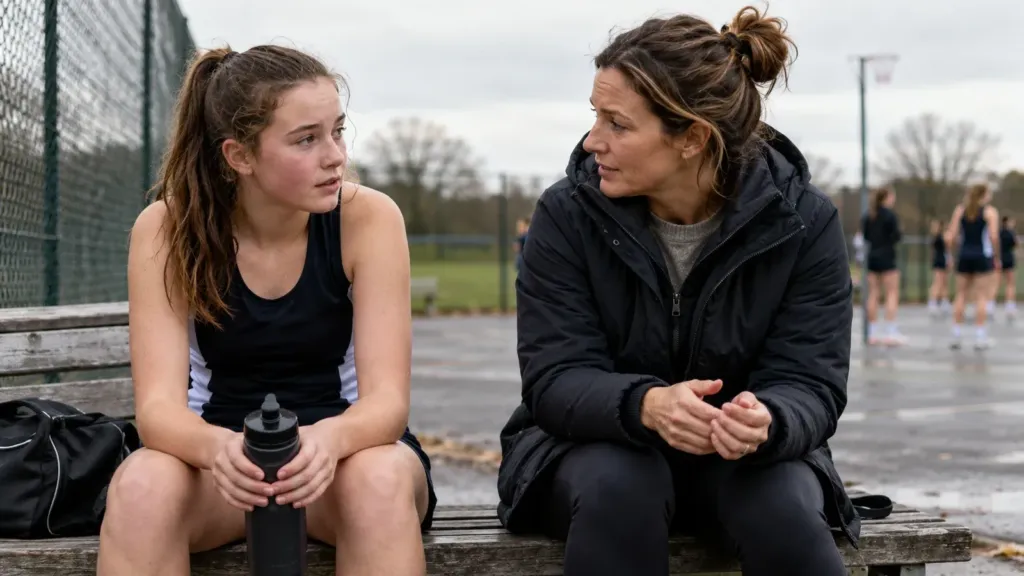
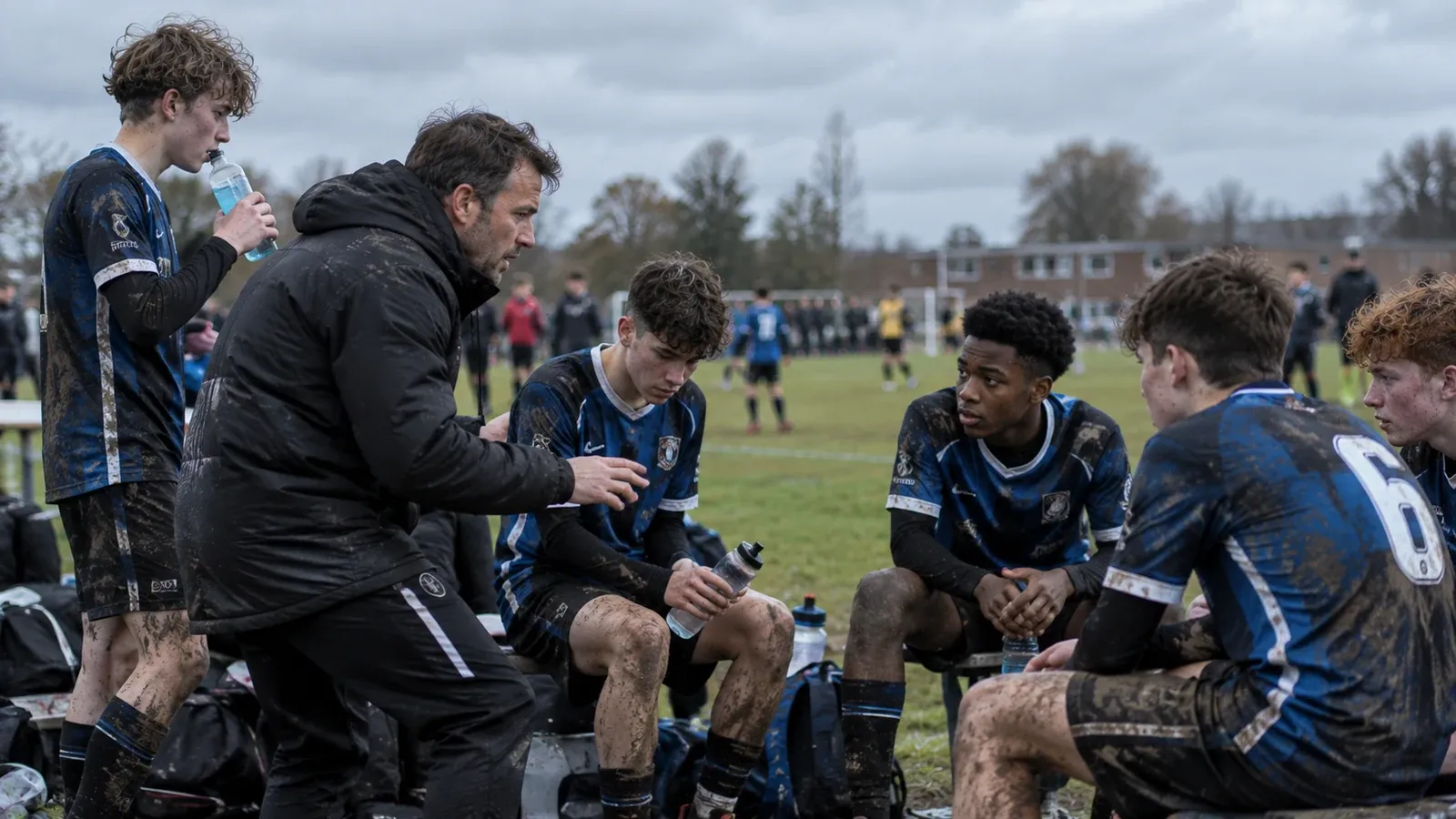
A young player makes an error and immediately looks towards the side.
That reaction is worth noticing.
They might be checking for tactical information. They might also be checking what the mistake means to the adult watching.
A shake of the head, raised arms, visible frustration or an immediate stream of instructions can add another layer to the error.
Now the player is dealing with the mistake and the reaction to it.
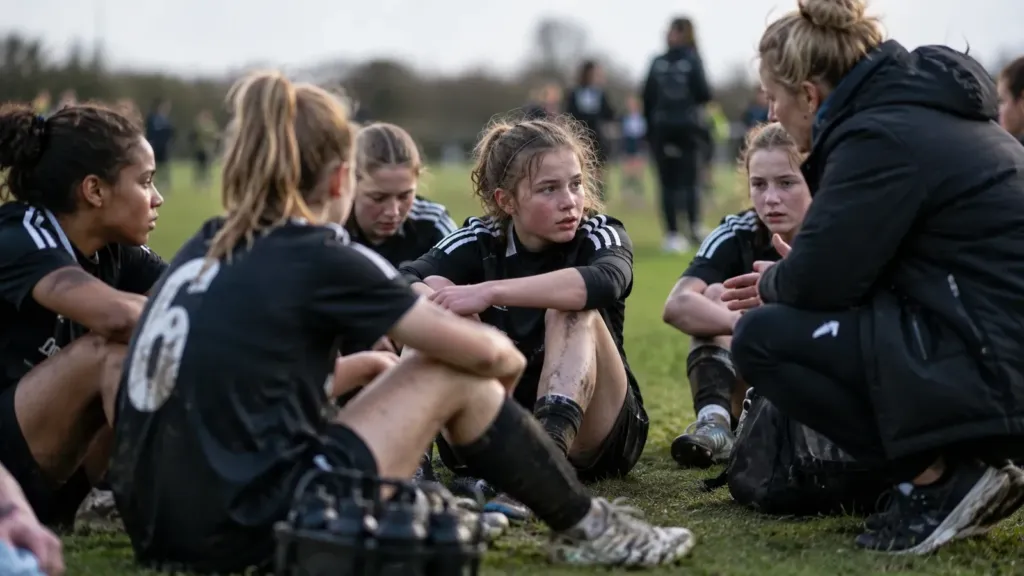
Coaches need to correct players. Parents will naturally have emotions while watching. Nobody needs to sit expressionless.
But if a player becomes frightened of the response to mistakes, playing freely becomes harder.
Research into motivational climate in youth sport consistently distinguishes more mastery or task-oriented environments, where effort, learning and improvement are emphasised, from ego-oriented environments centred more heavily on comparison and normative success. A systematic review of motivational climate in youth sport found task-involving climates were generally associated with more adaptive outcomes, although much of the evidence was observational and does not justify blaming a single adult behaviour for a player’s response.
The practical point is not that mistakes should receive no feedback.
It is that correction and threat are not the same thing.
Some mistakes need longer than five seconds
There are errors a player resets from quickly.
There are others that stay with them.
A mistake costs the team a final. A gymnast falls during an important routine. A player misses the deciding attempt. An individual competitor makes one error after months of preparation and the event is over.
"Next play" advice has limits when there is no next play.
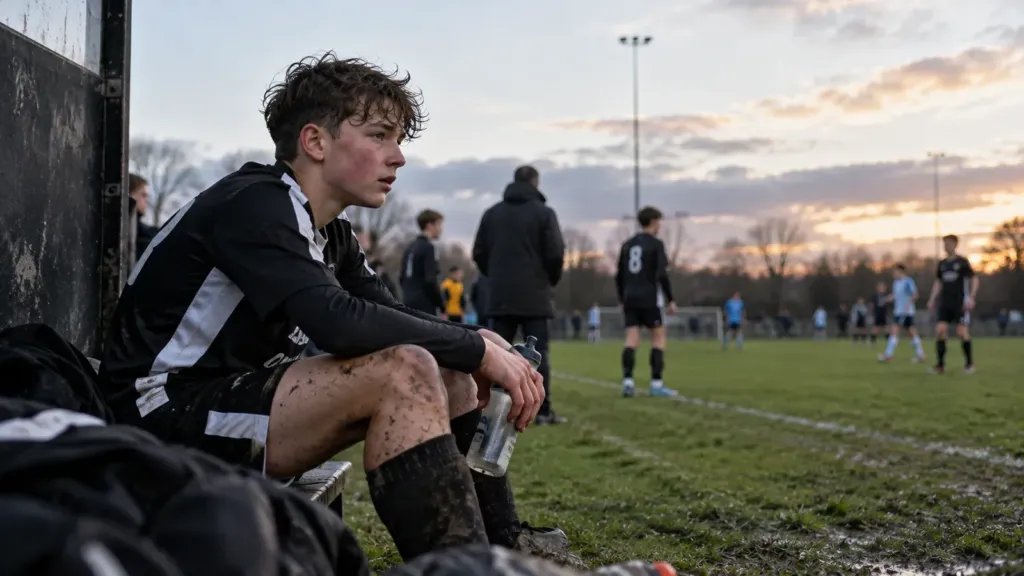
Now the player might need time to be disappointed.
That is not poor mentality.
The immediate competition reset and the later emotional processing are different jobs.
Once the event has finished, there is room to understand what happened, take useful information from it and decide what needs work. There is also room for the player to be upset without somebody immediately turning the experience into a lesson.
Not every difficult sporting moment needs to be fixed on the journey home.
The post-competition review should separate the mistake from the player
This is especially important with developing players.
"There were two decisions today we need to look at" is different from "You always panic under pressure."
One describes behaviour that can be reviewed.
The other starts turning a moment into an identity.
The same applies to the player’s own language.
"I rushed that decision" gives them somewhere to go.
"I’m terrible under pressure" is much harder to work with.
Good review gets specific. What happened? What did the player notice? What did they decide? What other option was available? Is this something that needs training?
Then stop.
You do not need to make a young player relive every mistake to prove they have learned from it.
Build a mistake routine before you need one
I would want the player to decide this in training, not in the middle of their biggest competition.
Keep the routine short enough to use.
For example, the player might notice the reaction, use one familiar physical or breathing reset, then identify the next job. In another sport, the reset might simply be turning away from the previous action, returning to position and finding the next piece of information.
Practise it after real errors in training.
Over time, the player starts recognising the moment earlier.
They still get annoyed.
They still care.
Some mistakes still hurt.
But the gap between the error and being properly involved again starts getting shorter.
That is the recovery I would measure.
Not whether the player looked completely unbothered, but how quickly they became useful to the competition again.
I don’t want players judging their recovery by whether they looked completely unbothered. I’d measure how quickly they became useful to the competition again.Grantley Baugh, Founder of PlayerScout
Was this helpful?
 9 min