



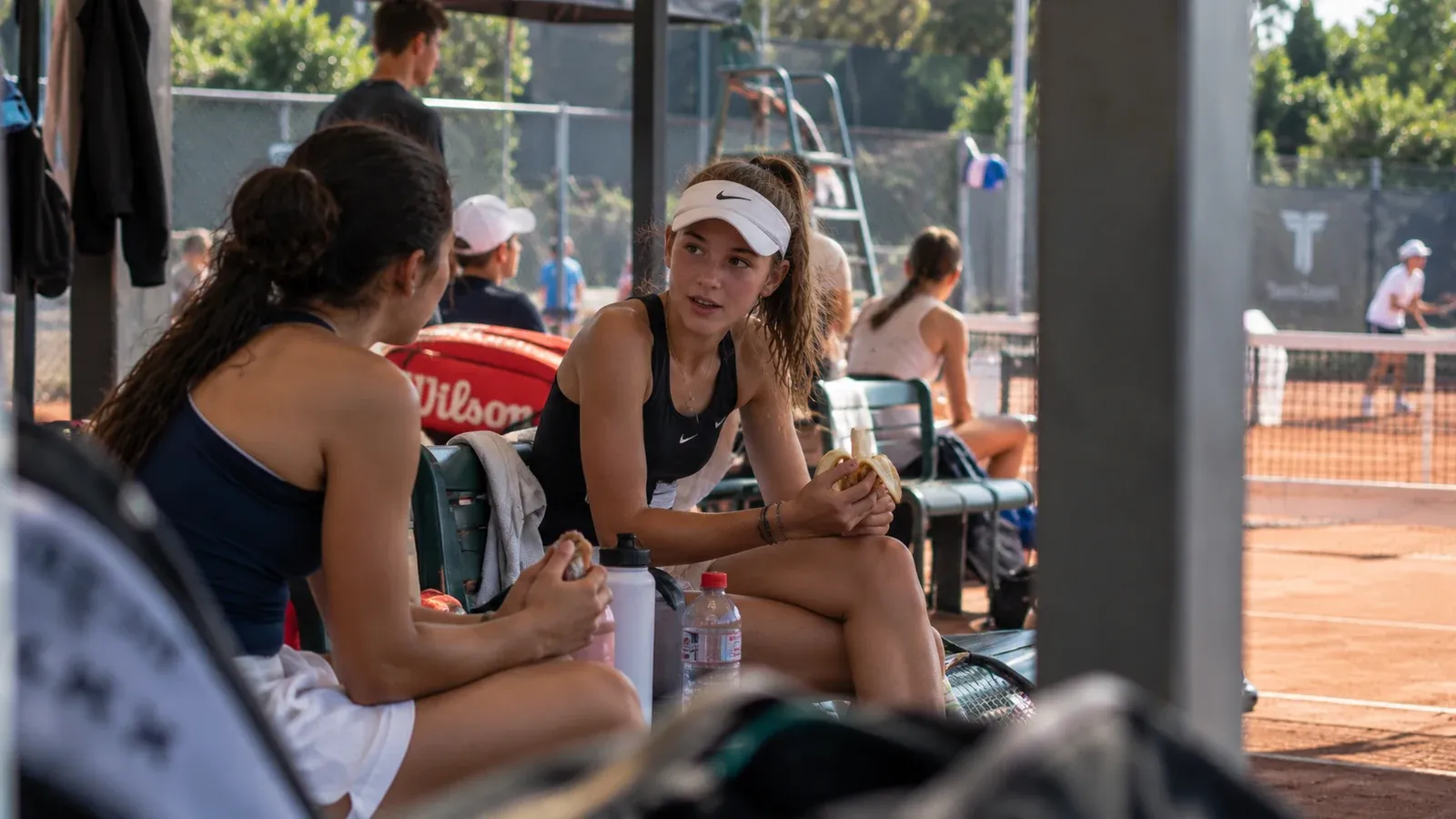

Competition-day food should help a young player arrive with enough energy, stay fuelled for however long the day lasts, and recover between events when needed.
For most players, that means normal familiar food.
A proper breakfast or first meal.
A carbohydrate-rich meal before competition.
Smaller familiar snacks when useful.
Regular fluid.
Food afterwards if they have finished, or between events if they have to compete again.
The difficult part is rarely knowing whether bananas, rice or sandwiches are “good”.
The difficult part is fitting food around the day.
Competition might start at 8am or 7pm. A tennis match gets delayed. A swimming programme runs late. A combat-sport weigh-in changes when a player eats. A hockey tournament means several matches. A basketball player travels for two hours before the first game.
So I would not build a competition-day plan around a perfect menu.
I would build it around the schedule.
Start with when the player actually competes
Take a sheet of paper and write down the day.
When do they wake up?
When do they leave home?
When does competition start?
How long is the journey?
How long will the warm-up take?
Are there several matches, races, bouts or events?
How much time sits between them?
When will normal food be available?
Once you know that, the eating plan becomes much easier.
An 8am start might mean a useful evening meal the night before, followed by a familiar breakfast after waking.
A 2pm start leaves room for breakfast and lunch.
A 7pm start means the player needs to eat properly through most of the day before they even reach the venue.
This sounds obvious, but late competition often catches players out.
They treat the morning like a normal day, eat a small lunch, travel to the venue and suddenly realise they have not eaten properly for five hours.
The competition meal cannot always repair everything that happened before it.
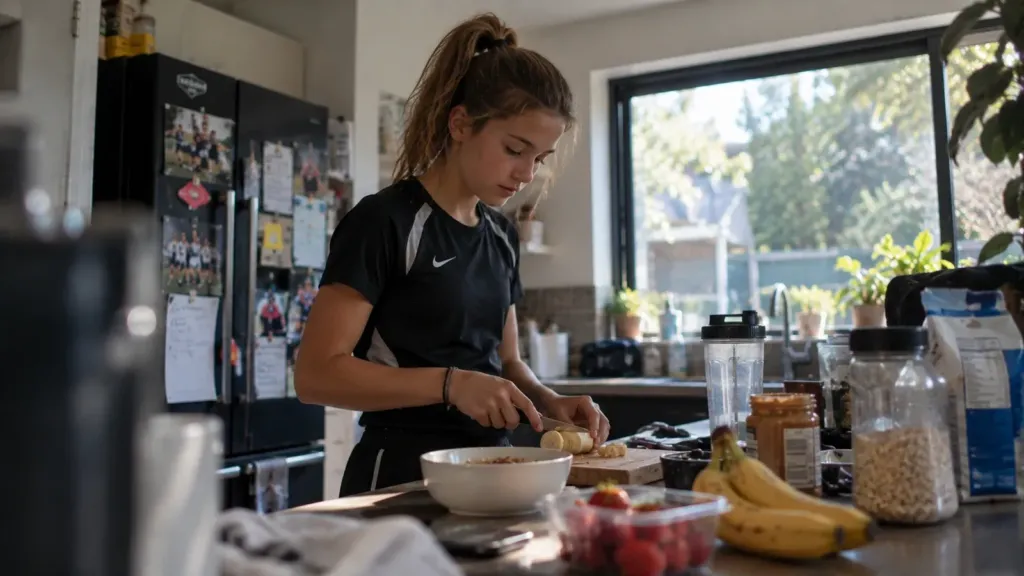
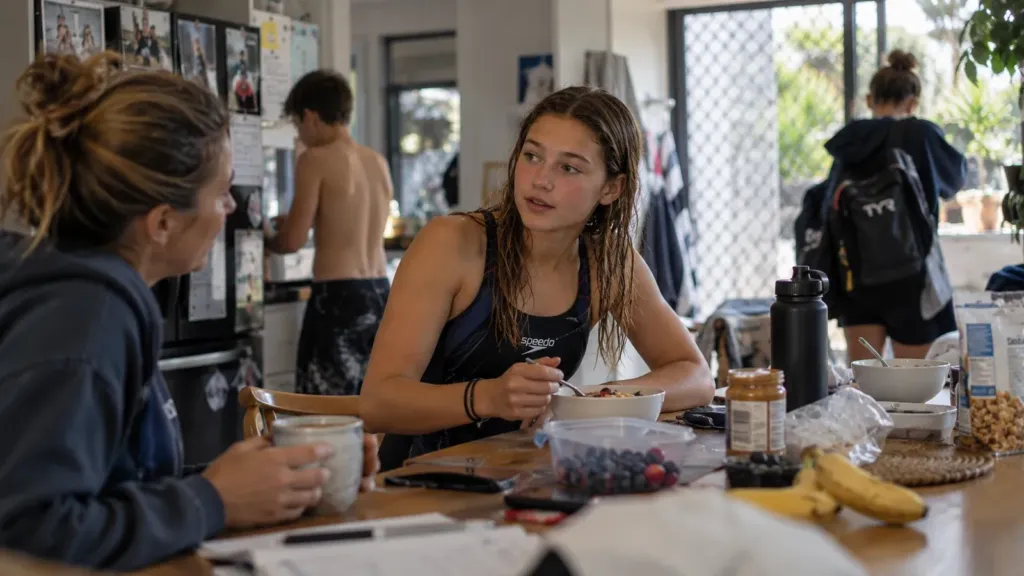
Breakfast depends on the start time
There is no special competition breakfast every player needs to eat.
If the event is later in the day, breakfast can look much like the player’s normal breakfast.
Porridge with fruit and yoghurt.
Eggs on toast with fruit.
Cereal with milk and a banana.
Toast or a bagel with yoghurt.
Whatever works for the player, provides useful energy and has already been tested.
If competition starts early, appetite and time become bigger problems.
I would rather see a player eat a smaller familiar breakfast they tolerate than force down a huge meal because somebody told them breakfast is the most important meal of the day.
The evening before also matters more when the morning is short.
Competition day is easier when you stop treating every meal as an isolated event.
The main pre-competition meal has a simple job
The main meal before competition should provide useful energy without leaving the player feeling heavy when they begin.
Carbohydrate usually deserves a clear place because it provides an important fuel source for higher-intensity exercise.
Rice, pasta, potatoes, bread, wraps, oats, cereal and fruit are all normal ways of getting it.
Add some protein and choose foods the player already knows they tolerate.
For example:
Rice with chicken and vegetables.
Pasta with a simple tomato-based sauce and a protein source.
A jacket potato with tuna or beans.
A sandwich or wrap with fruit and yoghurt.
Porridge with banana and yoghurt for an earlier event.
There is no advantage in making the meal more complicated because competition is important.
Our guide to what a young player should eat before competition goes further into meal timing, digestion and what to do when nerves affect appetite.
Do not keep feeding a player because competition feels important
This happens more than people realise.
Breakfast.
Then a snack.
Then the pre-competition meal.
Then another snack in the car.
Then a banana because everyone else has one.
Then a sports drink.
The player starts warming up feeling as if they have spent the entire morning eating.
More fuel is not automatically better.
If the player has eaten properly and is not hungry, they do not need to keep adding food because the event feels important.
The plan should provide enough energy while allowing them to feel comfortable.
That takes some trial and error.
You learn it through training and lower-pressure competition, not by introducing five new foods on the biggest day of the season.
Nerves often change what the player will eat
Parents sometimes prepare exactly what was planned, then competition morning arrives and the player says they cannot eat it.
That does not necessarily mean the plan was poor.
Nerves change appetite.
Some players feel hungry when anxious. Others lose interest in food completely. Some feel sick or get a nervous stomach.
If this happens regularly, build it into the plan.
A smaller meal might work.
A player might tolerate porridge better than a large solid breakfast.
Yoghurt, cereal, toast, fruit or a smoothie might feel easier for some players.
The answer is not to keep forcing food until the plate is empty.
The aim is to find a routine the player tolerates when competition feels different from training.
Pack for the day you might have, not only the timetable you were given
This is one of the easiest competition-day improvements.
Do not assume the venue will run exactly to schedule.
And do not assume suitable food will be available when you need it.
Bring enough food and fluid to deal with a delay.
That might include:
Sandwiches or wraps.
Bananas or other easy fruit.
Bagels.
Yoghurt if it can be kept safely chilled.
Cereal or oat-based snacks.
Simple rice or pasta dishes if storage is appropriate.
Water.
Other familiar foods the player already uses around sport.
The exact foods will vary between countries, cultures and families.
The principle travels well.
You want food that is familiar, practical to carry and suitable for the gaps in the day.
A competition bag should solve predictable problems before they become problems.
Eating between events depends on how much time you have
This is where competition-day nutrition becomes different from eating before one match.
Suppose a player finishes one event and has another in four hours.
There is time for something more substantial.
Now suppose the gap is 45 minutes.
A large meal makes much less sense.
The shorter the gap, the more I would favour smaller, familiar foods that provide carbohydrate without leaving the player uncomfortably full.
A banana.
A simple sandwich.
A bagel.
Fruit.
A cereal-based snack.
A drink containing carbohydrate might have a role in longer or demanding competition settings where eating solid food is difficult.
With more time available, the player can eat a proper meal or a larger snack.
This is not about following one universal tournament menu.
Look at the clock, then decide what the player has time to eat and digest.
Recovery starts before the day is over when another event is coming
A player finishes their first match at 11am.
Their next one is at 3pm.
Technically they are recovering from competition, but they are also preparing for the next one.
That changes the priority.
They need to replace some of the carbohydrate and fluid used in the first event while giving themselves enough time to feel comfortable before the next.
This is where what players should eat after training overlaps with competition nutrition, although the turnaround between events often makes timing more important.
If another demanding event follows soon, do not wait until the entire competition day is finished before thinking about recovery.
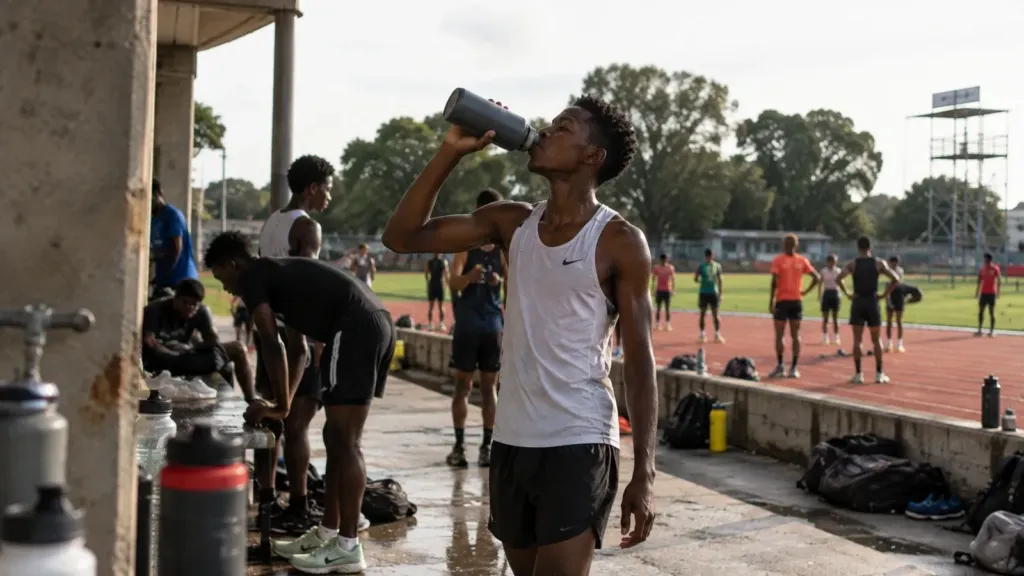
Hydration is a day-long job
A player who drinks very little all morning and then starts drinking heavily during the warm-up has left the job late.
Fluid should be available through the day.
Sports Dietitians Australia notes that adolescent players have individual fluid needs and should have access to enough fluid before, during and after sport.
How much a player needs changes with the environment and the sport.
Heat matters.
Humidity matters.
Clothing and protective equipment matter.
Duration matters.
Individual sweat rate matters.
A player competing outdoors in hot weather for several hours faces a different problem from someone doing a short indoor event in a cool venue.
Water will cover many normal situations.
Longer activity, heavy sweating, hot conditions or repeated competition might require more thought around fluid and electrolytes.
Our guide to hydration for young players explains those decisions in more detail.
Sports drinks are not the same as energy drinks
This distinction is worth teaching young players.
A sports drink is generally designed to provide fluid, carbohydrate and electrolytes.
An energy drink is usually marketed around stimulants, often including caffeine.
They are not interchangeable.
Sports drinks have specific uses in sport, particularly when exercise is prolonged, carbohydrate intake during activity is useful or replacing fluid and electrolytes becomes more demanding.
That does not mean every 45-minute youth competition needs one.
For most normal situations, water and food remain the starting point.
Caffeinated energy drinks are a different matter. Sports Dietitians Australia’s adolescent position statement recommends that caffeine use in young players should be approached carefully and says energy drinks are not recommended around sporting activities.
A brightly coloured bottle with “energy” written on it is not automatically sports nutrition.
Most young players do not need gels
Energy gels make sense in some endurance settings because they provide concentrated carbohydrate in a form that is easy to carry and consume.
That does not make them a standard requirement for youth sport.
If a young player has enough opportunities to eat normal food and their event does not create a strong need for carbohydrate during exercise, there is little reason to make gels part of the routine.
They also need testing before competition. New concentrated carbohydrate products sometimes cause stomach problems.
This fits a wider principle.
Do not copy the visible nutrition habits of adult endurance or professional players without understanding the reason behind them.
The International Olympic Committee’s consensus on sports supplements makes the same broader point about performance products: their usefulness depends on the specific situation, only a limited number have strong evidence for performance benefits, and products should be properly assessed rather than added automatically.
The venue matters more than nutrition plans admit
A neat nutrition plan is easy to write at home.
Then you arrive at a community sports ground.
There is nowhere to refrigerate food.
The only food outlet sells chips and sweets.
The event is running 90 minutes late.
The player leaves their lunch in the car.
Or you are at an indoor venue where food is not allowed beside the competition area.
This is normal youth sport.
The plan needs to survive it.
Think about food safety.
Use an insulated bag where needed.
Bring more water if access at the venue is uncertain.
Pack foods that tolerate travel.
Know where the player is allowed to eat.
If you are travelling internationally or staying overnight, check what will be available before you arrive.
A theoretically perfect meal that the player cannot store, buy or eat is not a useful plan.
Do not turn competition day into a nutrition exam
Young players already have enough to think about.
They should not be standing beside the court, track, pitch or pool worrying because they ate their banana 20 minutes later than planned.
A competition-day routine should reduce decisions.
The player knows roughly when they will eat.
They know which foods work.
Their bag is packed.
They have fluid.
There is something available if the event runs late.
If the schedule changes, they know how to adjust.
That is the level of understanding I would want to build.
Not dependence on a parent handing over exactly the right food at exactly the right minute.
After the final event, the day is not finished
Once competition is over, the job changes again.
Now the player needs to recover.
If they are eating a normal meal soon, that might cover most of what is needed.
If there is a long journey home, having something available after the event makes sense.
And if they compete again the next morning, recovery becomes part of preparation for tomorrow.
This is where competition-day nutrition stops being a collection of separate meals.
Dinner the night before affects the morning.
Breakfast affects the first event.
What happens between events affects the next one.
What happens after the final event affects recovery.
I would rather a young player understand that flow than memorise a list of “performance foods”.
A good competition-day plan is one the player already knows, the family can manage and the schedule does not easily break.
I would not build a competition-day plan around a perfect menu. I would build it around the schedule.Grantley Baugh, Founder of PlayerScout
Was this helpful?
 11 min