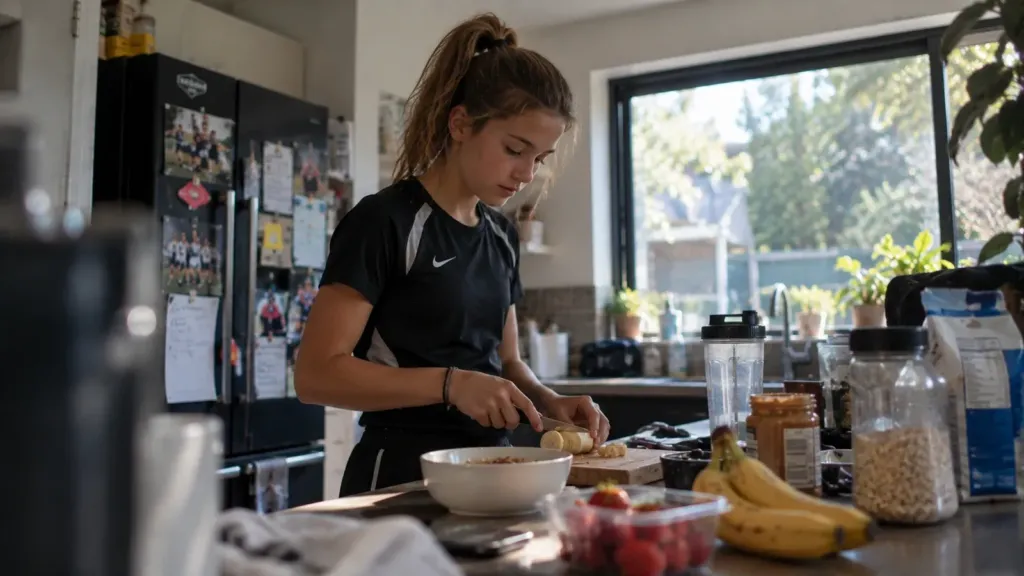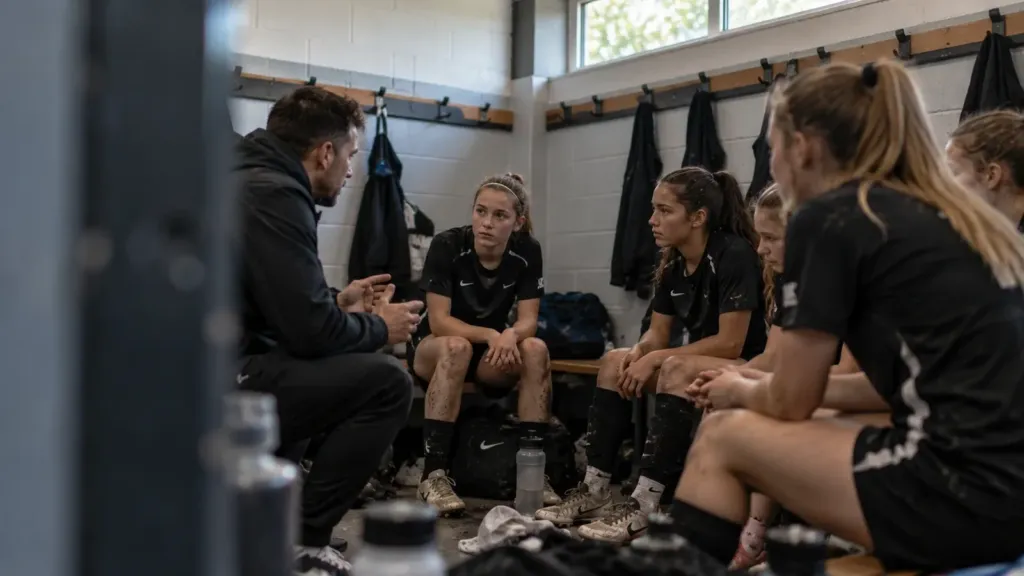




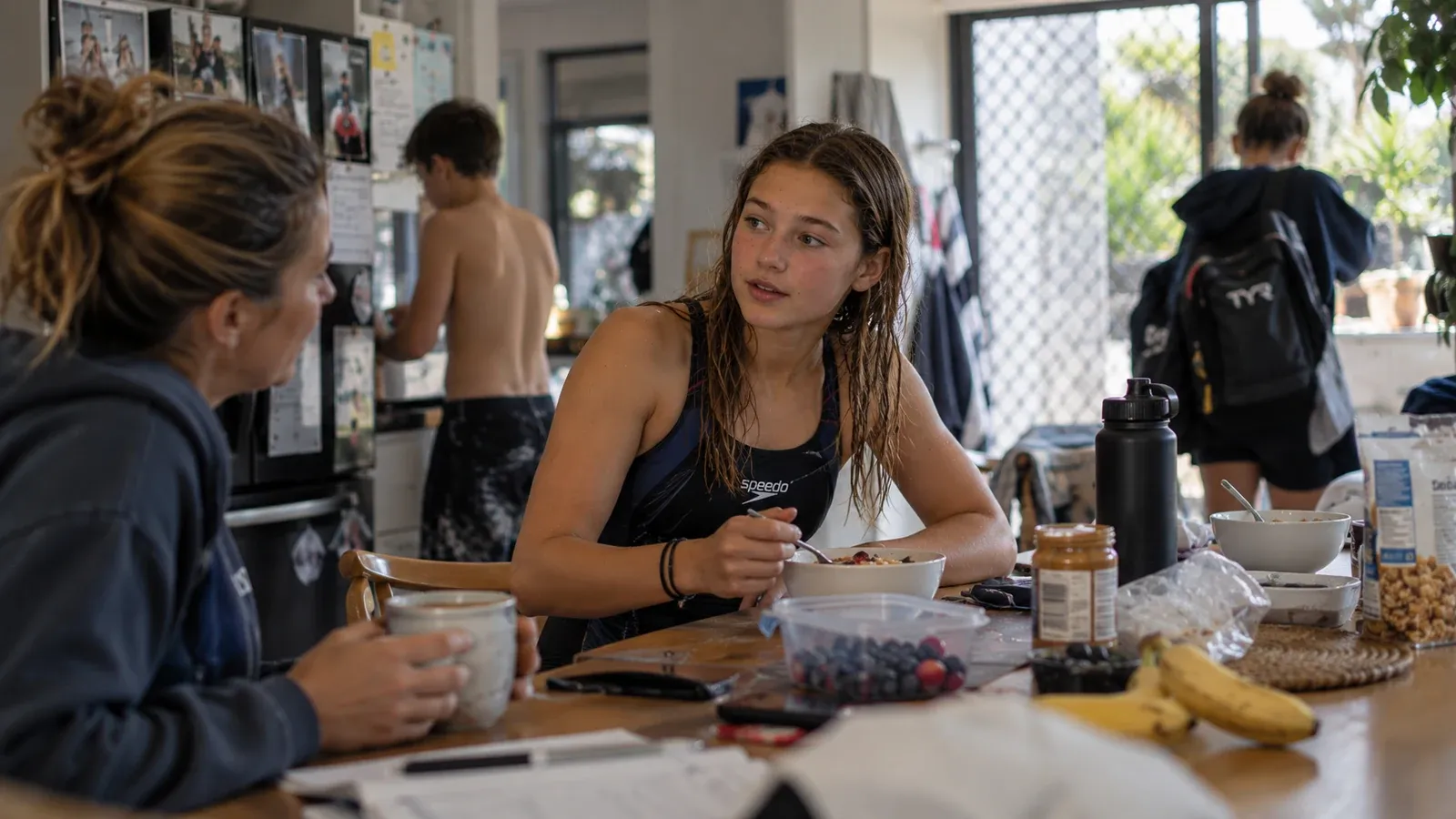

The best meal before competition is usually not anything special.
It is familiar food, with enough carbohydrate to help fuel the player, eaten early enough to digest properly.
For a main meal around three to four hours before competition, that might mean porridge with banana and yoghurt, rice with chicken, pasta with a simple sauce, a jacket potato with a suitable filling, or a sandwich or wrap with fruit.
If the player gets hungry closer to the start, something smaller such as a banana, toast, yoghurt or cereal might work better.
The mistake is looking for one perfect meal.
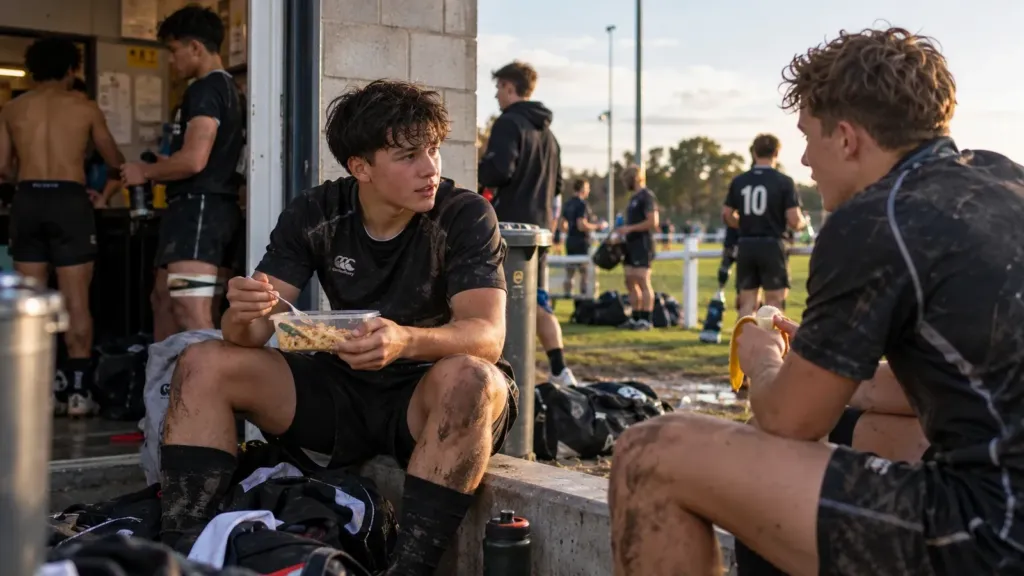
What works at 8am before a swimming competition might not work at 4pm before a rugby match. A tennis player waiting for a court has a different problem again.
Good pre-competition nutrition needs to answer three questions.
- Has the player eaten enough?
- Have they left enough time to digest it?
- Do they know the food sits well when they compete?
The problem often starts before the pre-competition meal
A parent sees what their child eats two hours before competition, so naturally that meal gets most of the attention.
But look further back.
Friday evening training finishes late. The player eats very little afterwards. Saturday morning starts early. They are nervous, so breakfast gets picked at rather than eaten. By the time someone starts worrying about the perfect pre-competition meal, the player has already spent hours under-fuelled.
One meal now has to rescue the whole morning.
I would rather fix the day than make the final meal enormous.
Young players are also eating for growth and development, not only sport. Guidance for adolescent players from Sports Dietitians Australia recommends matching eating patterns to daily exercise demands while providing regular sources of carbohydrate and protein across the day.
Before worrying about the final snack, look at what the player has eaten since waking up, or even the evening before an early start.
Arriving at competition after barely eating through the morning is one of the common nutrition mistakes developing players make.
Carbohydrate should do most of the fuelling work
Carbohydrate is an important fuel for demanding exercise.
That does not mean a young player needs bowls of plain pasta or a complicated carbohydrate-loading routine before every competition.
It means foods such as oats, cereal, bread, rice, pasta, potatoes and fruit have a useful job.
The amount should make sense for the player and what they are about to do.
A small 11-year-old playing a short event and an older teenager competing for several hours should not be expected to eat identical meals. The sport matters too. Duration, intensity and whether the player competes again later all change what needs to be planned.
Research into youth sport nutrition is still less developed than the adult evidence base, so I would be careful about turning adult carbohydrate targets into rigid rules for every child. What we do know is that developing players have to support growth alongside their training and competition demands, and their food needs should reflect the work they are doing.
For most families, there is no need to turn breakfast into a maths lesson.
Make carbohydrate a clear part of the meal and adjust the amount to the day ahead.
Give the meal time to get out of the way
Nutrition advice sometimes focuses so heavily on what is on the plate that digestion gets forgotten.
A player does not only need fuel. They need to feel comfortable enough to move.
A large meal eaten 45 minutes before a hard warm-up might contain excellent food and still be a poor choice because there has not been enough time to digest it.
A useful way to plan the day is for meals to become smaller and simpler as competition gets closer.
With three or four hours available, there is usually room for a normal meal. That might be porridge with banana and yoghurt, rice with chicken and vegetables, pasta with a simple sauce and a protein source, a jacket potato with tuna or beans, or a sandwich or wrap with fruit and yoghurt.
Closer to competition, a player who is hungry might prefer something smaller and familiar.
A banana, toast, a bagel, yoghurt, a small bowl of cereal or some fruit might be enough.
You do not need to hit a stopwatch.
You need enough time for the player to eat, digest and start competition feeling comfortable.
Protein belongs in the meal, but it does not need to take over the plate
Protein matters for developing players because they need it for normal growth as well as repair and adaptation from training.
Eggs, milk, yoghurt, chicken, fish, meat, beans, lentils and tofu are all useful options.
But the meal before competition does not need to become a huge protein meal.
If a player eats eggs on toast, yoghurt with oats, chicken with rice or a tuna sandwich, they are already combining protein with carbohydrate.
For most young players, that is enough complexity.
The bigger mistake would be building the whole meal around protein and forgetting the fuel needed for the activity ahead.
Pay attention to foods that leave the player feeling heavy
Fat and fibre are normal parts of a healthy diet. They should not become foods a player is frightened to eat.
Timing is the issue.
A very large meal containing lots of fat or fibre close to hard exercise might leave some players feeling full or uncomfortable.
That response differs between people.
One player might eat a particular breakfast every competition morning and feel fine. Another might struggle with exactly the same meal.
So I would not hand every player a list of banned foods.
I would pay attention to what happens after they eat.
If they repeatedly feel heavy during the warm-up, look at the size of the meal, what was in it and how close it was to competition.
Nerves change the plan
This is one of the parts nutrition charts rarely capture well.
A player might eat normally before training on Wednesday and then struggle to finish breakfast before an important competition on Saturday.
The food has not changed. Their nerves have.
Competition anxiety often changes appetite or how the stomach feels. Telling a nervous player to finish a huge plate because they need the energy might make eating harder.
Smaller portions might work better.
Some players find foods such as yoghurt, porridge, cereal with milk, banana or a smoothie easier to manage when they do not feel like eating much.
The important part is learning this before the biggest day of the season.
If nerves regularly affect appetite, the competition plan needs to account for that rather than pretending the nerves will disappear.
Early starts need planning the night before
An 8am start creates a practical problem.
You will find sports nutrition advice suggesting a substantial meal several hours before exercise. Few families want a 12-year-old getting up at 4.30am to eat breakfast.
Real life matters.
For an early event, what happens the evening before becomes more important. The player can then have a familiar breakfast after waking, with another small snack later if the schedule and their appetite allow.
This is a good example of why nutrition advice needs context.
The evidence gives us principles. The family still has to make those principles work on a Saturday morning.
Do young players need to carb load?
For most normal youth competitions, no.
Carbohydrate loading is a specific strategy used around prolonged endurance exercise. It should not become shorthand for eating an enormous bowl of pasta before every competition.
Most developing players need something far less dramatic.
- Eat enough across the day.
- Include carbohydrate regularly.
- Do not arrive after barely eating.
- Match the food to the demands of the sport.
Long endurance events, tournaments and repeated competition might need more detailed planning. That is different from telling every young player to carb load the night before.
It is also a good example of the problem with copying professional athletes’ diets without understanding why a particular strategy is being used.
Do not leave hydration until the journey to the venue
Food gets most of the attention, but the same planning applies to fluid.
A player who barely drinks all morning and then empties a huge bottle on the way to competition has left the job late.
Sports Dietitians Australia recommends that adolescent players have sufficient fluid available before, during and after sport. The exact amount differs because sweat losses and fluid needs change with the player, environment and activity.
For many young players, water is the normal starting point.
Longer events, hot conditions and repeated competition create different demands, which we cover in our guide to hydration for young players.
The simple pre-competition check is whether the player has been drinking normally through the day rather than trying to catch up at the last minute.
The food should already have passed the training test
I would never make an important competition the first test of a new nutrition idea.
Training gives you somewhere to learn.
Try the breakfast before a hard morning session. See whether the player prefers eating two hours or three hours beforehand. Find out which snack feels comfortable. Notice whether they become hungry halfway through.
Then use lower-pressure competitions to see what changes when nerves are involved.
Players practise warm-ups because they want to know how their body will feel when competition starts.
Food deserves the same thought.
You are building a routine, not searching for a secret meal.
Start with the competition time and work backwards
If there is plenty of time, have a normal meal containing carbohydrate, some protein and fluid.
As the start gets closer, make anything else smaller and easier to digest.
If the player is not hungry, do not force another snack simply because a plan says they should eat at a certain time.
If nerves regularly affect appetite, build around foods they already find easier to manage.
If the competition lasts several hours or the player competes more than once, the problem changes. Now you also need to plan what to eat on a competition day between events, not only the meal before the first one.
This is why one pre-competition menu will never suit every sport or every player.
What I would want a young player to learn
I would not want a 13-year-old worrying about nutrient timing every time they open the fridge.
I would want them to start understanding their own routine.
- What breakfast leaves me feeling good?
- How long do I need after a proper meal?
- What do I manage best when I feel nervous?
- Do I get hungry during competition?
- Have I been drinking properly today?
Those are useful things for a developing player to learn.
Over time, the parent should not need to manage every bite. The player starts recognising what helps them arrive fuelled and comfortable.
That is far more useful than memorising somebody else’s perfect pre-competition meal.
I don’t want young players searching for the perfect pre-match meal. I want them to learn what helps their own body arrive fuelled, comfortable and ready to compete.Grantley Baugh, Founder of PlayerScout
Was this helpful?
 11 min