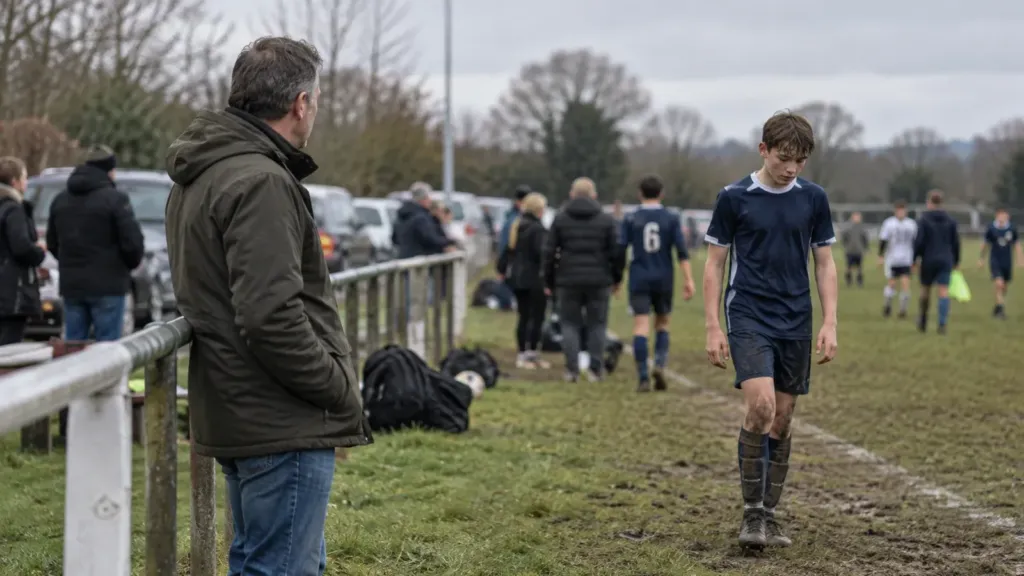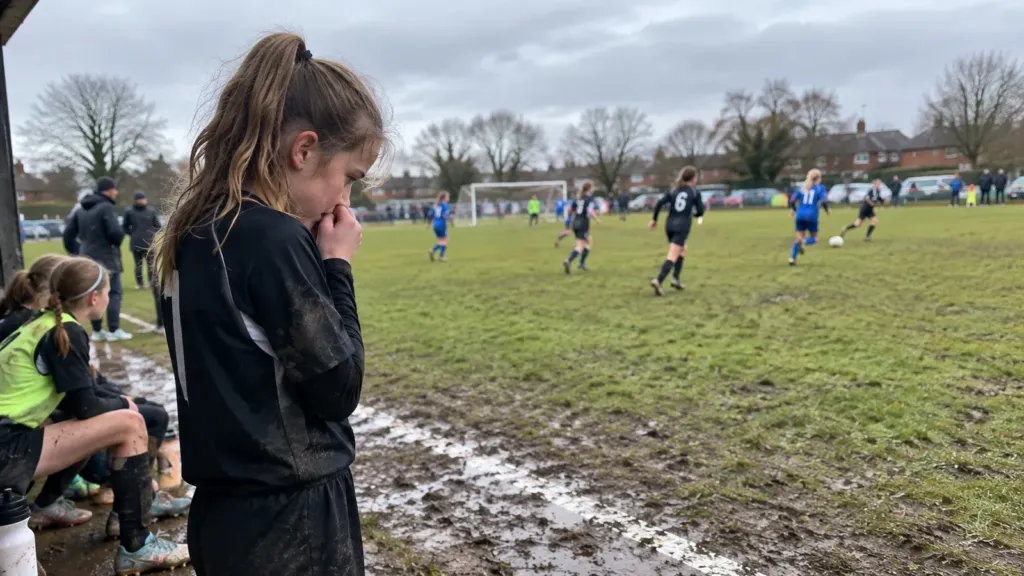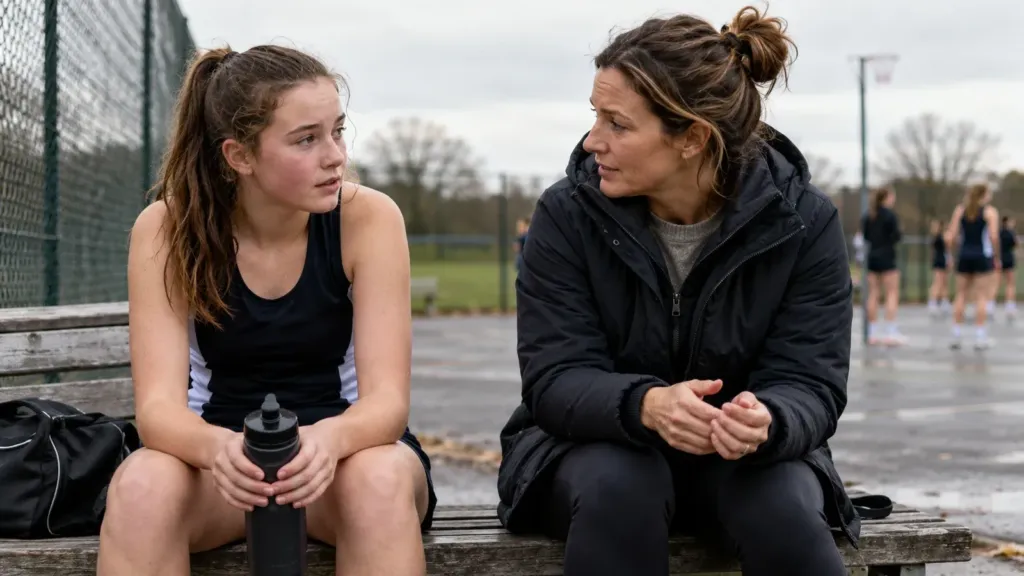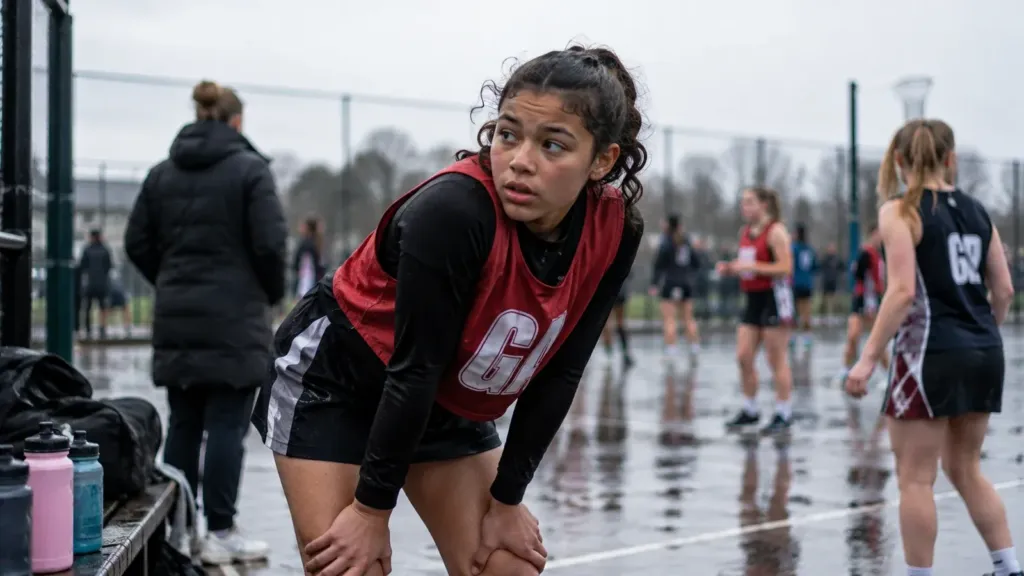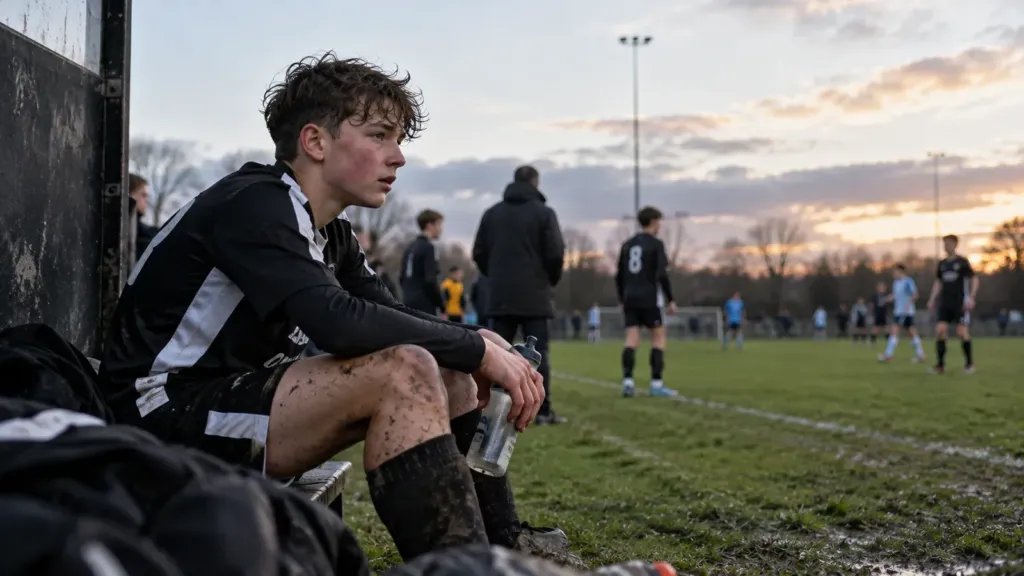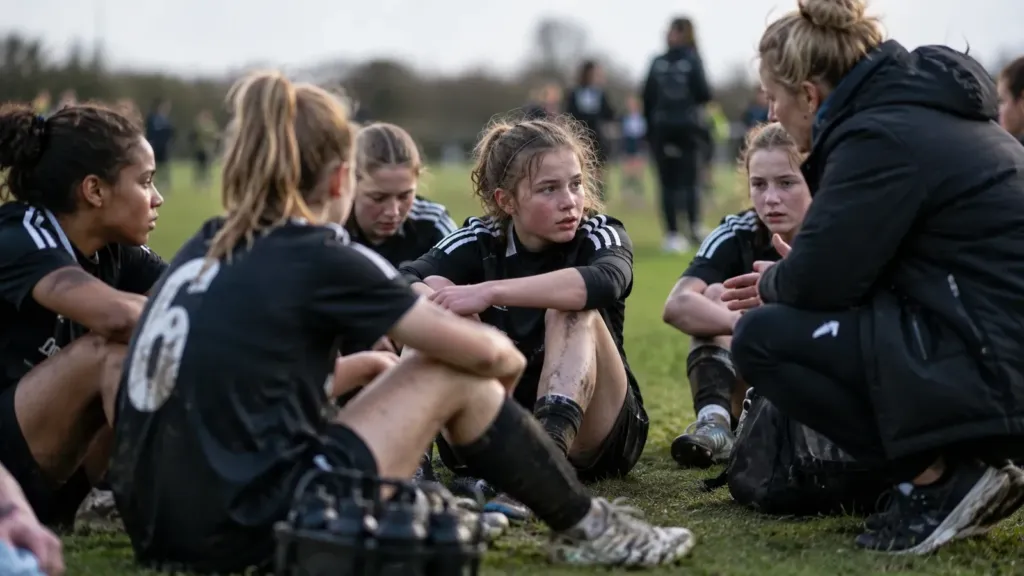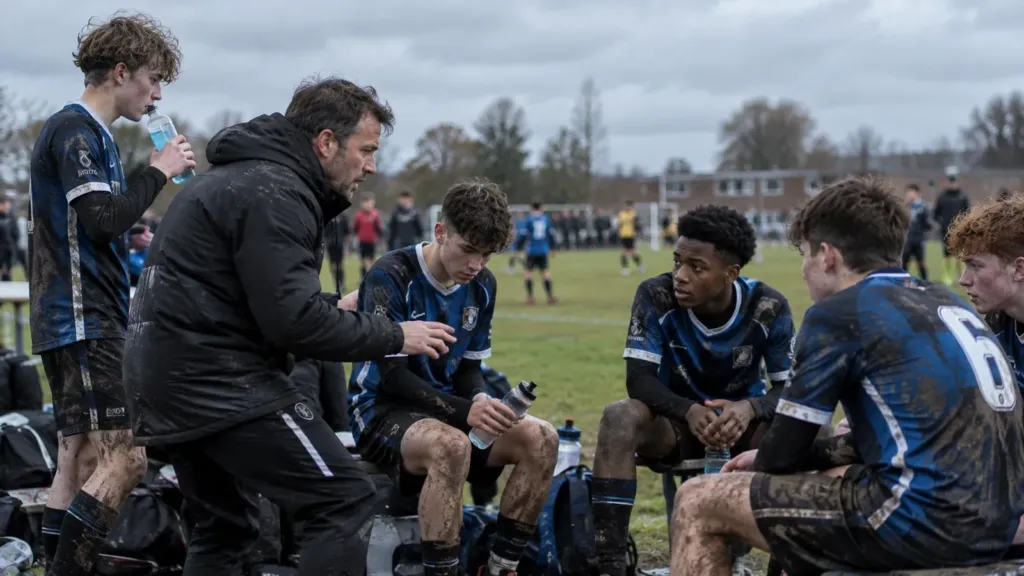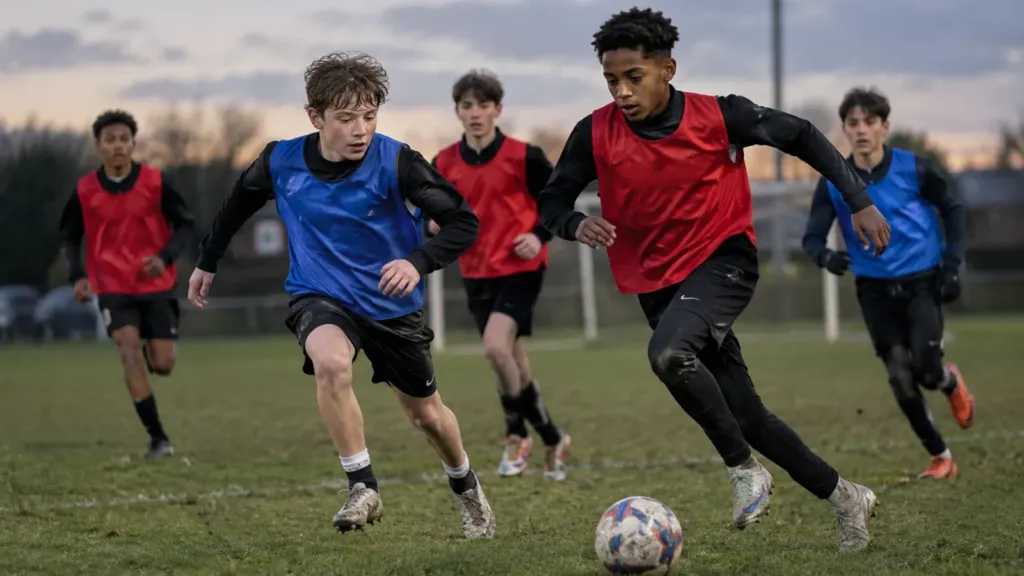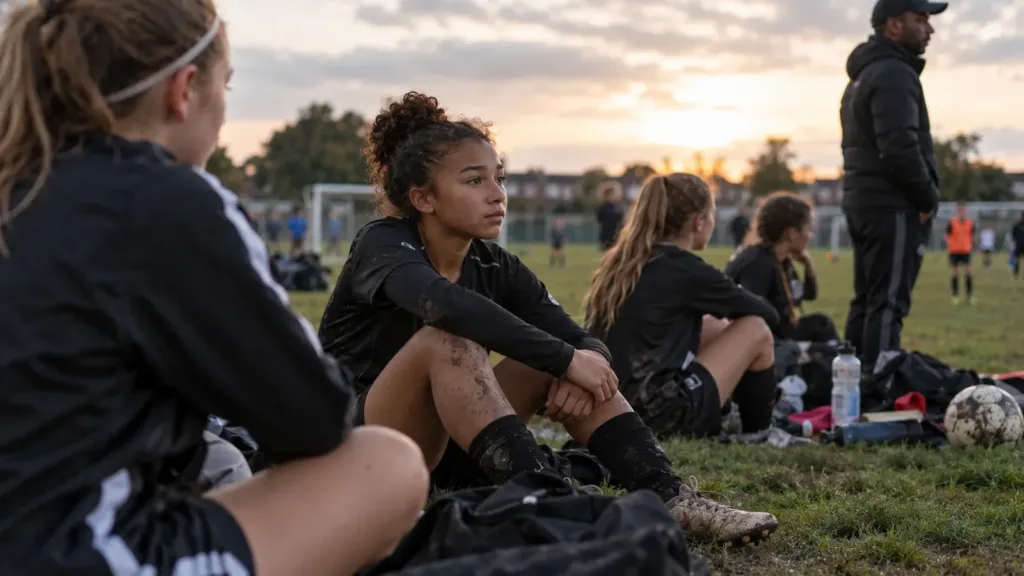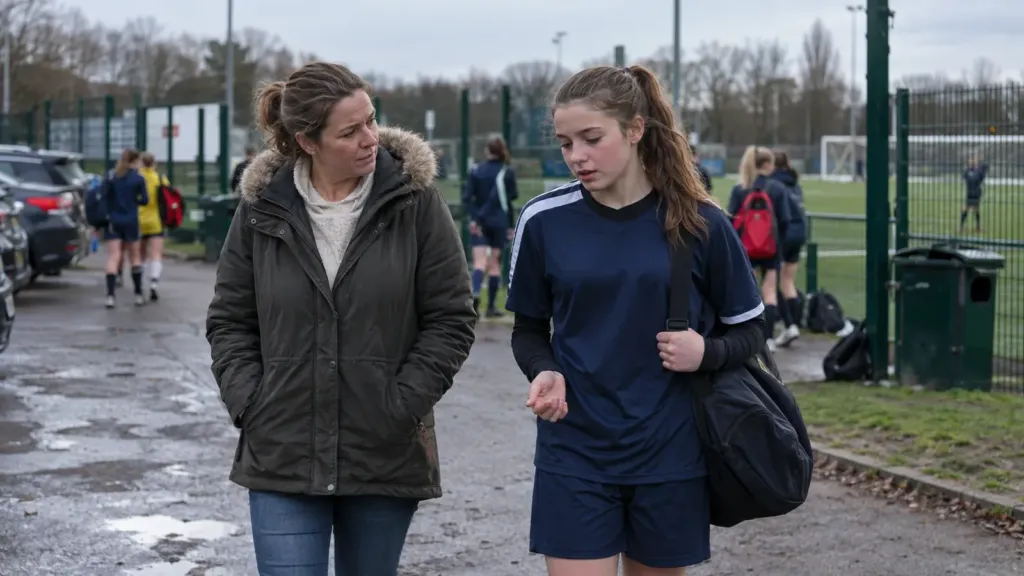


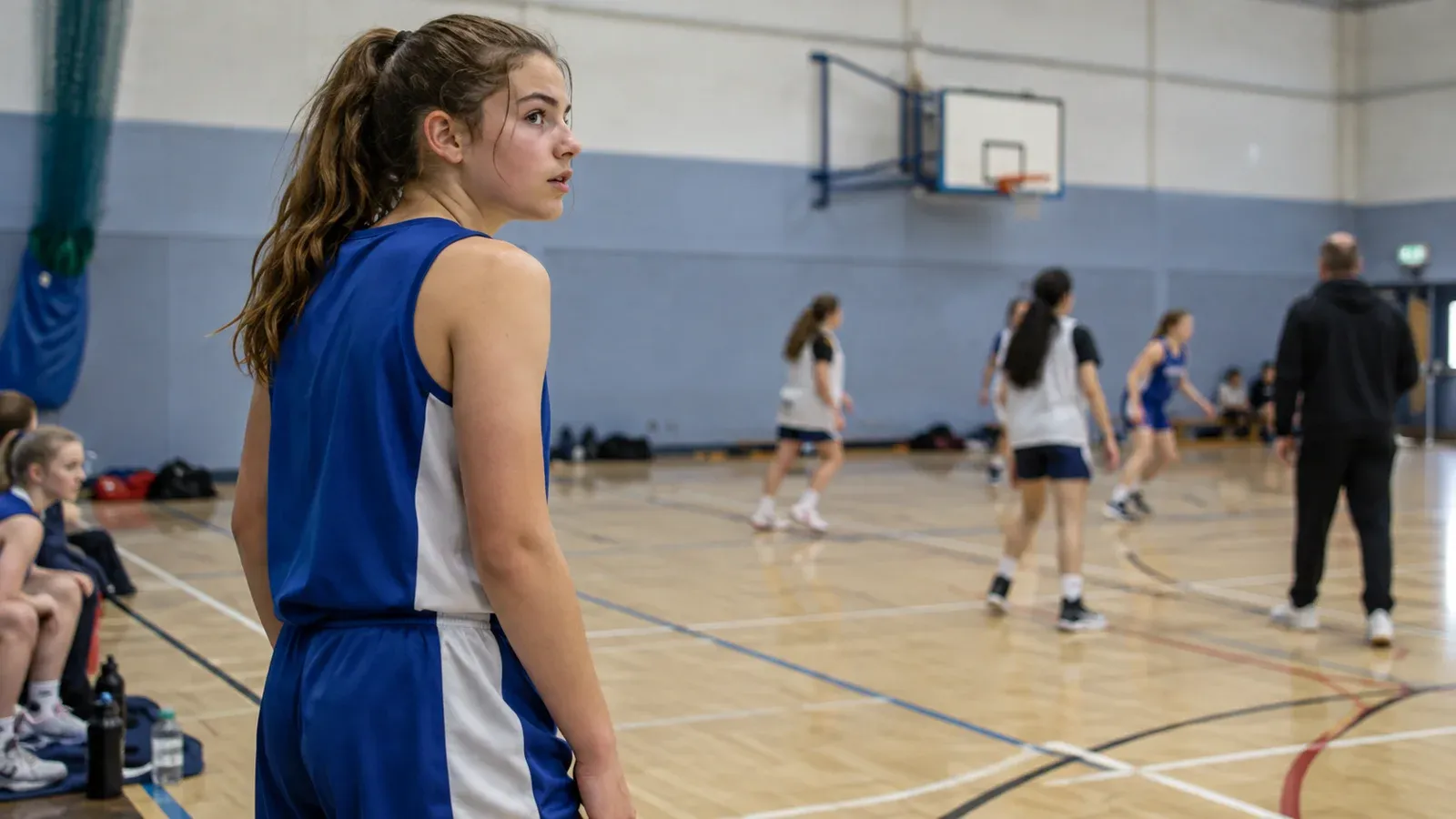

A player makes a poor pass, misses a chance or loses a point. The next moment is still coming, but their attention is stuck on the last one.
“I always mess this up.” “Don’t make another mistake.” “Everyone’s watching.”
Replacing every thought with “I’m amazing” isn’t necessarily useful either. A better question is: what can you say that helps you respond to the next moment?
That’s what self-talk in sport is for. You can use a short phrase to direct your attention, remind yourself of a task or respond to a setback. It doesn’t have to sound positive. It has to be useful.
What is self-talk in sport?
Self-talk is the language you use in your head or out loud when you’re playing. Sometimes it happens automatically. Other times you deliberately choose a word or phrase.
There are two useful types to understand. Instructional self-talk directs you towards something you can do, such as “watch the ball” or “find the space”. Motivational self-talk supports effort and persistence, such as “keep going” or “I can handle this”.
Research suggests that practising self-talk can help performance in some sporting tasks. A meta-analysis of 32 studies found an overall beneficial effect, but the size of the effect differed by task and training approach (Hatzigeorgiadis and colleagues’ 2011 meta-analysis). A separate review of 47 studies also found benefits while warning against simplistic rules about positive and negative thoughts (Tod and colleagues’ 2011 review).
These findings do not mean a phrase will transform every young player’s confidence or performance. Much of the wider research combines different ages, sports and methods. A 2019 study involving 117 junior competitors, with an average age of about 16, offers more directly relevant evidence: self-talk training was associated with improvements in several measured outcomes, with stronger results for the longer programme (2019 study of junior competitors). This does not establish that one particular phrase or the PlayerScout NEXT mnemonic works for every child.
Choose a phrase that points towards your next action
The biggest practical difference is between a phrase that describes what you fear and one that helps you do something.
“Don’t lose the ball” keeps the possible mistake in view. “Look up before you receive” gives you a task.
“Don’t double fault” focuses on the outcome you’re worried about. “Pick the target” gives you a decision.
“Stop being nervous” asks you to remove a feeling. “Breathe, then find my first job” gives you something to do while that feeling is still there.
None of these examples is a universal rule. A good cue is short, understandable and suited to the skill you’re working on. During a fast game, it should be brief enough that you can return your attention to play.
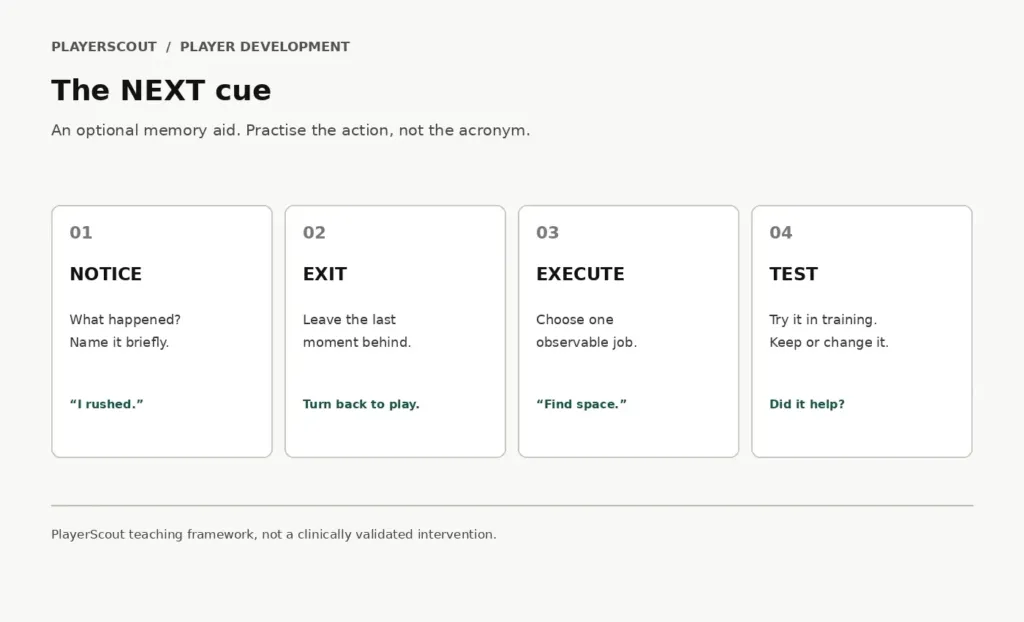
The PlayerScout NEXT cue: a simple way to use self-talk
You do not need a perfect mindset to use a cue. You need a small, repeatable response that fits what is happening.
Notice: Recognise the moment without arguing with the thought. “I’m rushing” is information, not a verdict on your ability.
Exit the replay: If the previous point is over, stop trying to change it while play continues. A breath, a turn back towards the court or a return to your position can mark the change.
eXecute one job: Choose a short, observable action cue such as “find space”, “watch the ball” or “recover position”. The letters in NEXT are a memory aid, not a scientifically validated intervention.
Test in training: Practise the cue in situations that feel like competition. Keep it if it helps you return to the right action; change it if it adds noise.
The important part is the next job, not saying the acronym in your head. In a fast-moving game, one word may be enough. If you already have a routine that works with your coach, there is no need to replace it.
Self-talk examples you can adapt
| Moment | Thought that can trap you | Shorter, more useful cue | What to do next |
|---|---|---|---|
| Football: misplaced pass | “I’ve ruined it” | “Recover shape” | Move into the next defensive position |
| Tennis: double fault | “Don’t do that again” | “Pick the target” | Choose the next serve target and begin the routine |
| Basketball: missed shot | “I can’t shoot today” | “Get back” | Sprint into the next defensive job |
| Swimming: waiting to race | “Everyone is faster” | “My first length” | Return attention to the practised opening plan |
| Netball: intercepted pass | “Coach will take me off” | “Find my player” | Rejoin the defensive phase |
| Gymnastics: preparing a skill | “What if I fall?” | “Set, then go” | Follow the coach-approved safe preparation routine |
These are examples, not prescribed cues. A coach may choose different words for a specific skill. The player should understand the action behind the phrase. Never use a cue to push through pain or override safety instructions.
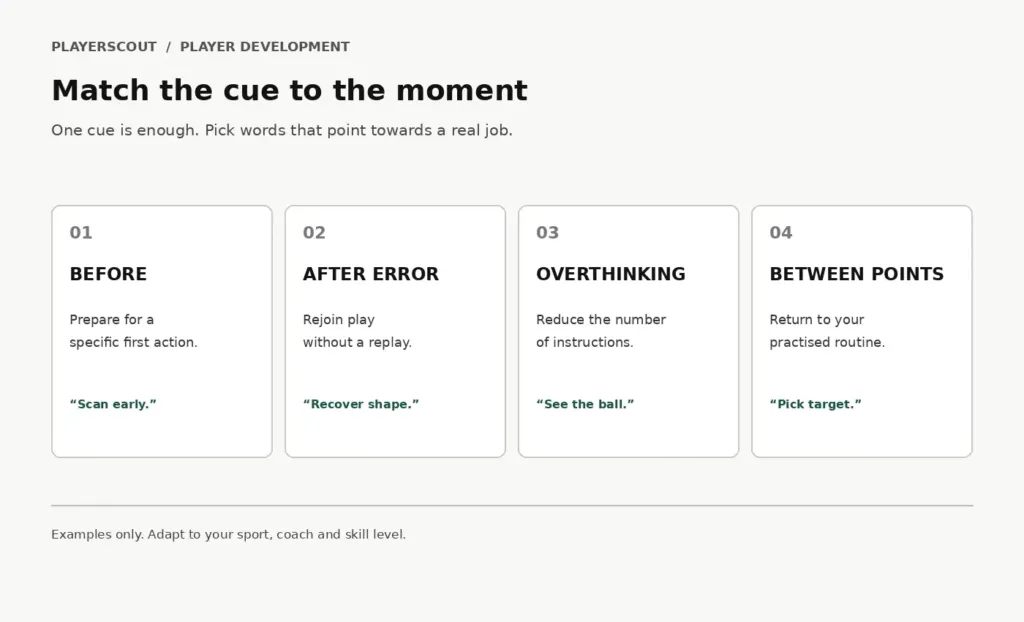
When to use self-talk during competition
Before competition
Before a start or between points, there may be time for a short preparation cue. During continuous play, respond to the immediate tactical situation rather than running through a lengthy mental routine. Choose one cue, not a long speech. A football player might use “scan early”. A swimmer might use “smooth first length”. A tennis player might use “see the ball”.
The phrase should relate to the plan you’ve already practised, not a new technical instruction you heard just before the start.
After making a mistake
Try a two-part response. Acknowledge the moment, then identify the next job.
“That happened. Next pass.” “Lost that point. Ready position.” “Poor landing. Reset for the next attempt.”
You don’t need to pretend the mistake was good. You need a way to stop reviewing it while the contest continues. For more on what to do after an error, see our guide to recovering quickly after a mistake in sport.
When you start overthinking
If your head fills with instructions, reduce them. One simple external cue may be more useful than trying to control every movement.
A basketball player might use “see the rim”. A netball player might use “find the free player”. A badminton player might use “send it deep”.
The aim is to return attention to the task, rather than keep checking whether you feel confident. If too many thoughts are getting in the way, read our guide to stopping overthinking during competition.
When you’re tired or frustrated
A motivational cue can be useful here. “One more effort”, “stay with it” or “next job” may support persistence when the player is tempted to disengage.
But self-talk isn’t a reason to ignore pain, illness or unsafe exhaustion. Tell a responsible adult or coach when something feels wrong.
After competition
This is a better time for detailed reflection. Ask yourself what worked, what you can practise and what you’ll try next time.
Avoid turning the review into a judgement about who you are. “I rushed two decisions under pressure” gives you something to work on. “I’m terrible under pressure” doesn’t.
Build a cue that fits your sport
Start with a moment that repeats, not a list of positive phrases. Then connect a few words to a visible action. Test the words in a drill that includes the pressure or decision you’re trying to handle.
- Choose one moment. Perhaps you rush after a mistake, hesitate when receiving the ball or lose focus between points.
- Choose one short phrase that describes a useful action. Keep it to a few words and make sure you understand exactly what it means.
- Test it in training. Use it during a realistic drill, then ask whether it helped you notice the right information or make the next decision.
If the cue is distracting, too technical or difficult to remember, change it. You don’t need to stick with a phrase because someone else uses it.
Imagine a hockey player who hesitates after losing possession. In a turnover drill, they practise the cue “recover and mark”, then move straight into their defensive position.
This is an illustrative example, not a reported case study. The words matter only if they help the player return to a useful action.
Does self-talk need to be positive?
No. It should be constructive and workable.
A research review found that negative self-talk did not consistently impair performance, challenging the idea that every negative thought must be stopped (Tod and colleagues’ 2011 review). Young players can have an unhelpful thought without treating it as a prediction.
Rather than fighting to remove “I’m going to mess up”, you might notice it and return to “watch the next ball”. That is different from pretending the worry isn’t there.
If harsh self-criticism is frequent, persistent or affecting a child’s wellbeing, adults should look at the wider environment and offer support. A mental skill cue isn’t a substitute for help with significant distress.
When a cue isn’t helping
Self-talk is not a test of whether a young player is mentally strong. If a phrase makes you more self-conscious, causes you to over-control a movement or feels impossible to believe, stop using it and choose something simpler. Sometimes no phrase at all is better than another instruction.
Be careful with cues that turn into demands: “I must score”, “never make a mistake” or “prove them wrong”. They can add another thing to worry about. A useful cue leaves room for mistakes and directs attention towards something you can do.
Self-talk also cannot fix an unsafe coaching environment, bullying, excessive expectations or a player who needs support beyond sport. Where distress persists, parents should seek appropriate professional advice rather than simply prescribe more positive thinking.
How parents and coaches can help
Give players ownership of their words. A cue should make sense to the person using it, not sound impressive to the adults watching.
Parents can leave room for conversation after sport without demanding an immediate review. If the player wants to talk, listen first.
Coaches can introduce cues in familiar drills before expecting players to use them under pressure. Match each cue to one task.
The test is practical: can the player show the action the cue is meant to trigger? If not, simplify the words.
For parents: Before training, ask “What is one moment you’d like to handle differently?” Let the player choose their words. After sport, avoid checking whether they remembered the cue as though it were a performance target. Ask whether it felt useful, then listen. Do not coach from the touchline with repeated instructions.
For coaches: Pick one cue that matches a particular drill, model the next action and allow players to personalise the wording. In a practice game, deliberately include ordinary mistakes and transitions so the cue is rehearsed under realistic conditions. Watch the behaviour, not whether players recite the exact phrase. If the cue disrupts execution, reduce or remove it.
Test your cue in training
Try a small experiment at your next training session. Choose one repeatable situation, such as receiving under pressure or recovering after a turnover.
Before the drill, pick your cue. During the drill, use it only at the moment it belongs. Afterwards, rate whether it helped you return to your task. Don’t rate yourself only by whether you won the point or scored.
Compare several similar attempts, with and without the cue. Keep it if it makes the next decision clearer; shorten or drop it if it adds another instruction. A useful cue is an option, not another rule.
If you’d like more structured practice with preparation, focus, confidence and responding to mistakes, explore the PlayerScout Player Mindset Program. It teaches mental skills for sport and isn’t treatment for a mental health condition.
The goal isn’t to win every argument inside your head. It’s to know what to do next, even when the last moment didn’t go to plan.
Was this helpful?
 7 min