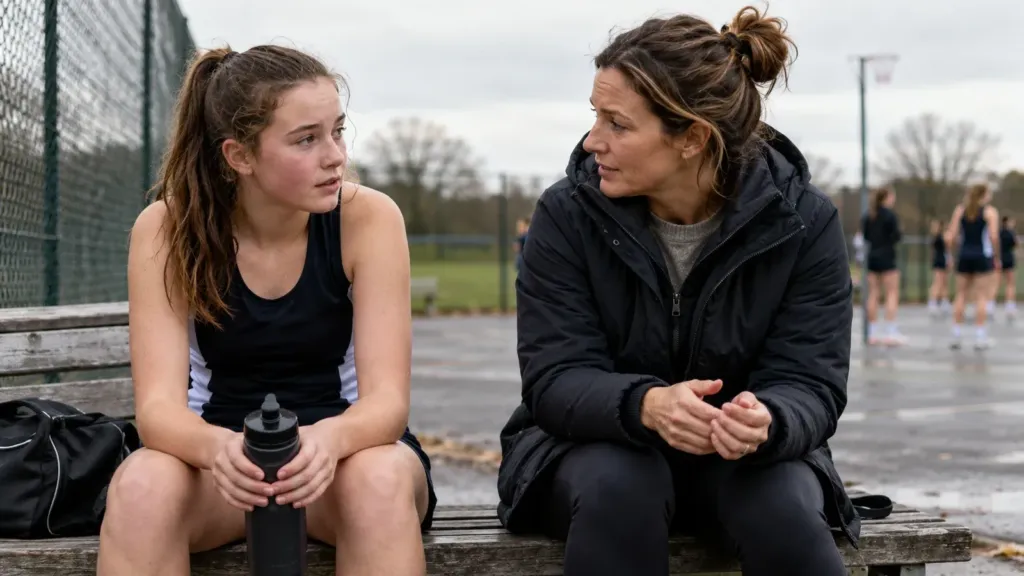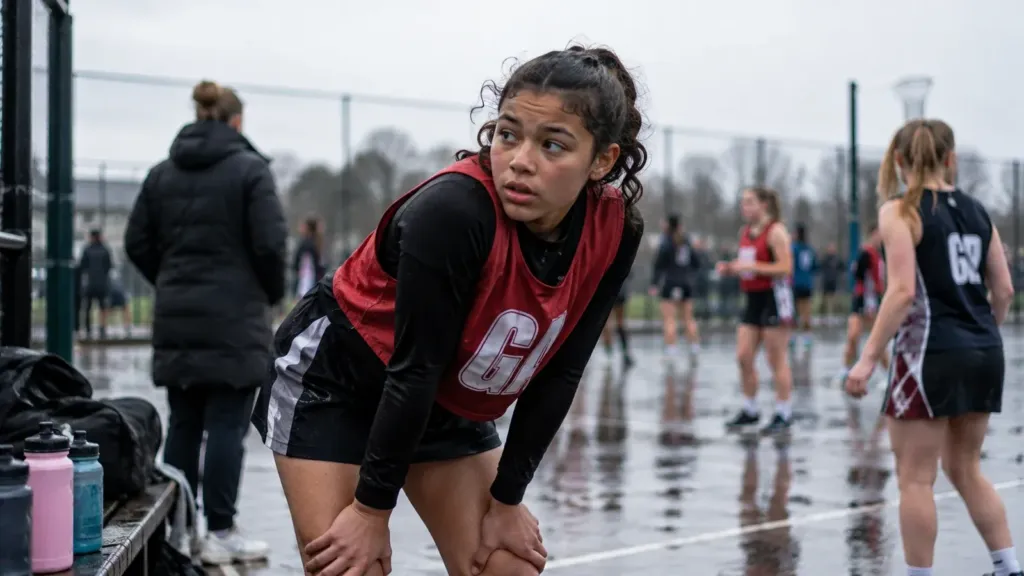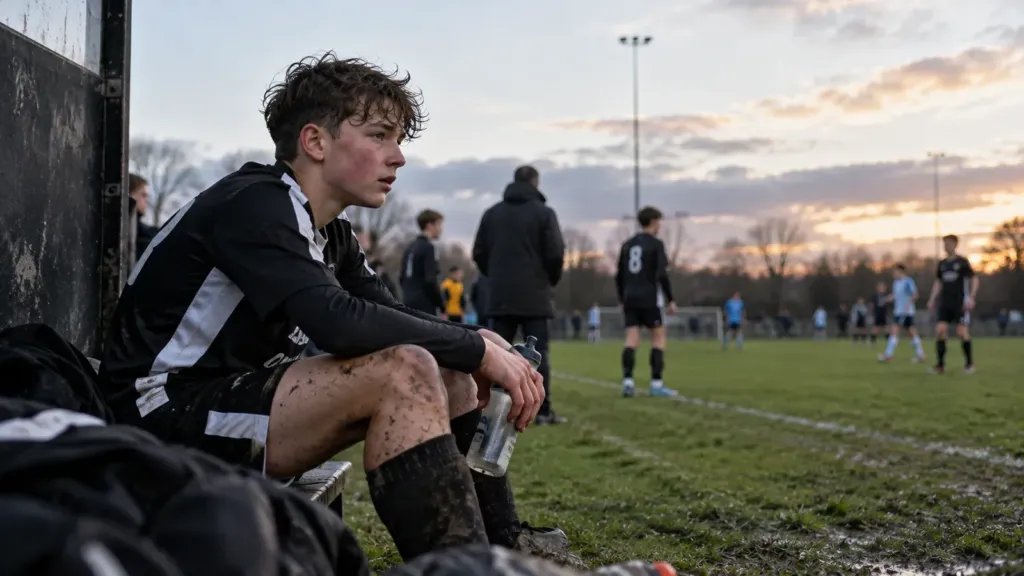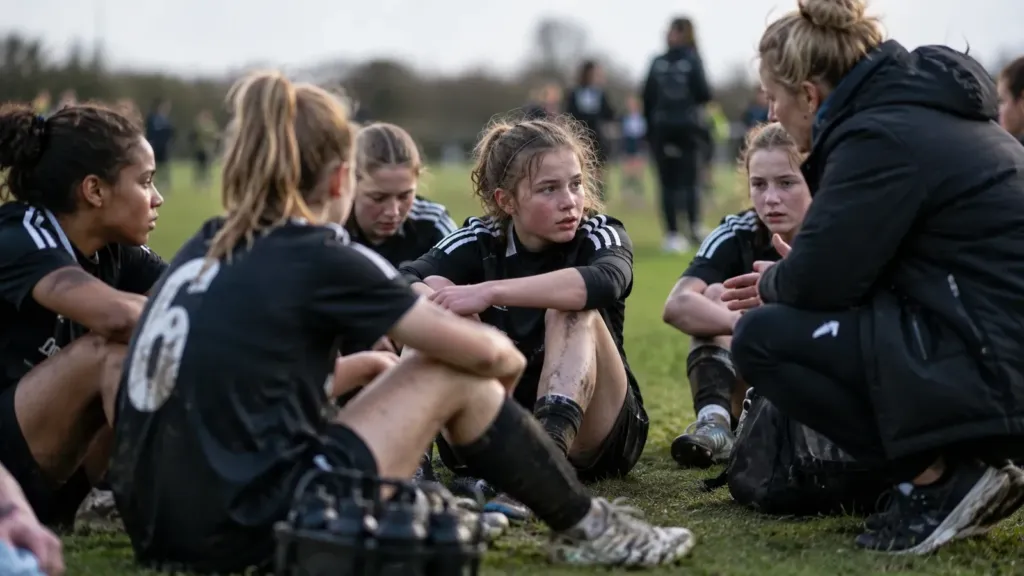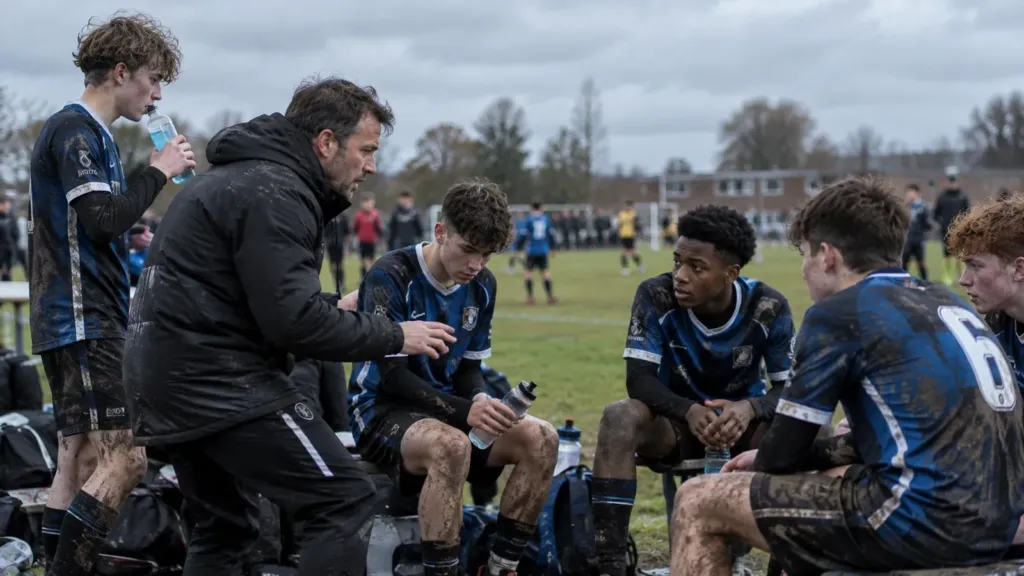



A player does something in training without much thought. Then competition starts, and suddenly they are thinking about their feet, their technique, what the coach said, whether they are making the same mistake again, what their parent is thinking and what happens if they lose.
By the time the next decision arrives, part of their attention is somewhere else.
This is what overthinking often looks like in sport. The answer is not to somehow stop thinking, because that gives the player another impossible job. A better aim is to get their attention back onto information that helps with what happens next.
For one player, that might be the space in front of them. For another, it might be the opponent’s position, the target, the rhythm of the movement, one simple tactical instruction or one breath while play has stopped.
The player still has thoughts. They have simply stopped giving every thought the same amount of attention.
Overthinking is often an attention problem
Suppose a player makes an early mistake. The next minute might be filled with thoughts such as: Don’t do that again. Why did I do that? The coach saw it. Keep your elbow in. Don’t rush. I always do this when I’m nervous.
Now imagine trying to compete while carrying all of that. The player still needs to read what is happening around them and make decisions.
Attention has limited capacity. Pressure and anxiety can make goal-directed attentional control harder, leaving more room for distracting or threat-related information to pull attention away from the task. Research in sport has found this pattern in pressure situations, including changes in visual attention alongside poorer performance.
That helps explain something players often find confusing. They feel as though they are concentrating more, but they might be concentrating on the wrong things.
A skill changes when you start supervising every part of it
Think about a movement a player has repeated thousands of times. It might be a tennis serve, basketball shot, golf putt, pass, sprint start or gymnastics skill.
During practice, much of the movement eventually becomes organised without the player consciously controlling every joint. Pressure can change that. The player starts checking the movement while performing it: Where is my foot? Is my arm high enough? Keep the knee here. Don’t open the shoulder.
Research into attentional focus has often found better motor performance and learning when attention is directed towards the intended effect of a movement rather than towards controlling individual body parts. A large 2021 meta-analysis reported an advantage for external over internal attentional focus across motor performance and learning studies.
There is an important caveat. A later 2024 reanalysis found evidence of publication bias in this literature and estimated much smaller average effects after correcting for it.
So I would not turn “external focus” into another magic rule. The practical lesson is still useful, though. If a learned movement starts falling apart under pressure, adding more and more conscious technical instructions during competition is not always the answer.
Training is where you build. Competition is where you use.
There is a time to think technically. Training might be exactly where a player needs to change foot position, adjust a swing, work on landing mechanics or understand a new movement. The coach slows things down, the player experiments, they get feedback and they repeat it.
Competition presents a different problem. The player has to perceive, decide and act under time pressure. Trying to run a full technical coaching session inside their own head while competing creates a lot to process.
Before competition, I would decide what deserves attention rather than giving the player six instructions.
For someone who tends to become overly technical under pressure, a cue might direct attention towards the outcome of the movement. “Hit through that space”, “push the ground away”, “land quietly”, “see the target” or “play into the open area” all give the player something specific to work with.
The wording depends on the sport and the skill. The point is to give attention somewhere useful to go.
Trying not to think about the mistake keeps the mistake involved
A player makes an error and immediately tells themselves not to think about it. Now they are checking whether they are still thinking about it. Another thought arrives: Don’t make the same mistake.
The previous mistake is still controlling their attention.
I would rather give the player a job. What needs attention now?
That might mean getting back into position, watching the opponent, finding a teammate, setting the feet, looking at the target or listening for the next call.
A useful reset is not about pretending the mistake never happened. It is about returning attention to something relevant before the next action begins.
Use a reset that is short enough to survive competition
A mental routine only helps if the player has time to use it. During competition there might be five seconds. Sometimes there is one.
A useful reset therefore needs to be simple. One version I like is:
Notice.
Reset.
Next job.
“Notice” means recognising where attention has gone. The player might realise they are replaying the mistake, worrying about the score or thinking about their technique again.
“Reset” might be one slower breath, relaxing the hands, looking at a fixed point or using one familiar word.
Then comes the important part: next job. Where does attention need to go now?
This is not about becoming perfectly calm. The player might still feel nervous. They are learning to compete while those feelings are present.
Give yourself something specific to look at
“Focus” is poor advice if the player does not know what focus means.
In many sports, visual attention is part of skilled performance. Research on the “quiet eye”, the final visual fixation on a relevant target before a movement, has found associations between longer or more effective quiet-eye periods and expertise or successful performance in several aiming tasks.
A meta-analysis also found improvements following quiet-eye interventions, although much of this literature involves specific closed skills rather than the constantly changing demands of open-play sport.
That limitation matters. A golfer preparing a putt has time to settle their gaze. A player responding to several moving opponents has a different attentional problem.
Still, the broader lesson transfers. Attention works better when it has a useful target.
“Stop overthinking” gives the player nothing to look for. “Watch the ball onto the racket”, “find the goalkeeper before you receive”, “pick the landing point” or “see the front of the rim” gives the mind a job connected to performance.
Pressure does not mean the routine has failed
Players often judge themselves too quickly here. They learn a breathing technique or reset routine, then a big competition arrives and their heart is racing. They still feel nervous, so they decide the routine is not working.
Removing nerves was never the only purpose.
A player can feel pressure and still direct attention well. That is a much more realistic skill.
A 2026 meta-analysis examining interventions designed to reduce performance decline under pressure found overall benefits across approaches including quiet-eye training, pre-performance routines, mindfulness and self-talk. The effects were clearer for closed skills, while results in open-skill sporting situations were less robust after adjustment for publication bias.
That distinction is useful because youth sport contains both.
A penalty, serve, free throw or putt gives the player time to run a routine. Open play does not. The mental strategy has to fit the moment.
Closed skills give you more room for a routine
If the player controls when the action begins, they have more time. A serve, free throw, penalty, putt or throw gives them a short period in which to organise attention.
A routine might include stepping into position, taking one breath, looking at the target, using one cue and beginning. The exact sequence matters less than having something familiar enough to repeat.
Research on pre-performance and attentional interventions suggests routines can help performance under pressure, particularly in closed-skill tasks.
The routine still needs practising. I would not invent a six-step routine the night before a final and expect it to feel automatic.
Open play needs something faster
Now picture a player in a fast invasion sport. They lose possession and the game immediately moves in the other direction.
There is no time for a ten-second breathing routine.
Their reset might be one word followed by one action. “Recover”, then run. “Next”, then find the opponent. They might not need a word at all and simply look for the next useful piece of information.
The right reset depends on the sport, the player’s position and what is happening in that particular moment. A routine has to fit inside the time the player genuinely has.
Parents and coaches can accidentally add more thinking
A player is already overloaded, then instructions start arriving from everywhere: move your feet, watch your position, relax, speed up, take your time, use your arms, keep your head up, don’t force it.
The adult is trying to help. The player now has eight more things to process.
Technical detail is useful when there is time to learn it. During competition, especially when a player is already struggling, more information is not automatically better information.
Sometimes the better intervention is one clear cue. Sometimes it is no new instruction at all. If the player already knows what to do, they might need enough space to do it.
Do not review the whole performance while you are still performing
This is one of the habits I would want a young player to understand early.
Competition is for responding. Review comes afterwards.
You do not need to decide whether you are playing well every two minutes, work out what today’s performance says about your ability or solve every mistake before the event has finished.
Some corrections do need making immediately. If a tactical problem keeps happening, the player or coach has to respond. But there is a difference between a useful adjustment and constant self-evaluation.
Ask what information helps the next action. Use that, then leave the full review until there is time to do it properly.
Practise the mental skill when there is something at stake
Players often practise resets while sitting quietly. That is a useful place to learn the process, but it is not where the skill eventually has to work.
The player needs opportunities to practise returning attention while they are tired, frustrated, being scored against, missing, losing or being watched.
Training can create some of those moments without trying to make every session psychologically brutal. Keep score, give the player one attempt, create a time limit or let them practise their reset immediately after a genuine mistake.
The aim is not to manufacture anxiety for the sake of it. It is to stop the first serious test of the mental routine being the competition the player cares about most.
What to do when you notice yourself overthinking
Do not start fighting your own mind. Notice what has happened, then make the problem smaller.
If you are replaying the last mistake, find the next job. If you are thinking about the result, return to what you need to read or do now. If you are consciously controlling every part of a well-learned movement, try one simple cue linked to the task or intended outcome. If there is a natural break, use a familiar breath or reset routine.
If the thought comes back, repeat the process.
You might have to do this many times during one competition. That is not evidence that the reset has failed. Returning your attention is the skill you are practising.
Expecting never to become distracted gives a player an impossible target. Knowing what to do when attention drifts gives them something they can use.
Competition is for responding. Review comes afterwards.Grantley Baugh, Founder of PlayerScout
Was this helpful?
 9 min