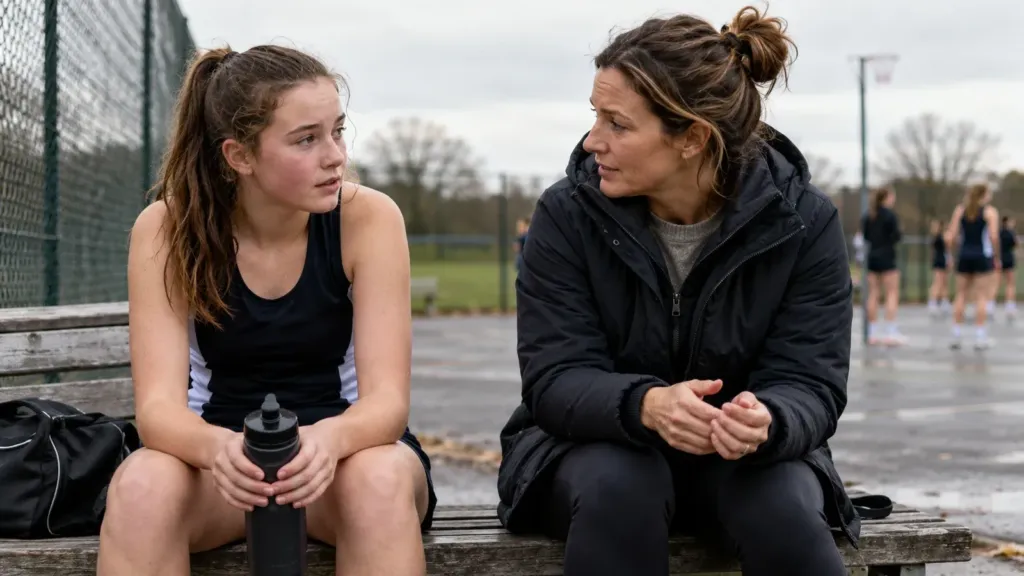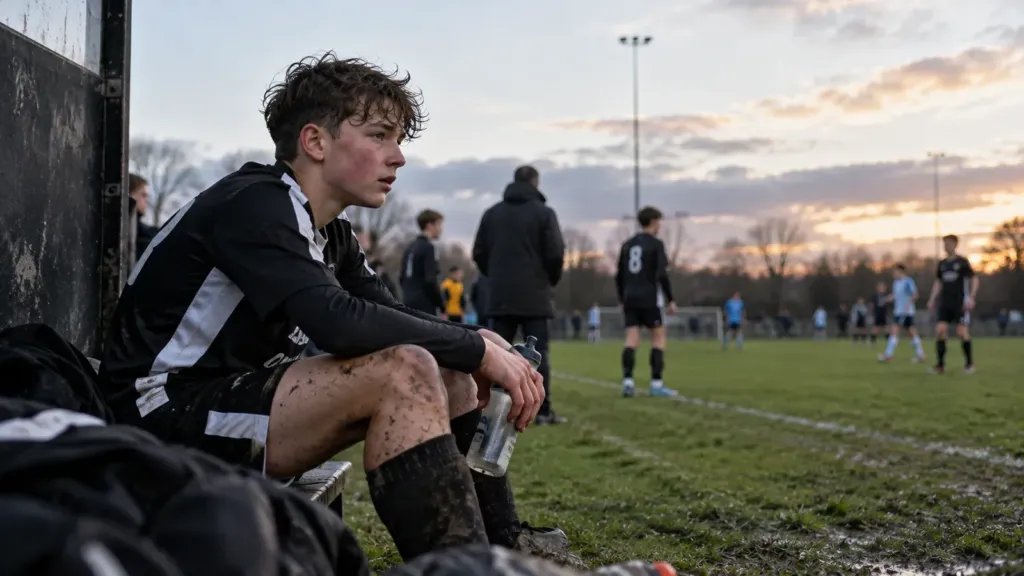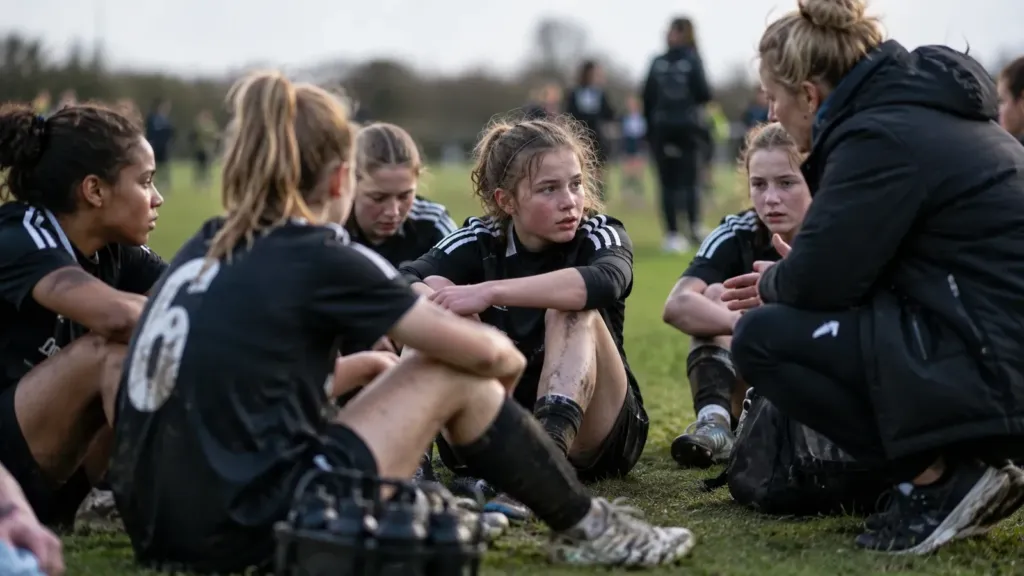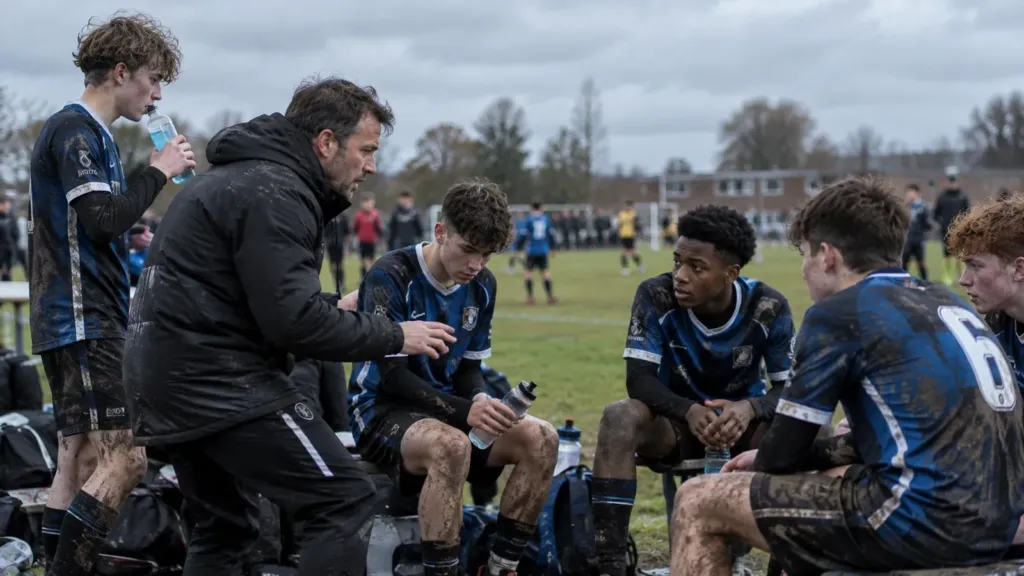





There is a conversation I would not rush with a young player.
They have just found out they are not starting. They did not make the squad. Somebody else got selected. Their academy or development programme has released them.
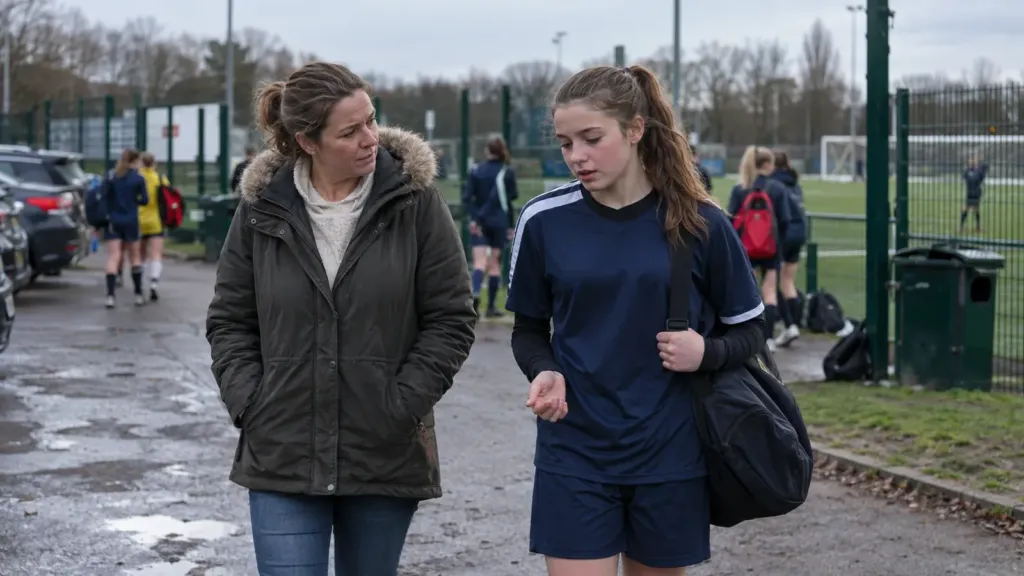
They get into the car and they are angry, embarrassed or completely quiet.
That is usually not the moment I would start explaining resilience.
Being dropped or not selected hurts because selection means something. It affects opportunity, status and belonging. For some young players, especially those who have spent years inside a pathway, sport has also become an important part of how they see themselves.
A 2026 systematic review of release in youth and developing sport found negative psychosocial effects across the included studies, although positive outcomes were also reported in some research and players’ experiences varied considerably.
So the first job is not to convince the player that the decision does not matter.
Let it matter.
Then work out what the decision actually tells you.
Being disappointed is not a mindset failure
I would be more concerned if a player had worked towards something for months and felt absolutely nothing when they missed out.
Disappointment is a reasonable response to losing something you wanted.
The problem starts when adults treat every uncomfortable emotion as something that needs fixing immediately. The player is upset, so we start telling them about famous players who were rejected. We explain how everything happens for a reason. We tell them they will prove the coach wrong.
All of that moves too quickly.
Sometimes the player needs to go home, eat, sleep and talk tomorrow.
Research on youth and developing players who have experienced release shows why some care is needed here. A recent systematic review covering 15 studies and participants aged from 5 to 21 found release was associated with a range of psychosocial experiences, with adaptation influenced by the support and resources surrounding the player.
Being upset does not mean the player lacks resilience.
What they do with the experience over time tells us far more.
Do not turn one selection decision into a final verdict
This is one of the hardest things for a young player to separate.
“I wasn’t selected” becomes “I’m not good enough.”
Those statements do not mean the same thing.
Selection tells you that, on this occasion, somebody making a decision chose another player or group of players.
There might be useful information inside that decision. The player might have technical, tactical, physical or psychological areas that need improving. The competition for places might be stronger. The coach might need something different for a particular role.
But youth selection also takes place while players are developing at different rates.
Talent identification and selection are not perfect prediction systems. A 2024 systematic review of talent detection, identification, development and selection describes talent development as a continuous, phased process rather than a single moment of identification.
More recent evidence makes the instability particularly clear in formal talent pathways. A 2026 meta-analysis covering 44,287 players from Olympic-sport talent programmes in 42 countries estimated average annual player turnover at 36.3%, reflecting frequent entry, deselection and replacement within these systems.
That does not mean selection decisions are meaningless.
It means they are decisions made at a point in a developing player’s journey, not certificates predicting the rest of their sporting life.
First separate what you know from what you are assuming
A player who has been left out will often fill missing information themselves.
The coach does not rate me.
Everyone else is better.
I have gone backwards.
I will never get another chance.
My teammates will think I am useless.
Some of those concerns might contain part of the truth. Some might not.
Before building a response around them, find out what you genuinely know.
Was feedback given?
Was the decision about current performance, development, tactics, physical readiness, attitude, squad balance or something else?
Is the player out for one competition or has their position changed more substantially?
Is there another selection point?
What does the coach want to see improve?
A clear answer is not always available. Selection involves judgement, and coaches do not always communicate decisions well.
Still, there is a big difference between responding to feedback and responding to a story the player has created because nobody explained the decision.
Ask for feedback you can do something with
“Why wasn’t I picked?” is understandable, but it does not always produce the most useful conversation.
The answer might become a defence of the coach’s decision.
I would rather move towards development.
“What are the main things I need to improve?”
“What would you need to see from me?”
“Is there something in training or competition that is holding me back?”
“What should I focus on over the next few weeks?”
For a younger player, a parent might help with that conversation. As players mature, I would increasingly want them to ask for feedback themselves where the environment allows it.
Then listen carefully.
Do not argue with every point while the coach is giving it.
You can decide afterwards whether the feedback is specific, fair and useful.
Not all feedback deserves equal weight
This part matters because “listen to your coach” is too simple.
If a coach says, “You need to improve your weaker-side movement because opponents keep forcing you there,” the player has something to work with.
If the feedback is, “You need to want it more,” we still do not know much.
Ask what that means in behaviour.
Does the player stop making recovery efforts?
Are they quiet in training?
Do they avoid difficult actions?
Is their training intensity inconsistent?
Do they switch off after mistakes?
Now there is something observable.
Good feedback should help the player understand what needs changing. Vague labels often leave them trying to change their personality rather than their performance.
The same applies to parents. Before agreeing that the player has a “bad attitude” or “isn’t confident enough”, ask what behaviour people are seeing.
Being benched gives you information if you stay involved
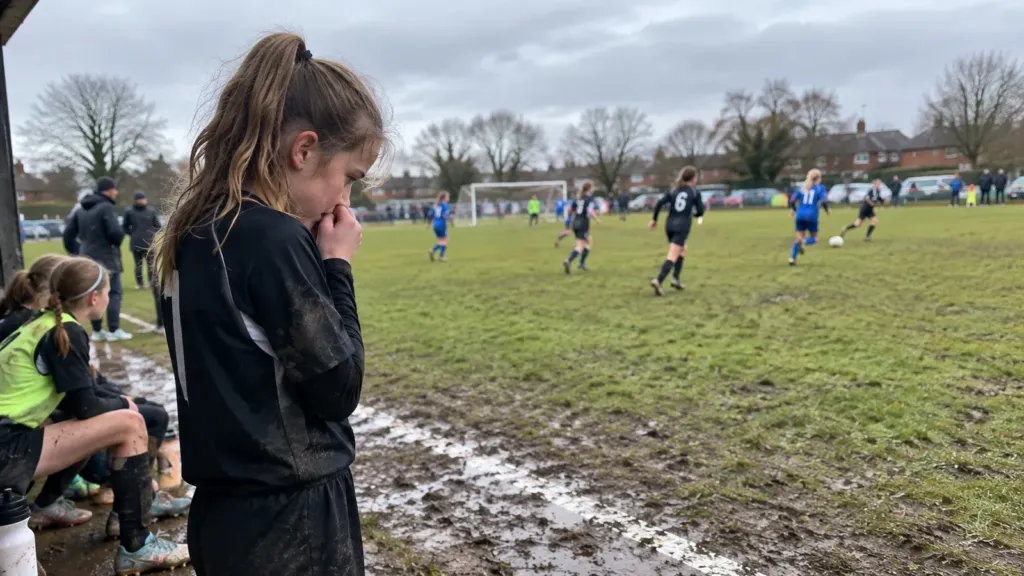
Sitting on the bench is difficult because the player is part of the competition without being able to influence it in the way they wanted.
Some players mentally leave.
They stop watching properly, withdraw from teammates or spend the whole time proving through their body language how unhappy they are.
I understand the reaction, but it wastes useful information.
If you might enter the competition, watch it as somebody who expects to play.
What is happening in your role?
What is the opposition doing?
Where is space appearing?
What has the coach been asking for?
What would you need to do immediately if you went on?
This is not about pretending to enjoy being left out.
It is about staying prepared while the decision is still outside your control.
If you do get your opportunity, you want your first few minutes to come from having watched the competition rather than spending the previous hour thinking about why you were not starting.
Do not try to win your place back in one training session
This happens a lot after selection disappointment.
The next training session becomes an audition.
The player runs harder than normal, forces difficult actions, tries to impress with everything they do and becomes frustrated whenever something goes wrong.
They are trying to solve the entire selection decision in 90 minutes.
That usually makes the session harder.
If the coach has given useful feedback, turn it into a period of work rather than a single performance.
Maybe the player needs to improve one technical weakness. Perhaps they need better tactical understanding, more consistency, improved physical qualities or a change in how they respond when training becomes difficult.
Progress takes whatever time the problem requires.
Our guide on how to build confidence as a young player explains why confidence becomes stronger when it is built from accumulated evidence rather than one performance or somebody else’s approval.
The same principle applies here.
Build evidence.
Parents should be careful about making the coach the enemy
Your child is upset.
You think the decision is wrong.
The instinct to defend them is understandable.
But telling a young player that the coach is clueless, biased or has something against them creates another problem unless there is genuine evidence for that conclusion.
Now the player has been taught that the decision contains nothing worth examining.
There are poor selection decisions. There are badly run environments. Bias, favouritism and inappropriate coaching behaviour exist in sport.
Those possibilities should not be dismissed.
But they should not be invented simply because the player did not get the outcome the family wanted.
I would start with facts. Find out what happened, ask for useful feedback and watch how the environment responds.
If the explanation keeps changing, feedback is absent, communication is disrespectful or the environment is harming the young person’s wellbeing, then the question becomes bigger than how to win selection.
The first conversation at home does not need to become a performance review
A player gets into the car after being benched or left out.
Parents often want to help, so the questions begin immediately.
What did the coach say?
Why do you think they picked them?
Did you train badly this week?
What are you going to do about it?
There will be time for those questions.
I would first work out what the player needs from the conversation.
They might want to talk.
They might want to be angry for ten minutes.
They might not want to discuss it until tomorrow.
That does not mean the subject should never be addressed. Avoiding every difficult conversation is not helpful either.
Timing matters.
A useful development conversation held tomorrow is better than forcing a bad one while everybody is emotional.
A useful development conversation held tomorrow is better than forcing a bad one while everybody is emotional.Grantley Baugh, Founder of PlayerScout
Selection systems are more changeable than young players often realise
Young players tend to experience selection as permanent because the decision feels enormous in the moment.
Research from formal talent pathways shows a much less stable picture.
The 2026 meta-analysis of talent-promotion programmes found substantial annual turnover across youth academies and federation junior squads. The authors concluded that these systems frequently select, deselect and replace developing players rather than identifying one fixed group and carrying them unchanged towards senior sport.
There is also direct evidence of reselection. Research following the closure of one youth football academy tracked players who subsequently entered other development environments, illustrating that losing one place does not necessarily end participation at that level.
We should be careful with what that means.
It does not promise every dropped player will return.
It does show why a single youth selection decision should not be treated as a final measure of potential.
Release from a pathway is different from sitting on the bench
These experiences belong in the same conversation, but they are not the same event.
Being benched for one competition might require a relatively small adjustment.
Being released from an academy, representative programme or long-term development pathway can affect routine, friendships, identity and future plans all at once.
A qualitative study of four former professional football academy players described longer-term psychological difficulties following release and highlighted problems around inadequate aftercare and unused social support. The sample was small and specific, so the findings should not be generalised to every released player, but they show why “bounce back” is sometimes an inadequate response.
The broader 2026 systematic review strengthens that point across multiple sports and studies. Release can have meaningful psychosocial consequences, and the support available around the player influences how they adapt.
If a young person has lost a major part of their sporting life, give the transition the weight it deserves.
Keep more than one part of the player’s identity alive
This matters most when sport becomes serious.
The more time a player invests, the easier it becomes for “I play this sport” to turn into “this sport is who I am.”
Then selection does more than remove an opportunity.
It threatens identity.
I would never tell a committed young player to care less about their sport simply to protect themselves from disappointment. Caring deeply is part of why sport matters.
But I would want other parts of life to remain visible.
Friends.
Family.
School or work.
Other interests.
Personal qualities that do not disappear when a team sheet changes.
This is especially important after major deselection or release. Research on released players has identified athletic identity as one of the relevant psychosocial issues surrounding transition.
The player should be allowed to want sport badly without making selection the only place their sense of worth comes from.
Decide whether the response is development, patience or a change of environment
Not every non-selection requires the same answer.
Sometimes the player needs to improve.
The feedback is clear, the environment is good and there is a sensible route forward. Work on it.
Sometimes the player needs patience.
They are developing physically, technically or tactically. Other players are currently ahead. Nothing needs blowing up because they were not picked this week.
Sometimes the environment needs questioning.
The player receives no useful feedback, opportunities have disappeared for a prolonged period, communication is poor or their development has stalled.
Now the family might need a broader conversation about whether this remains the right place.
Leaving should not be the automatic response to disappointment.
Staying should not be automatic either.
The question is whether the environment still offers a healthy and realistic opportunity to develop.
If you get another opportunity, do not try to prove everything at once
A player gets selected again after weeks on the bench.
Now they feel as though this is the chance.
They have to show the coach.
They have to make something happen.
They cannot make a mistake.
That pressure can make them play differently from the player who earned the opportunity.
Our article on how to deal with nerves before competition explains why feeling pressure does not mean the player is unprepared.
Once the event begins, return to the role.
Do the things the situation requires.
If the player starts monitoring every action because they are desperate to impress, our guide on how to stop overthinking during competition goes deeper into how to bring attention back to useful information.
The player does not need to settle the entire selection argument in one performance.
What I would want the player to take from being left out
Eventually, I would want the player to be able to separate three things.
The decision.
The information.
The response.
The decision belongs to whoever selects the team, squad or programme. You will influence some of it, but you will never control all of it.
The information is whatever the experience genuinely tells you. There might be a weakness to improve, a standard to reach, an environment to question or very little useful information at all.
The response belongs much more to the player.
Ask. Listen. Decide what is useful. Train. Keep perspective. Stay ready.
And if it hurts, let it hurt without deciding that the feeling proves you are not resilient enough for sport.
A young player’s development should never be judged from the lowest point of one selection decision.
Was this helpful?
 9 min