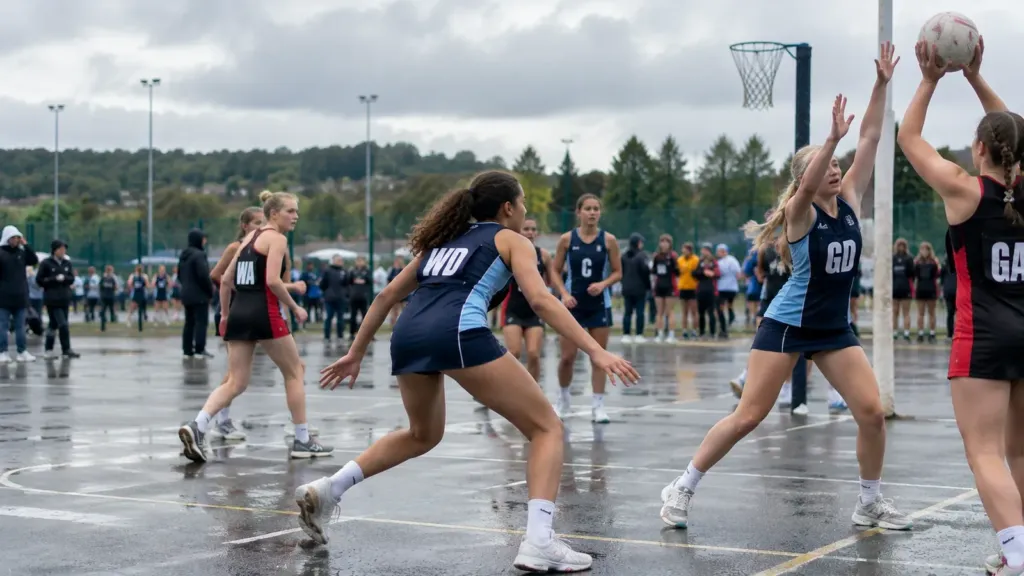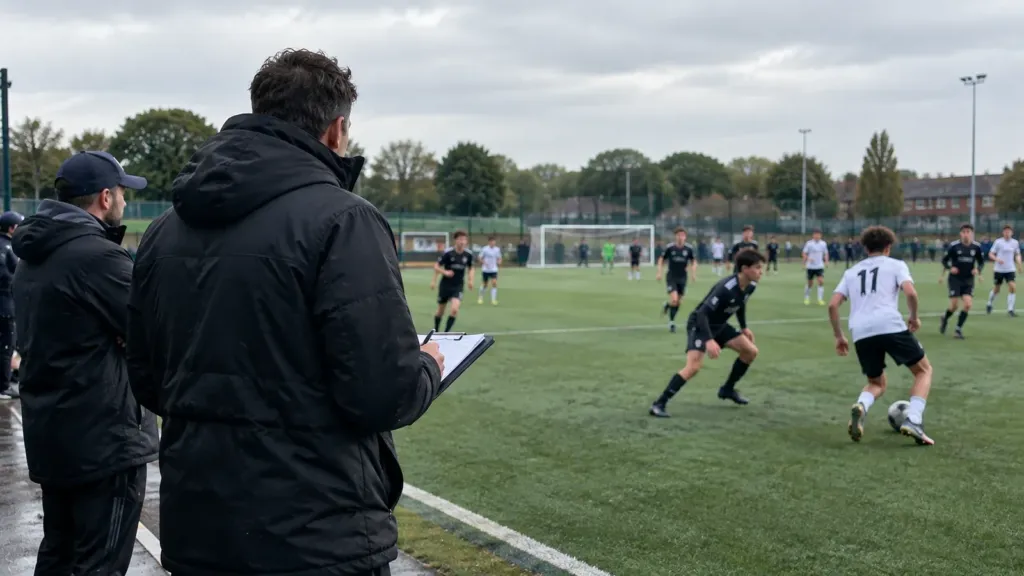




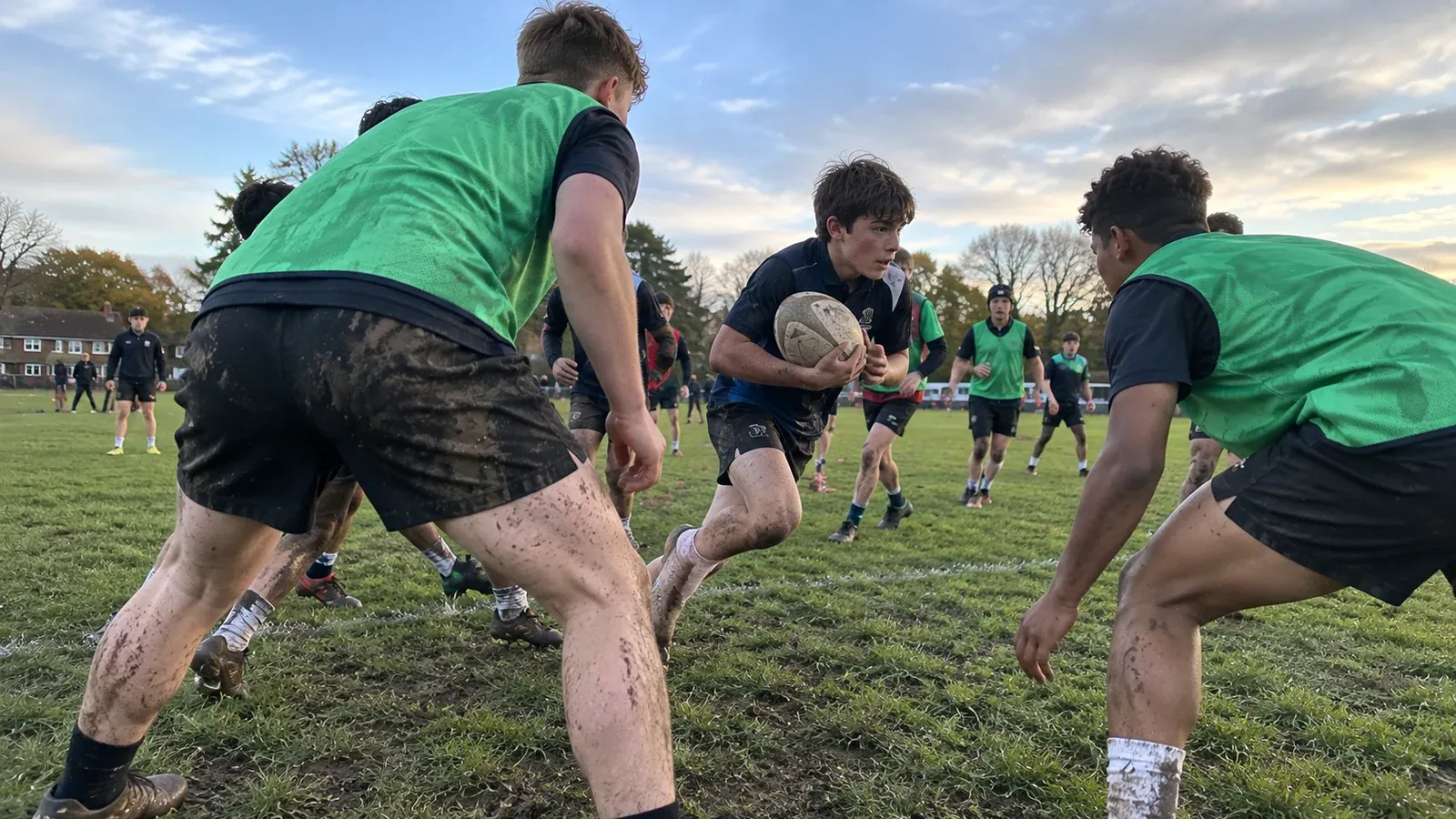
Put a group of young players together and some will stand out quickly.
One is faster. Another already has excellent technique. Somebody understands the competition earlier than everyone around them. One player wins far more often. Another is physically ahead of the group and makes difficult things look easy.
We tend to call those players talented.
The difficult part starts when we turn what we see today into a prediction about tomorrow.
Talent and potential are related, but I would not treat them as the same thing. In youth sport, talent is usually our judgement of qualities or performance a player is demonstrating now. Potential asks a much harder question: how good might this player eventually become?
The first involves evidence we can observe.
The second involves predicting development that has not happened yet.
That distinction matters because children and teenagers are still growing, learning, changing environments and gaining opportunities at different rates. Research into talent identification has repeatedly found that predicting future sporting success from youth characteristics remains difficult.
So when somebody says a 13-year-old “has more potential” than another 13-year-old, we should remember what they are doing.
They are making a forecast.
A young player never arrives as a finished product
Imagine two players of the same age.
Player A is currently stronger, faster and performs at a higher level.
Player B is technically good but physically behind and less consistent.
If we ask who is better today, we might have enough evidence to answer.
If we ask who will be better at 20, we have changed the question completely.
We now need to know how both players will grow, how their physical qualities will develop, how much useful practice they will receive, how they respond to coaching, whether they stay healthy and engaged, what competition they experience, what opportunities become available and how the demands of their sport change as the level rises.
We do not know most of that yet.
A systematic review of talent identification in sport found considerable variation in the factors separating more and less skilled performers and concluded that there was no clear set of variables consistently predicting future success.
This does not make youth evaluation pointless.
Coaches still need to assess players, select squads and decide who is ready for particular opportunities.
It means current performance and future potential should not quietly become the same judgement.
Current performance contains useful information
There is a danger of going too far the other way.
Once people learn that youth talent identification is uncertain, they sometimes talk as though current performance tells us nothing.
Of course it tells us something.
If a swimmer repeatedly produces strong times, that is evidence of current swimming performance.
If a young tennis player reads situations well and consistently solves problems against strong opposition, that is useful evidence.
If a gymnast demonstrates technical control, or a basketball player repeatedly makes good decisions under pressure, or a sprinter is performing at a high level for their age, coaches should not pretend those qualities are meaningless because the player is young.
The mistake is not noticing current ability.
The mistake is assuming the development curve from this point onwards will be predictable.
Article 13 on what coaches and scouts look for in young players explains why selectors use several types of information rather than one universal marker of talent.
Being ahead at 13 and becoming excellent at 23 are different achievements
This is one of the most useful findings for parents to understand.
A large systematic review and meta-analysis examining early talent promotion compared patterns associated with junior and senior performance across 71 study samples and more than 9,000 players.
The patterns for strong junior performers and strong senior performers were not the same.
Higher-performing juniors tended to begin their main sport earlier, enter talent-promotion programmes earlier and accumulate more specialised practice in their main sport.
Higher-performing senior players showed a different pattern. On average, they had started their main sport and talent-promotion programmes later, accumulated less early main-sport practice and more practice in other sports.
These are group-level associations. They do not mean a young player should deliberately start late, avoid specialist coaching or play several sports because doing so guarantees future elite performance.
They do show why early sporting success and long-term potential should not be treated as interchangeable.
The qualities and developmental histories associated with being ahead during childhood are not necessarily identical to those associated with the highest adult performance.
Growth changes what talent looks like
Youth sport makes prediction especially difficult because players do not mature at the same rate.
Two 14-year-olds are both 14.
Their bodies do not have to be at the same developmental stage.
Differences in biological maturation can affect characteristics such as height, body mass, strength and power. Depending on the sport, those differences might change how effective a player looks during competition or testing.
That creates a difficult selection problem.
An early-maturing player might genuinely be the stronger performer today. Their performance should not be dismissed as “only physical.”
At the same time, a selector needs to consider how much of the current advantage reflects qualities likely to remain important and how much reflects temporary differences in development.
The same care applies to a later-maturing player. Being physically behind does not automatically mean they possess greater hidden potential.
We should not replace one bad prediction with another.
The sensible position is to understand that maturation changes the context in which current performance is being judged.
Relative age creates another layer
Biological maturity and relative age are not the same thing.
Relative age comes from the way youth sport groups players into age categories.
If a competition uses a one-year selection period, a player born near the beginning of that period might be almost a year older than somebody born near the end while both compete in the same age group.
Across youth sport, research has repeatedly documented relative-age effects, although their size varies by sport, age, sex and level.
A meta-analysis covering 14 sports and 16 countries found consistent relative-age effects overall, with the size of the effect influenced by factors including age category, level and sporting context.
The important point is not that every relatively older player has an unfair advantage.
It is that “best in the age group” is partly a judgement made inside a system where players are not exactly the same age or at the same stage of development.
That makes future-potential claims harder again.
Selection itself changes development
This part gets missed.
Talent identification does not happen outside the development process.
Suppose one player is selected at 12.
They now receive stronger coaching, better facilities, higher-level competition, more feedback and regular contact with experienced staff.
Another player is not selected and returns to an environment with fewer resources.
Five years later, we compare them.
We are no longer comparing the same two players we assessed at 12.
Their opportunities have been different.
A 2024 systematic review examining talent detection, identification, development and selection describes these stages as connected parts of a continuous and phased process rather than completely separate events.
That is important because selection is not simply an attempt to find potential.
Selection also influences what happens to potential afterwards.
Opportunity becomes part of the development story.
Potential is not a hidden number inside the player
I would be careful with language such as “high-potential player” if it starts sounding like potential is a fixed quantity somebody possesses.
Development is more complicated than that.
The player brings physical, technical, perceptual, psychological and behavioural characteristics into an environment. The environment provides coaching, practice, competition, relationships, facilities, expectations and opportunities. The sport itself keeps asking different questions as the player moves through levels.
Those things interact over time.
A player might develop rapidly in one environment and struggle in another. A quality that creates a large advantage at one level might become less important later, while something barely noticed at 12 becomes increasingly valuable as competition becomes faster or more complex.
Potential therefore makes more sense as a developmental possibility than a promise.
We are asking what this player might become under future conditions we only partly know.
I would be careful with language such as "high-potential player" if it starts sounding like potential is a fixed quantity somebody possesses.Grantley Baugh, Founder of PlayerScout
Improvement rate is interesting, but do not turn it into another magic test
A player who learns quickly gets attention for good reason.
A coach gives information and the player starts applying it.
A technical problem improves.
Their understanding develops.
They adapt to a harder level.
Those are useful observations.
Research into coachability has identified behaviours such as attentiveness, willingness to learn, persistence, seeking feedback, receiving feedback and applying feedback.
That gives coaches something more useful to observe than simply labelling a child “a quick learner.”
But improvement rate still needs context.
A beginner might improve quickly because there is so much room to improve. Another player might appear to progress slowly because they are already operating at a higher level. Different skills develop at different rates, and growth itself can temporarily change coordination and performance.
Learning behaviour belongs in the picture.
It should not become the new single predictor of future success.
Potential looks different in different sports
There is no universal profile of a high-potential young player because sports do not reward the same things.
Body dimensions have a different importance in basketball than in many racket sports.
Peak power matters differently in sprinting than in an endurance event.
Decision-making has a different form in an open invasion sport than in a closed technical event.
The age at which high-level performance normally emerges also varies considerably.
This is one reason talent research needs to be interpreted carefully. A broad scoping review of sport-talent research between 1990 and 2018 found a narrow evidence base, including heavy representation of male participants and football.
We should be particularly cautious when somebody takes a finding from one sport, one sex, one country or one age group and turns it into a rule for young players everywhere.
Potential only makes sense in relation to the future demands of the sport being discussed.
Technology has not solved the prediction problem
Sport now has access to more data than previous generations of selectors.
Physical testing.
Technical statistics.
Tracking information.
Video.
Psychological measures.
Growth and maturation information.
Predictive models.
More data might improve decisions when used well, but more measurement does not make uncertainty disappear.
A 2026 systematic review of machine-learning approaches to talent identification in youth team sports found studies using anthropometric, physical, technical, perceptual-cognitive, psychological, socio-cultural and multidomain information.
Some models reported strong internal predictive performance.
The problem was what happened when researchers looked at the quality and generalisability of that evidence. External validation was uncommon, and 59% of included studies were judged to have a high risk of bias.
The authors concluded that machine learning currently makes more sense as support for talent-identification decisions than as a replacement for traditional approaches.
Even sophisticated models struggle with the same basic problem.
The future has not happened yet.
Parents should be careful with both labels
Being told your child is talented feels positive.
Being told they have “huge potential” feels even bigger.
Neither label should become the player’s identity.
A player labelled talented might start protecting that reputation. Difficult situations become threatening because struggling no longer fits the story everybody tells about them.
Another child hears that somebody else has more potential and begins to treat development as though the important decision has already been made.
Neither response helps much.
I would rather talk about what the player currently does well, what they are developing and what the next level will require.
Those conversations contain information the player can use.
“You’re the talented one” does not.
Coaches need to know which question they are answering
When evaluating a young player, I think this distinction helps:
Are we selecting the player who is best equipped for today’s competition?
Or are we trying to identify somebody who might eventually perform at a much higher level?
Sometimes the same player answers both questions.
Sometimes they do not.
A coach choosing a squad for an important event has a legitimate reason to value current performance.
A development programme claiming to identify long-term potential has taken on a harder job.
Article 16 on what to do if you don’t get selected explains why a player should therefore take a selection decision seriously without treating it as a complete forecast of their sporting future.
The wording matters.
“This player is currently ahead” is an observation.
“This player has the greatest potential” is a prediction.
We should know when we have crossed from one into the other.
Early selection does not prove the system has found the future best players
This is where youth pathways need humility.
Talent programmes have limited places.
Selectors need to make decisions.
Some players need to be chosen and others will miss out.
None of that means organisations should stop identifying promising young players.
But early selection should not be confused with certainty.
The meta-analysis on early talent promotion reported substantial turnover within talent-promotion programmes and found contrasting developmental patterns between high-performing juniors and high-performing seniors.
That should make us interested in keeping routes open where the sport allows it.
Late developers need somewhere to develop.
Players outside formal systems need meaningful competition and coaching.
Selected players need continued evaluation rather than being treated as proven future performers.
A good pathway should develop talent, not simply congratulate itself for finding it early.
So what should a young player focus on?
Not proving they have potential.
That is somebody else’s prediction.
The player has a more useful job.
Improve the qualities their sport requires. Learn from coaching. Build physical qualities appropriately as they grow. Develop technical skill. Learn to read competition. Make decisions. Practise. Compete. Recover. Stay curious when the level exposes something they cannot yet do.
Article 14 on how to get noticed without trying to impress explains why performing for the observer often pulls attention away from the sport itself.
The same principle applies here.
Do not spend your development trying to look like a high-potential player.
Develop.
Let the evidence keep changing.
Talent tells us something about today. Potential asks us to predict tomorrow.
Youth sport needs both ideas.
We need to recognise good performance.
We also need to think beyond the current result.
Problems start when adults treat those two judgements as though they are identical.
A player who is ahead now deserves recognition for what they have achieved. A player who is behind needs development, not an invented story that they secretly possess more potential. Both still have years in which their abilities, bodies, opportunities and relationship with sport might change.
So when somebody asks me which young player has the most potential, I would want more than a ranking.
I would want to know what we are seeing now, what might be influencing it, what the sport will demand later and what development opportunities each player will receive next.
Then I would still leave room to be wrong.
That is not weakness in talent identification.
With young players, it is part of doing it properly.
Was this helpful?
 13 min