



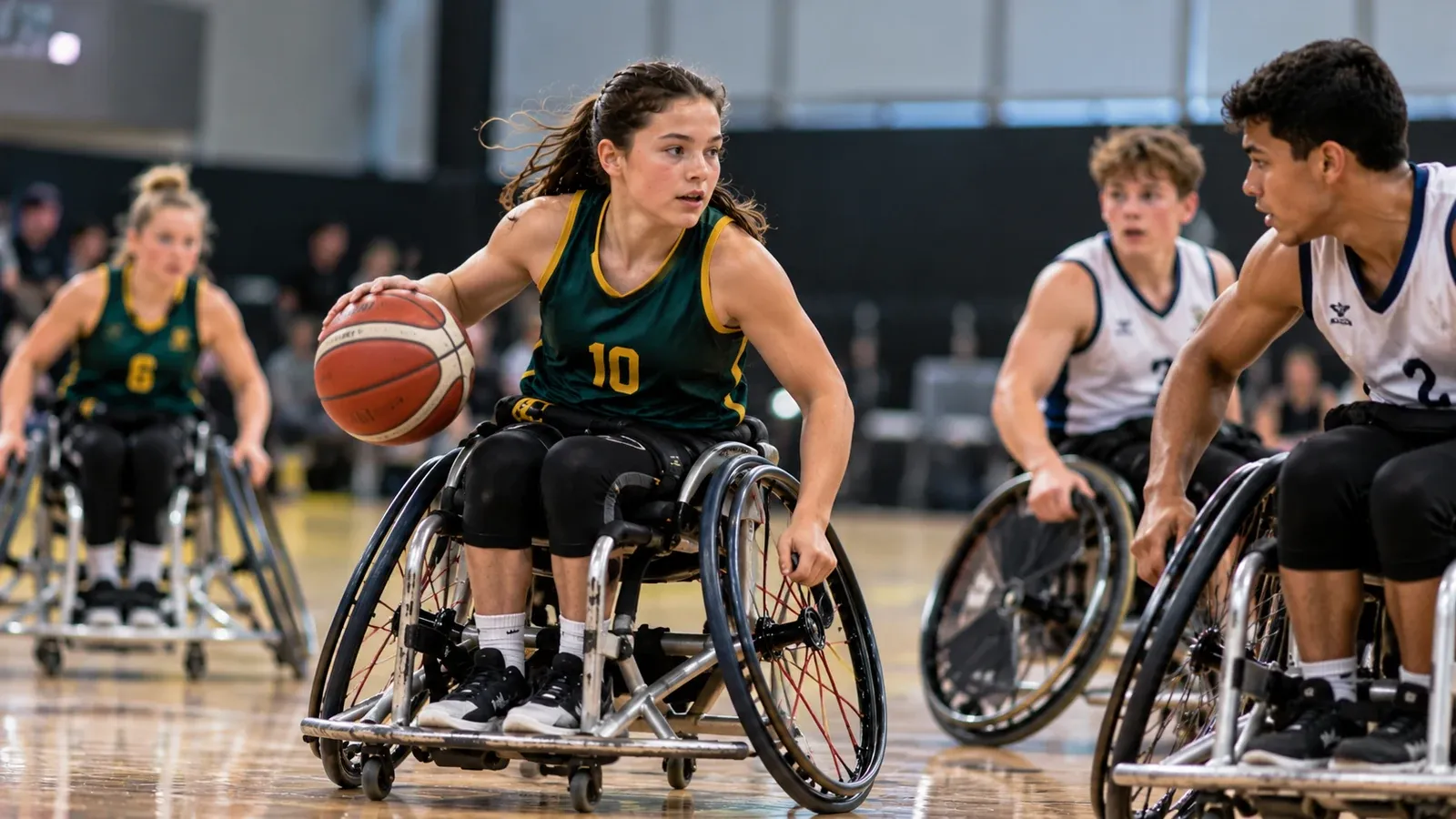
Australia’s inaugural Libby Kosmala Para Futures Cup brought 70 emerging Para-sport competitors from every state and territory to Canberra for four days of national competition and development.
Held at the Australian Institute of Sport from 2 to 5 October 2026, the event involved participants aged 13 to 32 across 12 sports. It was not exclusively a youth competition, and organisers have not published a verified breakdown of how many participants were under 18.
Team West, representing Western Australia and South Australia, won with 1,302 points. Team North, made up of Queensland and the Northern Territory, finished one point behind on 1,301. Team East scored 1,072 and Team South 955, according to the Australian Sports Commission.
More than a competition
The programme included athletics, badminton, boccia, cycling, goalball, powerlifting, rowing, shooting, swimming, table tennis, wheelchair basketball and wheelchair rugby. Participants could try disciplines outside their usual sport while meeting Paralympian mentors and specialist coaches.
For some competitors, organisers said, it was a first interstate trip or an early opportunity to spend time with a large group of people with disabilities. Team North and Team East jointly received the peer-voted Win Well Cup, recognising how participants competed and supported others. That award was separate from Team West’s overall victory.
The system behind the Cup
The event formed part of the Australian Government-funded Para System Uplift, led by the Australian Sports Commission and Paralympics Australia with the National Institute Network. Dedicated Para Sport Units have been established across states and territories to improve access to talent identification, coaching and specialist support.
In a report published on 9 October, Paralympics Australia said more than A$55 million had been invested in developing Para-sport talent, specialist coaching and classification expertise, performance support and Para Sport Units. That figure describes wider system investment, not the budget of this competition.
The Cup was a pilot for a possible series of multi-sport competitions ahead of Brisbane 2032. Organisers have also discussed the possibility of including neighbouring countries. Neither ambition should be mistaken for a confirmed annual event or international expansion.
What happens when competitors go home?
National events can introduce developing players to new disciplines, coaches and peers. But regular access to equipment, classification, coaching and suitable competition matters once participants return to their own regions.
That distinction is important for younger players balancing school, family travel and different support needs. Published accounts describe positive experiences during the Cup, but do not establish whether it will improve long-term retention or performance.
Paralympics Australia subsequently described 24-year-old sprinter Ethan Sonter meeting a mentor he had first encountered at a ‘Come and Try Day’ in 2007, when he was five. His experience illustrates how development can extend across many years. It does not demonstrate that the new Cup itself caused a lasting outcome.
Future reporting should examine whether the competition returns, whether participants gain regular opportunities at home and whether the programme reaches players facing significant barriers to entry. For now, the verified achievement is the completion of a national multi-sport pilot. Its lasting impact remains to be measured.

PlayerScout Take
"A national event can be a brilliant first experience, but players don't develop in four days. What matters is whether they go home to coaches who understand their needs, appropriate equipment and opportunities to keep competing. That's where we'll learn whether this Cup has helped build a pathway rather than just created a memorable weekend."

Grantley Baugh, Founder, PlayerScout
