

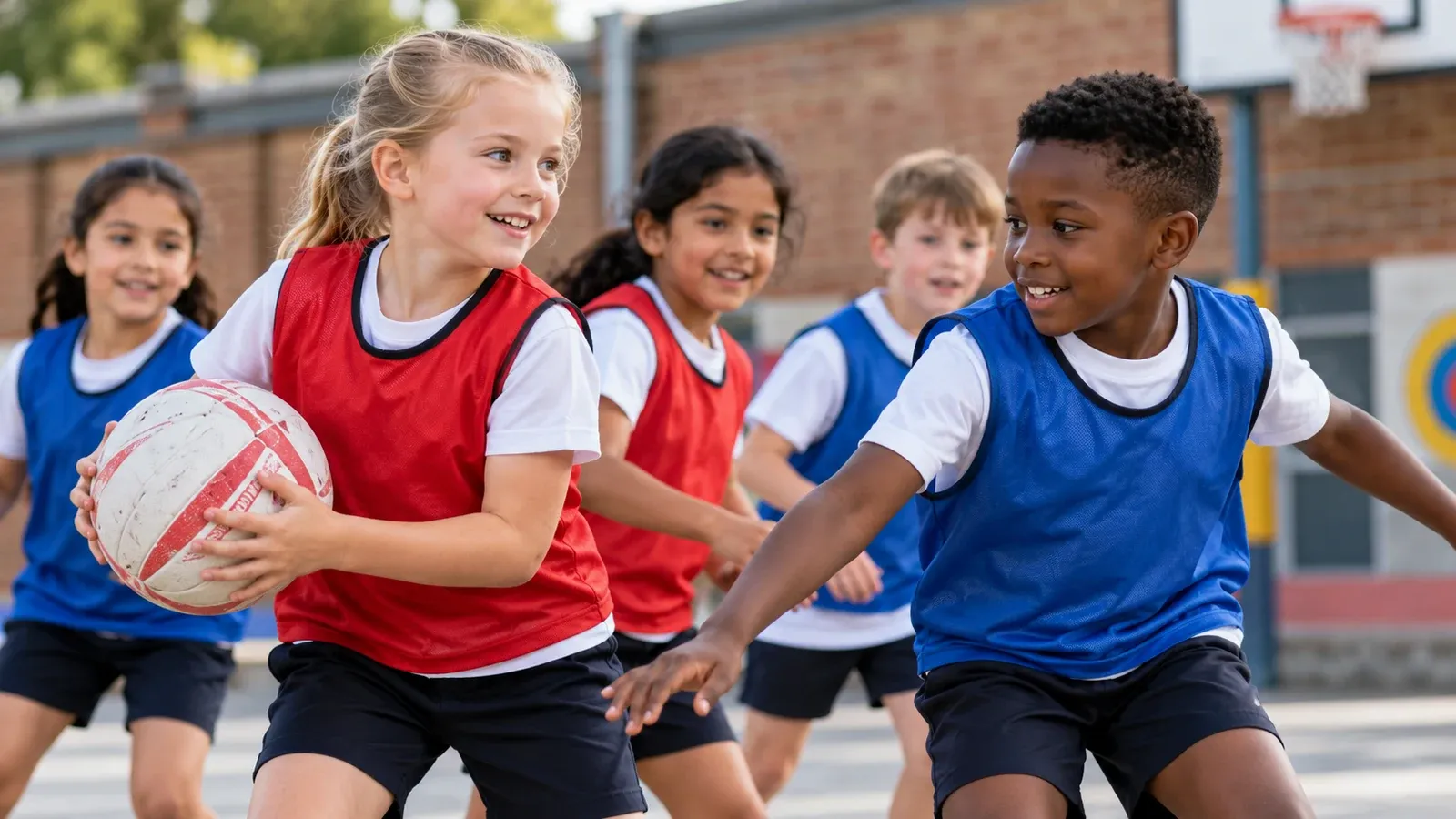
Almost half of boys aged seven to nine surveyed in England believe some sports are only for boys, according to new findings that suggest sporting stereotypes can be established well before secondary school.
The Youth Sport Trust’s Girls Active National Reports 2026, published on 9 October, found that 48% of boys in that age group agreed with the statement. Across all surveyed ages, 41% of boys and 25% of girls agreed that some sports are for boys and others are for girls.
The findings come from an online survey conducted between January and June 2026 involving pupils from 110 schools in England. They capture children’s reported views and experiences rather than directly measuring the opportunities provided by every school.
Beliefs about sport are changing
The Youth Sport Trust said agreement with the idea of gender-specific sports had increased since 2023/24. Among boys, the proportion rose from 35% to 41%; among girls, from 20% to 25%. These comparisons are across survey waves, not a study following the same children over time.
The highest agreement was among younger primary-school pupils. That matters because many conversations about girls’ participation focus on what happens during adolescence. These findings suggest schools and clubs may need to examine what children hear and experience much earlier.
Girls report unequal opportunities
Only 47% of girls surveyed felt they had opportunities to participate in the same range of sports and activities as boys during PE. Asked whether girls’ and boys’ sport were regarded as equally important, 56% of boys agreed, compared with 39% of girls.
Those differences do not prove that all participating schools restricted girls’ activities. They do, however, show that girls and boys can experience the status and accessibility of school sport differently.
The Youth Sport Trust also reported that among girls who were less active at school because of negative comments from boys, 47% said those comments involved gender stereotypes about being a girl. Among girls affected by negative comments from other girls, 59% said the remarks concerned their appearance. These percentages refer to specific subgroups, not to all girls surveyed.
What schools and clubs can learn
For primary schools, the question is not simply whether football, dance, cricket, gymnastics or other activities appear on the timetable. It is whether pupils are encouraged to try them without being made to feel that participation is unusual for their gender.
Clubs face a similar challenge when children arrive for introductory sessions. Coaches can examine how groups are formed, how activities are described, whose achievements are highlighted and whether children are able to explore different sports without embarrassment.
These are practical areas to review, rather than interventions proven effective by this particular survey. The research does not establish what caused the attitudes or whether changing any one practice would increase participation.
What the figures cannot tell us
The findings relate to pupils surveyed in England and should not be presented as global estimates. The published headline figures do not by themselves demonstrate that gender stereotypes caused children to drop out of sport.
What they do show is that assumptions about who belongs in particular sports are already present among young children. For those responsible for player development, that makes the earliest experiences of sport part of the participation question, not just preparation for what happens later.

PlayerScout Take
"When a child arrives at a club for the first time, the important thing is whether they feel they can have a go. If the message is that certain sports aren't for them, we may lose their interest before we ever find out what they enjoy. Coaches and schools need to look at the opportunities children actually experience, not just the activities they say are available."

Grantley Baugh, Founder, PlayerScout
